How to Choose the Best Acoustic False Ceiling Design for Any Space

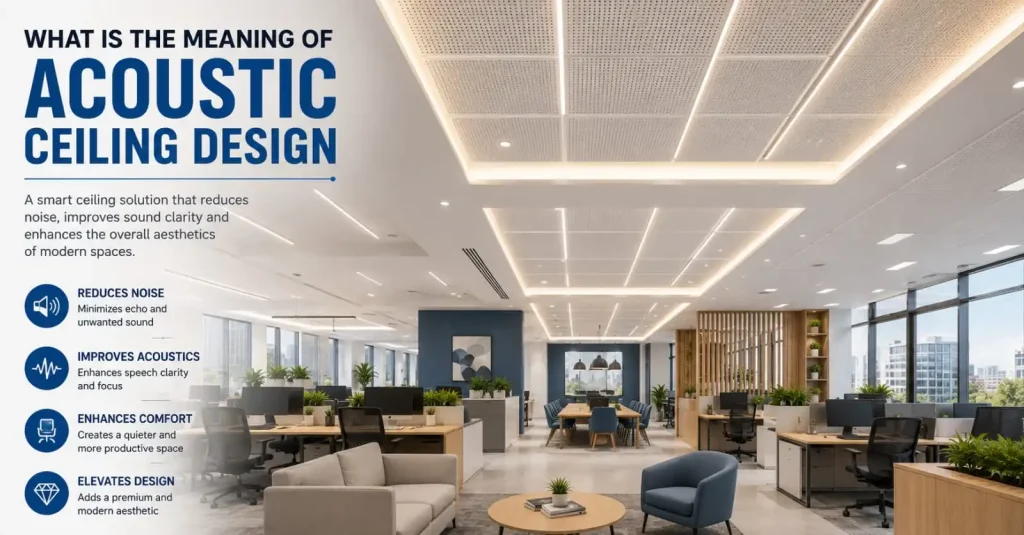
There are some rooms where you immediately feel comfortable. Do you know why? Sometimes it is the lighting and the furniture. But often it is the sound. The office design or cafe can still feel stressful if every phone call echoes in the room. The real question is how to control the noise in the spaces. This is where acoustic ceiling design makes a difference. It reduces noise levels by up to 50% to create a more comfortable environment. The best part? It is easy to install the acoustic plaster ceiling without compromising on design.
Key Benefits
- An acoustic false ceiling absorbs sound and reduces echo.
- The spaces become more comfortable due to less noise.
- Modern acoustic ceilings also ensure aesthetics.
- Different materials like gypsum and mineral fiber offer different performance levels.
- The elegant finish of an acoustic plaster ceiling appears if you design it properly.
What is the Meaning of Acoustic Ceiling Design?
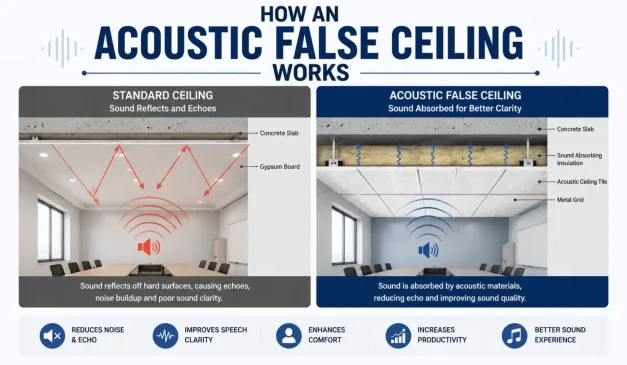
An acoustic false ceiling design is built to absorb and block sound. These are different from regular false ceilings that hide wires or ducts. It is prepared from special materials that trap sound waves. It stops them from bouncing around the room.
Think of a regular ceiling like a mirror for sound. The waves hit the mirror and reflect back in the room. However, an acoustic false ceiling is similar to a sponge. It catches the sound and reduces it. How exactly is it done? There are materials like mineral wool and fiberglass. The engineer places them behind the ceiling panels. This not only reduces noise levels but also ensures a peaceful space.
Why Is Acoustic False Ceiling Design Becoming Popular?

Ask yourself: Isn’t noise becoming a problem in modern life? Urban areas suffer more noise pollution. The research shows that work productivity reduces up to 66% due to poor acoustics. It also increases stress levels among employees.
Remote work and urban density are rising. People need quiet space to focus and complete their projects. This is why an acoustic false ceiling is becoming popular in the construction of modern buildings.
A peaceful environment is not only a luxury. But it is necessary for focus and well-being. It is a practical upgrade that pays off in comfort and quality of life. What’s more? An acoustic plaster ceiling also combats the following modern challenges:
- Distractions at the open office
- Privacy at home and office
- Blocks the noise of traffic and the neighborhood
- Ensure speech clarity in the rooms
- Provide better customer comfort in retail spaces
What Are the Benefits of Acoustic Ceiling Design?

Given below are the benefits of acoustic ceiling designs in modern construction:
- Better Sound Absorption
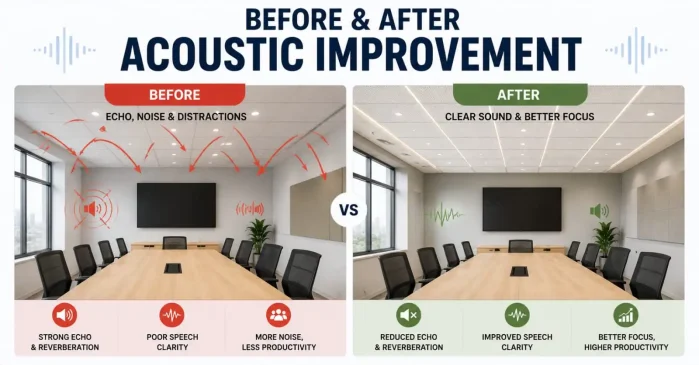
An acoustic false ceiling absorbs sound waves instead of reflecting them. How is this helpful? The echo and background noise are lower. The environment is clear and more natural. The voice sounds clearer and more natural.
- Better Productivity
Excessive noise not only influences concentration but also the efficiency of employees. Acoustic false ceiling designs control sound levels by minimizing the design. It helps employees to focus and communicate better. What’s more? It ensures that employees stay productive throughout the day.
- Greater Privacy
Acoustic ceilings limit sound transmission between rooms. This leads to better privacy between rooms. Thus, these panels are ideal for the following spaces:
- Conference rooms
- Executive cabins
- Healthcare facilities
- Educational centers
These spaces usually have confidential discussions and seamless communication is important.
- Enhanced Comfort
You feel more relaxed and comfortable in a quiet environment. Acoustic false ceilings improve the overall experience of the spaces. They reduce the unnecessary noise and create a pleasant atmosphere.
- Modern Aesthetics
Modern acoustic ceiling systems focus beyond functionality. Acoustic Ceiling panels not only enhance interior aesthetics but also maintain acoustic performance. They are available in various textures and patterns that provide an attractive design to your spaces.
- Additional Thermal Insulation
Acoustic ceiling materials also provide thermal insulation benefits. They transfer heat through the ceiling. The result? You find comfort in the indoor temperature. This improves the energy efficiency and lowers the electricity costs over time.
What Are the Trending Acoustic False Ceiling Designs For Offices?
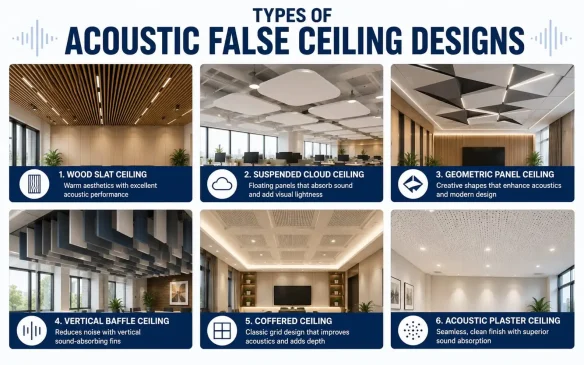

Corporate offices are more open and noisy than other setups. Given below are some trending acoustic false ceilings for offices:
- Wood Slat Ceilings
Wood slat ceilings are an ideal choice if you want your office to look natural. It improves acoustics using backing materials that absorb sound. What’s more? A sense of depth and length is created with a clean linear design. This ultimately makes the workspaces feel more open and welcoming.
- Suspended Cloud Panels
They are acoustic elements hung below the main ceiling. The engineer places them at different heights. The engineers mostly use suspended cloud panels for open offices and conference rooms. This is because they reduce noise while adding a dynamic visual feature to the ceilings.
- Geometric Panels
This is the best option if you like geometric shapes like triangles and hexagons. The geometric panels provide a blend of functionality and creative design. They absorb the unnecessary sound and echo in the room. The most interesting part is that they add a contemporary architectural element to enhance the overall structure of the interior.
- Vertical Baffles
They are the ceiling components that help absorb sound from multiple directions. The engineer hangs them below the ceiling. The design of the vertical baffle acoustic false ceiling is large. Thus, you often find them in tech offices and co-working spaces where echoes are common.
- Coffered Acoustic Ceilings
This ceiling features the sections that conceal sound-absorbing materials. They create a structural and elegant appearance. The best part is that they blend traditional ceiling aesthetics with acoustic performance. This is why a coffered acoustic ceiling applies in executive offices and meeting rooms.
What Are the Trending Acoustic False Ceiling Designs for Homes?
Every homeowner wants comfort at home. An acoustic false ceiling turns a noisy living room into a peaceful sanctuary. Given below are common acoustic false ceiling designs for homes:
- Soft Gypsum with Mineral Wool
A 12-mm gypsum ceiling pairs with 25-mm mineral wool. This results in low noise and echo in the bedrooms. They become quieter and more comfortable. Most importantly, the rooms are conducive to better sleep.
- Perforated Gypsum with Acoustic Felt
The perforated gypsum panels combine with acoustic panels to absorb sound. They not only reduce reverberation but also create a distraction-free environment. It helps you focus on your work more efficiently.
- Cove Ceilings with LEDs
This is an ideal acoustic false ceiling panel design if you want a relaxing and cozy atmosphere in your room. The cove ceilings combine with warm-white LED lights that provide indirect illumination. Most homeowners choose them to get a restful sleep in their bedrooms.
- Acoustic Plaster False Ceiling
Acoustic plaster ceilings offer a smooth and seamless appearance. They absorb most of the sound in the room. This is why homeowners prefer it in their modern and luxurious residential interiors.
- Staggered Panel Layouts
Staggered ceiling panels are the best choice for large and open living spaces. They distribute sound evenly throughout a room. The result? The harsh echoes reduce, and acoustic comfort improves in the spaces.
What Are the Trending Acoustic False Ceiling Designs for Commercial Spaces?
Commercial spaces need to balance style with functionality. This is why restaurants and gyms use acoustic false ceilings to manage noise while maintaining design. Given below are acoustic false ceiling designs for commercial spaces.
- Sculptural Ceilings
Sculptural ceilings feature artistic three-dimensional forms. These types of acoustic false ceilings serve as both visual and acoustic solutions. Thus, the designer may suggest this if you want better sound with great aesthetics.
- Mixed Material Ceilings
This is an ideal acoustic ceiling design if you like unique textures. They combine with various materials like wood, metal, and fabric to form the textures. The result? It absorbs sound while improving the overall acoustic performance in commercial spaces.
- Integrated LED Lightning
It is the most suitable option for spaces that need efficient illumination. The integrated LED lighting systems embed within acoustic ceiling panels. They preserve the sound-absorbing properties of the ceiling. What’s the best part? The commercial spaces look sleek and modern in appearance.
- Eco-Friendly Materials
This is the preferable choice among all the acoustic false ceiling designs. Why? This is because they manufacture from environmental-friendly materials. These materials support green building goals and also control sound in the spaces.
How to Choose the Right Acoustic False Ceiling Design?
The decision for your acoustic false ceiling design depends on various factors. Given below are some of the points to keep in mind when choosing the right design for your space:
- Assess Your Noise Level
The first step is to know your needs carefully. The moderate sound control is necessary for a quiet home. Whereas the busy restaurants or commercial spaces need materials that absorb high sound.
- Measure Your Space
The choice for your acoustic ceiling solution also depends on the size and layout of your room. Cloud panels and baffles are ideal for large open areas. However, the designer may use gypsum systems for compact rooms.
- Set Your Budget
The cost of acoustic false ceilings varies as per the design. You will often find that foam panels are more budget-friendly than wood slates or custom fabric systems. The twist happens when you apply acoustic plaster ceilings. They offer premium aesthetics and performance.
- Check Lighting Needs
Fixtures and LED lighting integrations need the support of a ceiling system. So, it is advisable to ask your interior designer about the compatibility of your ceiling system. The expert guidance will help you combine sound control with lighting solutions effectively.
- Think About Maintenance
Ask yourself about the time you can spend to clean and maintain the acoustic false ceiling. Some ceilings are easy to maintain while others need more frequent care and attention. This is why it is important to know your needs and choose the right material.
The Final Words
An acoustic false ceiling is more than a design trend. It is a smart investment that provides comfort and peace in the spaces. It is useful to control sounds in commercial spaces and homes. The right acoustic ceiling transforms how your space sounds and feels. Every acoustic false ceiling design option is stylish and functional. You can compare and choose according to your needs.
FAQs
1. What is the difference between a regular false ceiling and an acoustic false ceiling?
A regular false ceiling hides wiring, ducts, and utilities while enhancing aesthetics. An acoustic false ceiling is designed to absorb sound, reduce echo, and improve room acoustics using specialized materials like acoustic plaster, mineral fiber panels, or acoustic ceiling tiles.
2. How much noise can an acoustic ceiling reduce?
An acoustic ceiling can reduce perceived noise levels by 20–30 decibels, depending on the material and installation. It helps minimize echo, reverberation, and background noise, creating a quieter and more comfortable environment in homes, offices, schools, and commercial spaces.
3. Is an acoustic plaster ceiling better than acoustic tiles?
An acoustic plaster ceiling provides a seamless appearance and excellent sound absorption, making it ideal for premium interiors. Acoustic ceiling tiles are more affordable, easier to install, and simpler to replace, making them suitable for offices and commercial environments.
4. Can I install an acoustic false ceiling in an existing room?
Yes, an acoustic false ceiling can be installed in existing rooms without major structural changes. It is an effective retrofit solution for improving sound quality, reducing noise, and enhancing comfort in homes, offices, classrooms, and commercial spaces.
5. How long does an acoustic false ceiling last?
A well-installed acoustic false ceiling typically lasts 10–20 years or longer. Its lifespan depends on material quality, environmental conditions, and maintenance. Regular cleaning and inspections help maintain both acoustic performance and visual appeal.
6. Are acoustic ceilings expensive?
Acoustic ceiling costs vary by material and design. Acoustic foam and ceiling tiles are budget-friendly, while acoustic plaster ceilings and custom wood slat systems are premium options. The investment often pays off through improved comfort, acoustics, and energy efficiency.
7. Do acoustic false ceilings help with thermal insulation?
Yes, acoustic false ceilings provide thermal insulation by creating an air gap and using insulating materials. This helps regulate indoor temperatures, improve energy efficiency, and reduce cooling and heating costs while enhancing acoustic comfort.