Acoustic Ceiling Panels: Types, Installation Process and Applications

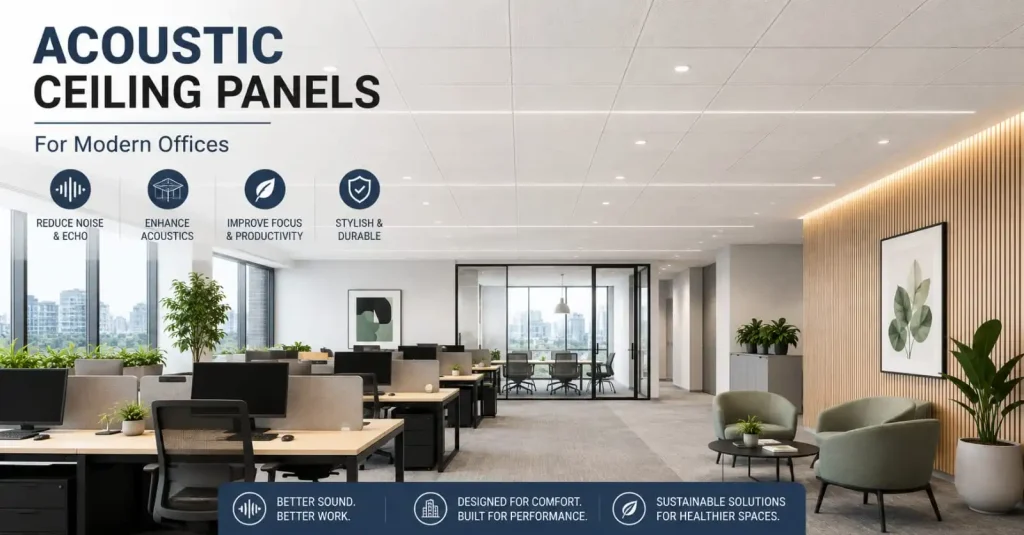
Have you ever gone to a restaurant or a modern living room? What exactly did you find? There is a high chance that the first thing you notice is what you hear. Voices bouncing off walls. The hum of air conditioners. The echo makes conversations harder to follow.
Yes, it’s true. Sounds impact the comfort of the space. The room with a beautiful design might feel unpleasant if noise constantly travels around it. That is why architects and interior designers focus on acoustic ceiling panels.
Want to know more about acoustic ceiling panels? Read on this blog post to find out!
What Are Acoustic Ceiling Panels?
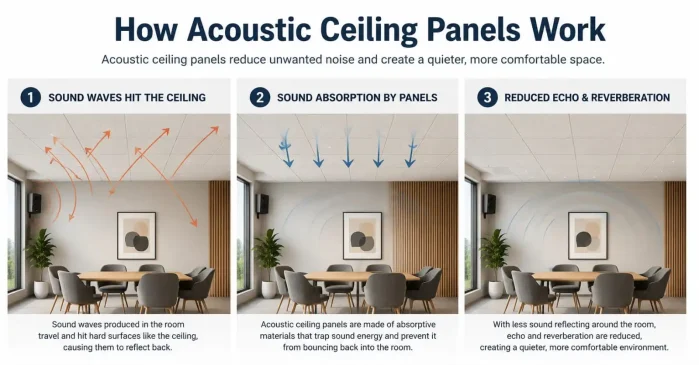

Acoustic ceiling panels are elements of the ceiling. It absorbs and controls sound within a room. These panels are made from sound-absorbing materials. How does it help? It reduces echo and reverberation.
Let’s understand it this way: Imagine you shout in an empty hall and hear your voice bounce back continuously. That’s an echo. But what if you speak in a well-furnished room with curtains and furniture? The room absorbs sound differently. The same principle applies to acoustic ceiling panels.
These panels capture sound energy and reduce reflections. The result? The conversations become clear and spaces more comfortable. The modern acoustic panel ceiling designs are available in different colors and patterns. It allows designers to improve acoustics without any compromises in aesthetics.
Why Acoustic Ceiling Panels Are Important in Modern Buildings?
Buildings are more open and collaborative nowadays.
This is because open offices encourage teamwork. Restaurants prefer spacious layouts. Homes feature open-plan living spaces. These designs are indeed appealing. But they often create sound challenges. The noise travels freely across large spaces without proper sound control.
This is where acoustic ceiling panels save you. Given below are the importance of ceiling panels in modern buildings:
- Reducing echo and reverberation
- Improving speech clarity
- Enhancing comfort and productivity
- Creating better learning environments
- Improving customer experience in commercial spaces
What Are the Types of Acoustic Ceiling Panels?
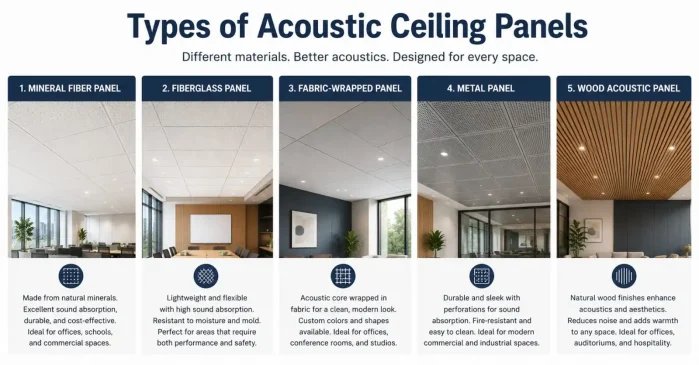
Given below are the most common types of acoustic ceiling panels:
- Mineral Fiber Panels
These are the options that you will usually find in offices and commercial buildings. They offer excellent sound absorption at a cost-effective price. The best part? They are available in a variety of finishes.
- Fiberglass Acoustic Panels
Fiberglass panels absorb sound clearly. You will often find them in auditoriums and conference rooms. This is because they are lightweight and control noise efficiently.
- Fabric-Wrapped Panels
These panels feature sound-absorbing cores covered with decorative fabric. They combine functionality with visual appeal and are often chosen for premium interiors.
- Metal Acoustic Panels
Metal panels contain perforations. They allow sound absorption and maintain durability. Airports and metro stations are common areas where architects use metal acoustic panels.
- Wood Acoustic Ceiling Panels
They are very popular in modern architecture. Why? This is because they not only provide a warm and natural appearance but also ensure acoustic performance.
What Are the Acoustic Ceiling Panel Materials and Their Properties?
The material that you use to design an acoustic ceiling panel impacts its performance. Given below are some common acoustic ceiling panel materials and their properties:
Mineral Fiber
- Good sound absorption
- Fire-resistant
- Budget-friendly
- Easy to install
Fiberglass
- Excellent acoustic performance
- Lightweight
- Moisture-resistant
- Suitable for high-noise areas
Wood
- Natural appearance
- Durability
- Warm interior aesthetics
- Balanced sound absorption
Metal
- Durable
- Low maintenance
- Suitable for commercial applications
- Can be combined with acoustic backing
PET Panels
PET panels are popular because of their sustainability and acoustic effectiveness. Many contemporary acoustic panel ceiling design concepts now use PET panels because of their environmental benefits.
How to Choose the Right Acoustic Ceiling Panels?
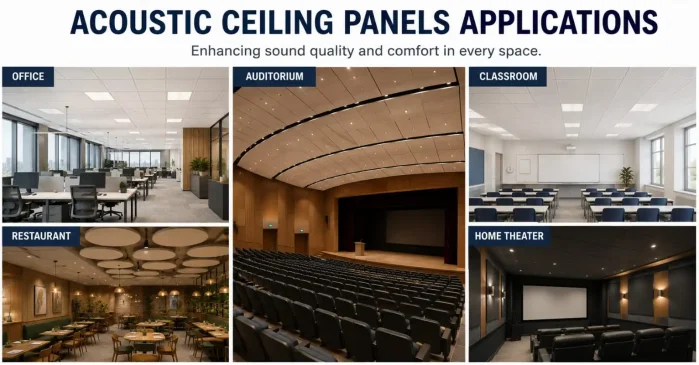
There is more than choosing the right design when it comes to acoustic ceiling panels. Given below are a few factors to choose the right acoustic ceiling panels:
- Understand the Purpose
Ask yourself: What type of noise do you want to control? A conference room requires different acoustic treatment than a home theater.
- Evaluate the Space
Large rooms often need higher sound absorption. However, small rooms may need fewer panels.
- Consider Design Preferences
The ceiling plays a major role in interior aesthetics. Many architects choose wood acoustic ceiling panels because they add warmth and sophistication.
- Check Maintenance Requirements
Some materials are easier to clean and maintain than others. This is very important in healthcare and hospitality environments.
- Focus on Acoustic Ratings
Look at the Noise Reduction Coefficient (NRC). A higher NRC usually indicates better sound absorption performance. The best acoustic panel ceiling design balances all the following:
- Performance
- Durability
- Budget
- Visual Appeal
What Are the Benefits of Installing Acoustic Ceiling Panels?
The acoustic ceiling panels are popular because they offer several practical benefits. Given below are some of these benefits:
- Better Sound Quality
The primary advantage of acoustic ceiling panels is that voices become clear. It decreases the unwanted noises and makes you feel comfortable.
- Increased Comfort
A quiet environment brings peace of mind and improves focus. Hence, this is very important in offices, schools, and homes.
- Enhance Productivity
It’s a proven fact that noise impacts focus and efficiency. Acoustic ceiling panels help you create better environments to work and boost productivity.
- Improved Aesthetics
Modern acoustic panel ceiling design options make ceiling panels an attractive architectural option instead of a purely functional element.
- Energy Efficiency
There are certain acoustic ceiling panels that also contribute to thermal insulation. It helps you maintain indoor comfort.
What Are the Maintenance Tips for Acoustic Ceiling Panels?
Like any building element, acoustic ceiling panels perform best when you maintain them properly. Given below are some tips you can follow:
- Dust Regularly: Use a soft brush, vacuum, or microfiber cloth to remove accumulated dust.
- Address Stains Quickly: Spot cleaning prevents stains from becoming permanent. Always follow manufacturer recommendations.
- Control Moisture: Excessive moisture can damage certain panel materials. Ensure adequate ventilation in humid areas.
- Inspect periodically: Check for sagging, cracks, or loose fittings. Early repairs help maintain performance.
- Avoid Harsh Chemicals: Strong cleaning agents may damage finishes, especially on wood acoustic ceiling panels.
With proper care, acoustic ceiling panels can continue delivering excellent performance for many years.
What Are the Common Challenges to Install the Acoustic Ceiling Panels?
Given below are some common challenges to install the acoustic ceiling panels:
- Uneven Existing Ceilings: Older buildings have structural irregularities that require adjustments during installation.
- Mechanical and Electrical Services: Some services, like lighting fixtures and wiring, may need careful coordination.
- Moisture Concerns: Areas with high humidity require materials that are resistant to moisture.
- Material Selection: Choosing the wrong panel type can affect both performance and appearance.
- Budget Constraints: Premium options such as wood acoustic ceiling panels may involve higher initial costs. They usually provide long-term value.
Thinking, how can you address these challenges? Hire a professional installer and choose an acoustic panel ceiling design that performs effectively.
The Final Words
Noise is something many people only notice when it becomes a problem. A comfortable space without noise comes with thoughtful acoustic planning. This is exactly where acoustic ceiling panels make a difference. They help you create peaceful homes and enhance customer experiences in commercial spaces. You have an option to choose from different acoustic panel ceiling designs as per your personal preference. The best design feature in a room is the one you hear less of.
FAQs
1. What are acoustic ceiling panels used for?
Acoustic ceiling panels are used to absorb sound, reduce echo, and improve overall acoustic comfort in residential, commercial, and institutional spaces.
2. Are wood acoustic ceiling panels effective for sound control?
Yes. Wood acoustic ceiling panels provide excellent sound absorption while adding warmth and visual appeal to interiors.
3. Can acoustic ceiling panels be installed in homes?
Absolutely. Many homeowners use acoustic ceiling panels in home theatres, living rooms, study rooms, and bedrooms to reduce unwanted noise.
4. How long do acoustic ceiling panels last?
With proper maintenance, most acoustic ceiling panels can last 15–25 years or even longer depending on material quality and environmental conditions.
5. Are acoustic ceiling panels expensive?
Costs vary depending on material, design, and installation requirements. Premium options such as wood acoustic ceiling panels generally cost more than mineral fiber panels.
6. Can acoustic ceiling panels improve office productivity?
Yes. By reducing distractions and improving speech clarity, acoustic ceiling panels help create a more focused working environment.
7. What is the best acoustic panel ceiling design for modern interiors?
The best acoustic panel ceiling design depends on the space. Linear wood panels, fabric-wrapped systems, and geometric suspended panels are among the most popular choices in contemporary architecture.