Pebbles: Meaning, Types, Uses, and Landscaping Ideas for Homes

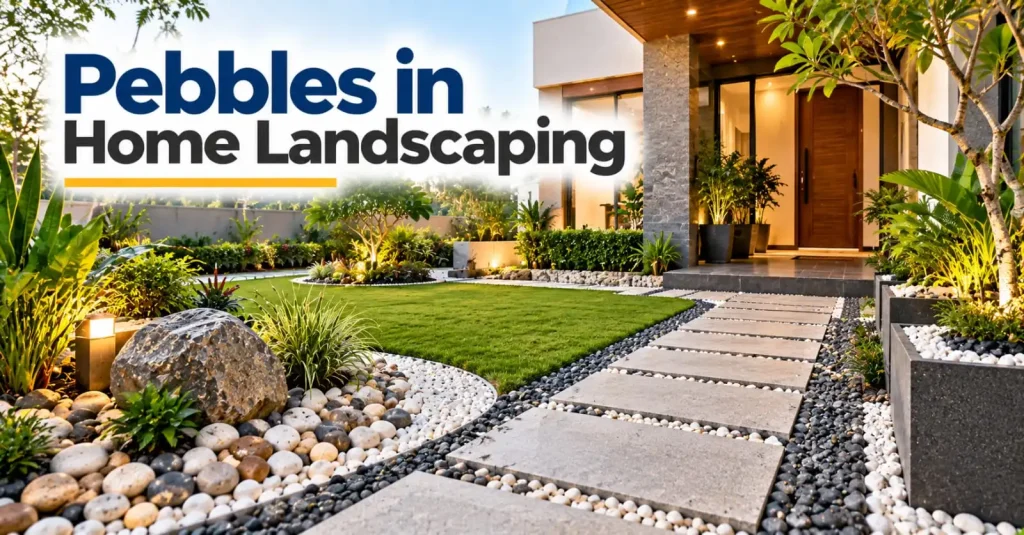
A beautiful home does not end at the front door. The small outdoor spaces also shape how a home feels. Sometimes, a few well-placed plants can change the look of a space. At other times, the simplest materials make a huge difference. Pebbles are one such material. They bring texture and natural character to outdoor spaces. They look simple. Yet, with the right arrangement, they can make an ordinary space feel more pleasing. Read on this blog post to find types and uses of pebble stones for homes.
What Are Pebbles?
Pebbles are small stones that are round in shape. They form through weathering and erosion. Manufacturers also process stone materials to form pebbles. The common applications of pebble stones are as follows:
- Garden decoration
- Pathways
- Outdoor design applications
The most interesting part of using pebbles is that they have a smooth surface. This often develops as water and natural forces wear down rough edges. Pebbles are available in different sizes and colors. Designers often use decorative pebbles for homes to create a natural finish. However, each application requires a different type of pebble. This is why it is advisable to choose materials based on your use and available space.
What Are the Different Types of Pebbles for Landscaping in a Home?
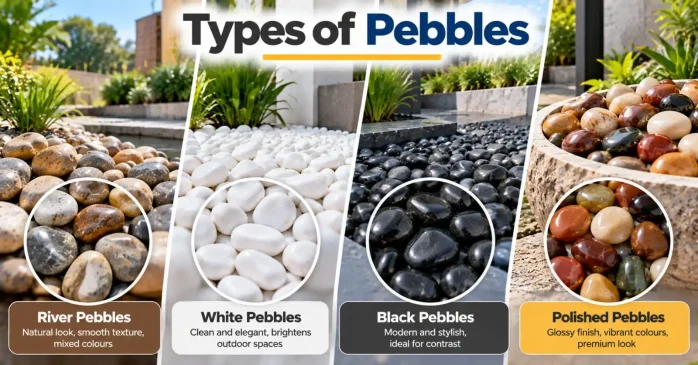

Given below are the different types of pebble stone for landscaping in a home:
- River Pebbles
This type of pebble stone develops naturally in water environments. These pebbles have a flowing movement. This is why they have round edges and smooth surfaces. The best part? River pebbles have earthy colors that provide a contemporary look to your space. The common uses of river pebble stones are as follows:
- Garden beds
- Water features
- Decorative borders
- Pathways with suitable installation
Designers often recommend river pebble stones for people who want an outdoor space to feel close to nature.
- White Pebbles
White pebbles are more suitable for contemporary landscaping. Why? This is because of their light and soft color tone. The best part is the white contrast against green plants and dark surfaces. White pebbles make small outdoor areas look brighter. But every coin has two sides. This type of stone provides a contemporary look, but stains are more visible on them.
- Black Pebbles
If you want a bold and modern look, black pebble stones are more suitable. The common uses of black pebbles are as follows:
- Light walls
- Concrete surfaces
- Green foliage
Their dark color can highlight individual plants. They also work as a contrast material in minimalist gardens. It is advisable to consider the local climate before using dark stones in open areas. This is because dark surfaces absorb more heat in direct sunlight.
- Polished Pebbles
This type of pebble stone is popular because of its smooth and shiny finish. Manufacturers polish these stones to provide this finish to pebbles. They suit decorative applications where appearance matters most. You can use them in planters, indoor arrangements, and selected outdoor features. For areas that become slippery when wet, choose the surface finish carefully.
What Are the Common Uses of Pebble Stones Around the Home?
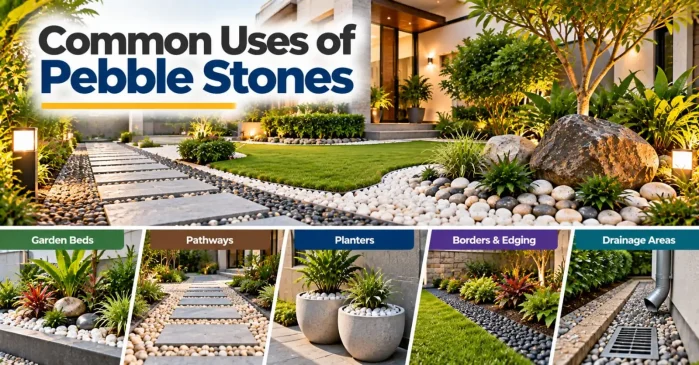

The following are the common applications of pebble stones around the home:
- Garden Decoration
One of the easiest uses is covering exposed soil around plants. Pebbles create a neat visual boundary. They can also reduce direct soil exposure. Use a suitable landscape fabric where needed. Make sure the arrangement does not block the airflow or water needs of the plants.
- Pathways and Walkways
Pebble pathways can add character to a garden. They suit homes with natural or rustic landscaping themes. It is necessary to choose a surface that ensures smooth movement. A landscape professional can help select an appropriate installation method.
- Drainage Areas
Some landscaping designs use stones to support water movement. Pebbles can form part of a drainage arrangement when the design includes suitable grading and drainage layers.
- Borders and Edges
Pebbles can define the boundary between a lawn, flower bed, and paved surface. This creates a more organized appearance. It also helps separate different landscape materials.
What Are the Pebble Landscaping Ideas for Home?
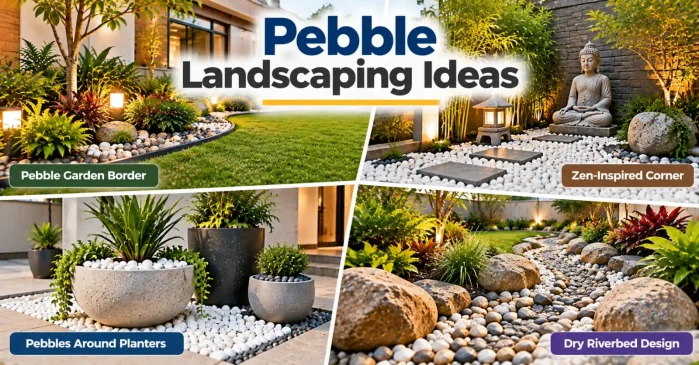
Given below are the pebble stone landscaping ideas for home:
- Create a Pebble Garden Border
Designers often use pebbles around flower beds and shrubs. This is because the border separates the plants from the lawn or pathway. It is necessary to keep the border wide for the required design. Most importantly, you should avoid placing stones where they could obstruct maintenance or walking.
- Design a Small Zen-Inspired Corner
A quiet corner with pebbles provides a calm visual quality to your garden. Use a limited color palette. Add larger stones as focal points. You can include ornamental grasses or suitable low-maintenance plants. The goal is to maintain balance rather than fill every empty space. This idea works well in courtyards, balconies with appropriate weight considerations, and compact gardens.
- Add Pebbles Around Planters
Planters often leave exposed soil around their base. A layer of decorative pebbles can improve the overall appearance. Try contrasting colors. For example, darker planters with lighter stones create a defined look.
- Build a Dry Riverbed Design
A dry riverbed uses stones and pebbles to suggest the shape of a natural stream. You can create a curved arrangement through a garden. Use larger stones along the edges and smaller pebbles in the center. The design works best when the shape follows the landscape naturally.
The Final Words
Pebbles may look like small details. But they can influence how an outdoor space feels. They add contrast to plants. They define garden edges. They bring texture to otherwise plain surfaces.
The best landscaping design is not always the most expensive one. It is the one that fits your space, climate, and daily needs. Start with a clear idea. Choose the right stones. Plan the installation properly.
A few thoughtful details can help your home’s outdoor spaces feel more complete.
FAQs
1. What are pebbles mainly used for?
Pebbles are mainly used for landscaping, garden decoration, pathways, borders, planters, and outdoor features. They can also support selected drainage applications. Their use depends on pebble size, type, surface, installation method, and the specific requirements of the landscape design.
2. Which pebbles are best for home gardens?
River pebbles, white pebbles, and decorative landscaping stones are popular choices for home gardens. The best option depends on color, size, texture, durability, and maintenance needs. Choose pebbles that complement plants, pathways, and other outdoor elements for a balanced garden design.
3. Are pebbles good for drainage?
Pebbles can support drainage when used as part of a properly designed drainage system. They create spaces for water movement around suitable areas. However, pebbles alone do not guarantee better drainage. Soil conditions, grading, drainage layers, and installation methods also matter.
4. Can I use pebbles on a balcony?
Yes, you can use decorative pebbles on a balcony for planters, small garden areas and design features. However, check the balcony’s load capacity and waterproofing first. Pebbles can add significant weight, so professional guidance may be needed for larger installations.
5. How do I keep white pebbles clean?
Keep white pebbles clean by removing leaves, dirt, and debris regularly. Rinse suitable pebbles with clean water when needed. For stubborn stains, use a gentle cleaning method that suits the stone and does not harm nearby plants, soil, or surfaces.