Wall Louvers: Types, Designs and Applications

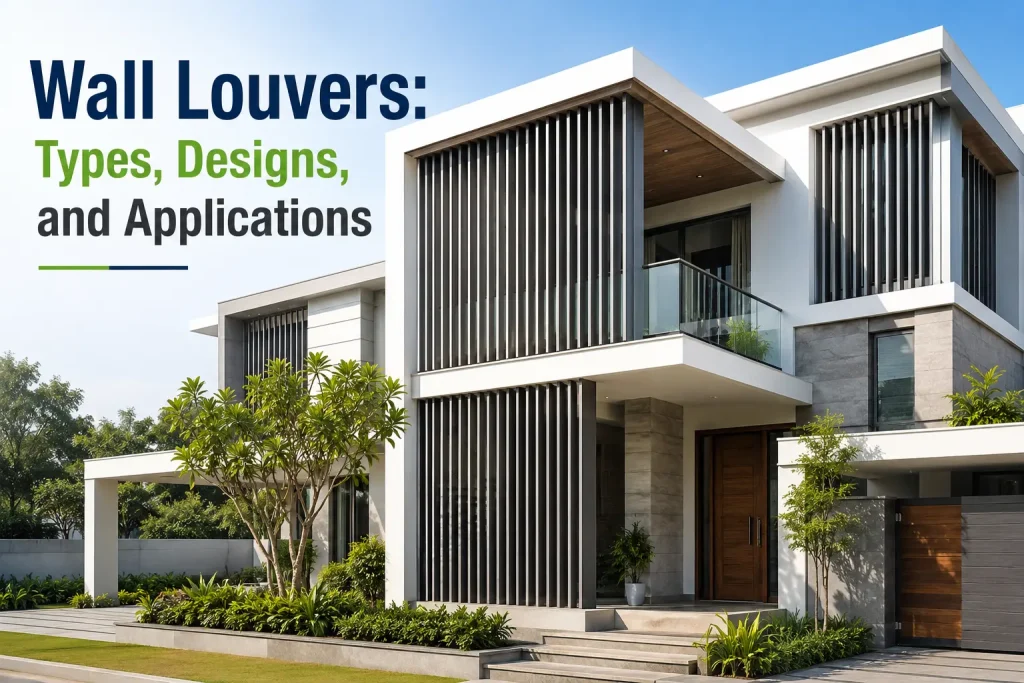
Wall louvers are lungs for the building. Human lungs let fresh air in and protect our bodies. Similarly, louvers for walls improve ventilation in buildings. But what exactly is a wall louver? It is an element that engineers install on exterior and interior walls. It is a series of angled slats that are fixed within a frame. It is popular in modern homes because it allows air to flow freely. Moreover, it prevents the entry of rainwater and other unwanted particles.
Read on this blog post to find out the common applications and different types of louvers.
Quick Answer
Wall louvers are angled slats that workers fix within a frame. Modern homeowners install them in both interior and exterior areas. The primary purpose of wall louvers is to improve natural ventilation. Moreover, they help you maintain privacy and safety during weather conditions. Some of the common materials used to make louvers for walls are:
- Aluminium
- Steel
- Wood
- PVC
- Fibre Cement
What Are the Different Types of Wall Louvers?
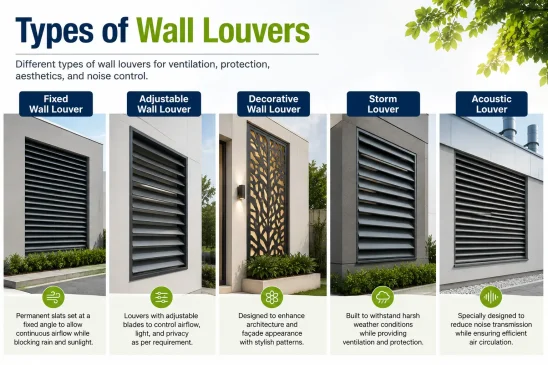

Given below are the different types of wall louvers:
- Fixed Wall Louver
This type of louver for walls has blades set at a permanent angle. Engineers often recommend them because they are durable and demand low maintenance. The most common applications of fixed wall louvers are spaces where continuous airflow is necessary.
- Adjustable Wall Louvers
These louvers have movable blades. Thus, they regulate airflow as per the weather or ventilation needs. You will usually find adjustable wall louvers in office buildings and commercial spaces.
- Decorative Wall Louvers
Modern architecture uses wall louvers as design elements. The common decorative louvered wall panel systems are available in the following:
- Timber finish
- Powder-coated aluminium
- Textured metal
- Custom geometric patterns
Interior designers often use decorative wall louvers to create façades and balcony screens.
- Storm Louvers
It is ideal for areas with frequent rainfall or strong winds. Why? This is because they minimize water penetration while allowing fresh air to circulate. Buildings in coastal cities and regions with heavy monsoons often require storm louvers.
- Acoustic Louvers
There are many other concerns apart from ventilation. Some equipment, like diesel generators or compressors, creates noise. Acoustic louvers help you reduce noise levels and they restrict airflow.
What Are the Right Materials to Choose for Wall Louvers?
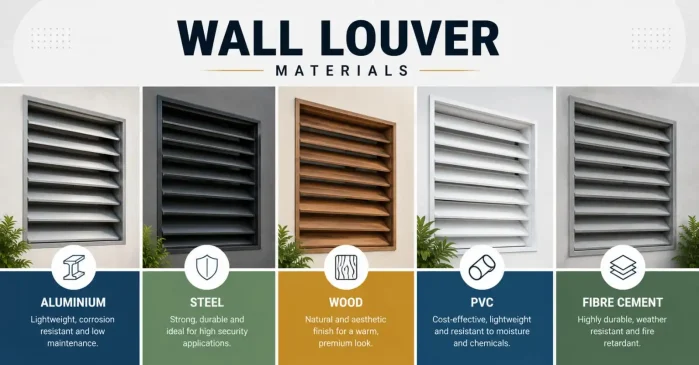

Given below are the materials to consider when choosing the louvers for the wall:
- Aluminium
This material dominates modern wall louvers due to its following properties:
- Lightweight
- Resist corrosion
- Perform well in different weather conditions
The best part? Powder-coated aluminium is available in different colors. Hence, it becomes easy to match different architectural styles.
- Steel
Steel louvers are ideal for homeowners who seek strength more than appearance. The engineers often advise it for industrial plants and manufacturing facilities. This is because they manage heavy-duty environments efficiently. The experts recommend protective coatings on steel louvers to prevent corrosion.
- Wood
Wood adds warmth to wall louvers. This is why architects often advise louvered wall panel systems for luxury homes and cafes. However, wood material louvers require regular polishing or weatherproof treatment to maintain their appearance.
- PVC
PVC louvers are lightweight and easy to install on walls. The most intriguing part is that they resist moisture efficiently. Hence, they are commonly used in bathrooms and kitchens.
- Fibre Cement
Fiber cement is popular because it not only provides durability but also resists weather. It is mostly used in exterior applications because they require less maintenance.
What Are the Popular Wall Louver Designs?
Contemporary homes use vertical aluminum fins across the front elevation. Why? This is because they create depth and shade while maintaining privacy. However, commercial buildings integrate horizontal louvers into glass facades. This makes the harsh sunlight soft and reduces heat gain.
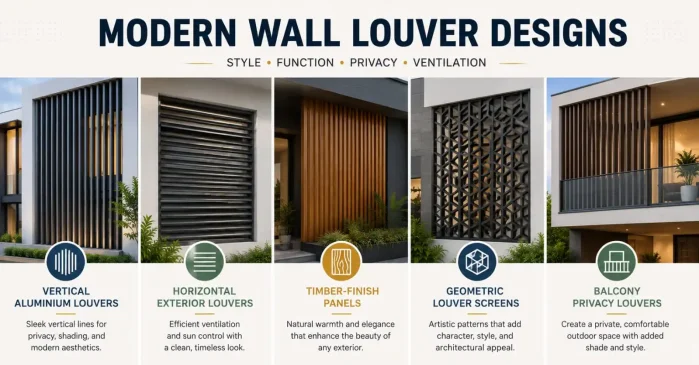
Given below are some trending wall louver designs:
- Vertical aluminium louvers for modern facades
- Horizontal exterior wall louvers for ventilation
- Timber-finish decorative panels
- Laser-cut metal louver screens
- Wood-look composite louvers
- Slim minimalist black aluminium profiles
- Custom geometric louvered wall panel systems
- Privacy screens for balconies and terraces
What Are the Common Applications of Wall Louvers?
Given below are the common areas where architects use louvers for walls:
- Residential homes
- Commercial buildings
- Industrial buildings
- Parking structures
- Hospitals
- Schools
- Warehouses
- Factories
- Data centers
What Are the Factors to Consider When Choosing the Wall Louvers?
Below are the factors to consider when choosing the louvers for walls:
- Climate
It is necessary to understand the weather conditions in your area. Storm louvers are especially important for areas with heavy rainfall. However, you can install other types of wall louvers in normal climatic regions.
- Material
The louver for walls material must depend on the climatic conditions. This is because aluminum performs well in most environments. But wood often fail to last longer in heavy rainfall.
- Ventilation
Some rooms in the home require higher ventilation than others. Hence, you can use minimal flat louvers instead of decorative feature walls in these rooms.
- Building Orientation
The face of your building is also an important factor to consider when choosing the right wall louver. It is advisable to choose shading louvers if your building faces south and west directions.
- Maintenance
Wood louvers require regular maintenance. It demands your extra attention and adds expenses. Thus, make sure you assess your budget and maintenance needs carefully before a final decision.
The Final Words
Good architecture is more about the performance of building. The wall louvers help you make space feel comfortable. The best part is they enhance the overall appearance of your building. There are different types of louvers for walls. This means you can compare and select the one that suits your needs. But make sure you choose the right louvered wall panel for the best performance.
FAQs
1. What are wall louvers used for?
Wall louvers are used to improve natural ventilation while reducing heat, dust, rain, and direct sunlight. They’re commonly installed in homes, offices, factories, parking structures, and utility rooms to maintain airflow and enhance building comfort without compromising privacy.
2. Which material is best for wall louvers?
Aluminium wall louvers are the most popular choice because they’re lightweight, rust-resistant, durable, and low maintenance. Wood, steel, PVC, and fibre cement are also suitable, depending on the building’s design, climate, and ventilation requirements.
3. Are wall louvers suitable for residential homes?
Yes. Louvers for wall installations are ideal for homes, especially in bathrooms, balconies, staircases, utility rooms, and façades. They improve ventilation, increase privacy, reduce heat build-up, and add a modern architectural look.
4. Can wall louvers reduce cooling costs?
Yes. Wall louvers improve natural airflow and reduce heat gain, helping maintain cooler indoor spaces. When combined with passive building design, they can reduce dependence on air-conditioning and improve overall energy efficiency.
5. What is a louvered wall panel?
A louvered wall panel is a panel with angled slats that allows continuous airflow while limiting rain, dust, and direct sunlight. It combines ventilation, privacy, and architectural appeal, making it suitable for residential and commercial buildings.
6. How often should wall louvers be maintained?
Most wall louvers need cleaning every three to six months to remove dust and debris. Aluminium and PVC require minimal maintenance, while wooden louvers should be inspected periodically and recoated when necessary to protect against weathering.