Types of Door Frames in Construction: Materials, Sizes & Uses

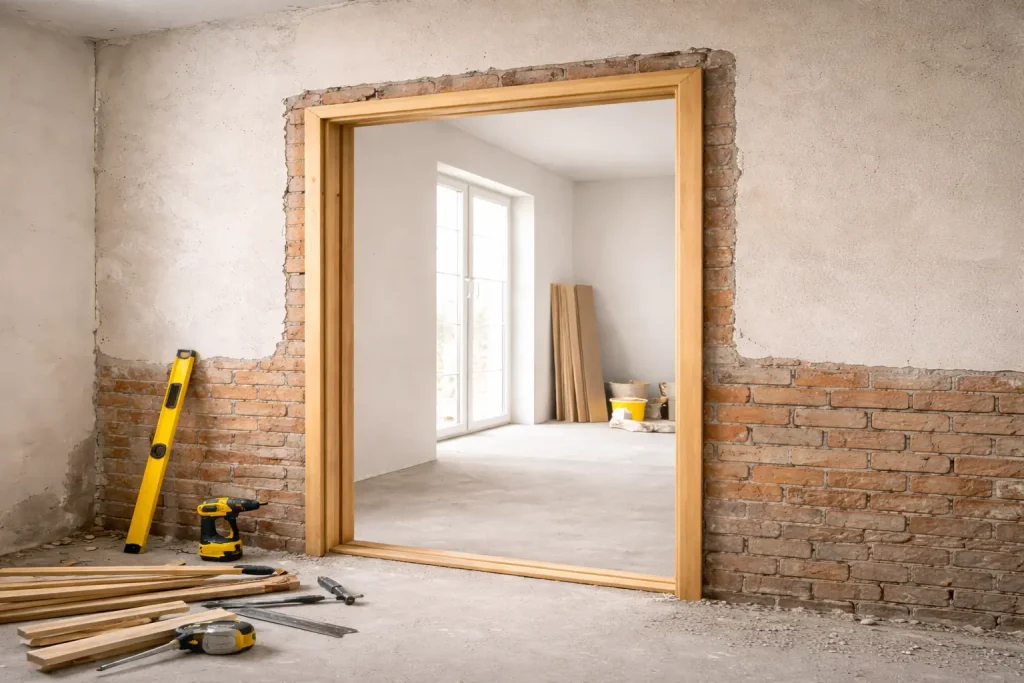
When we talk about doors in a building, most people immediately think about the door panel—its design, color, or finish. But ask any architect, civil engineer, carpenter, or site contractor, and they’ll tell you something more important: the real strength of a door starts with the frame.
A door frame is the structural boundary that holds the door in place. It transfers load to the wall, keeps the door aligned, and ensures the door opens and closes smoothly for years. Choosing the right types of door frames can affect durability, security, maintenance, and even the aesthetics of your space.
On construction sites, this is a common discussion. An architect might prioritize design and finish, the civil engineer checks structural compatibility, the contractor worries about installation and cost, and the carpenter focuses on workability. All these viewpoints shape the decision about door frame types in construction.
Let’s walk through the most common door frame materials, sizes, and uses, just the way professionals discuss them on real projects.
Why Door Frames Matter in Construction

Before we explore the types of door frames, it helps to understand why they are so important.
A door frame does several jobs at once:
- Supports the door weight
- Transfers loads to the wall
- Keeps the door aligned
- Provides fixing points for hinges and locks
- Adds finishing aesthetics to openings
If the frame is weak or poorly installed, even the best door shutter will start sagging, scraping, or misaligning.
This is why builders often say: “Install the frame right, and the door will behave.”
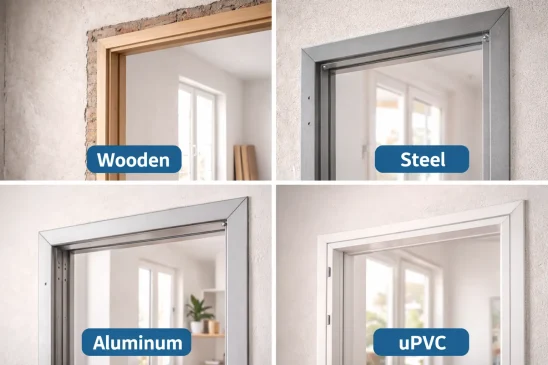
Wooden Door Frames: The Traditional Favorite
Among all door frame materials, wooden door frames are probably the most familiar. They’ve been used for centuries in homes, temples, and heritage buildings.
Most carpenters prefer hardwood varieties like teak, sal, or hardwood engineered timber because they are strong and relatively resistant to moisture.
Why professionals still choose wooden frames
Architects love wood because it blends beautifully with interior finishes. Carpenters like it because it’s easy to cut, shape, and repair on site.
Typical advantages include:
- Natural appearance and warmth
- Easy to customize or carve
- Good strength for residential doors
- Compatible with most door shutters
Where they work best
You’ll usually see wooden door frames in:
- Residential homes
- Bedroom doors
- Interior doors
- Premium villas or heritage-style designs
A practical note from site experience
Contractors often remind clients that wood needs termite treatment and polishing. Without proper care, moisture or insects can damage the frame over time.
Steel Door Frames: Strong and Durable
In many modern buildings, especially apartments and commercial projects, steel door frames are becoming a popular choice.
These frames are typically made from pressed steel sheets that are welded and powder-coated for durability.
Why engineers prefer steel frames
From a structural perspective, steel frames offer excellent durability and stability. They resist warping, termite attacks, and moisture damage.
Benefits include:
- High strength and durability
- Fire resistance options available
- Termite-proof and rot-resistant
- Low maintenance
Typical applications
You’ll commonly find steel door frames in:
- Apartment buildings
- Hospitals
- Schools and offices
- Industrial facilities
Contractor’s viewpoint
Steel frames are often installed before plastering, so wall finishing needs careful coordination. But once fixed properly, they can last decades with minimal maintenance.
Aluminium Door Frames: Lightweight and Modern
If you walk through modern apartments or office spaces today, you’ll notice the increasing use of aluminium door frames.
Aluminium is lightweight, corrosion-resistant, and perfect for contemporary designs.
Why architects use aluminium
Architects like aluminium frames because they create clean lines and slim profiles, which work well with glass doors or minimal interiors.
Key advantages include:
- Lightweight but strong
- Rust-resistant
- Modern appearance
- Low maintenance
Common uses
Aluminium frames are often used for:
- Bathroom doors
- Office partitions
- Balcony doors
- Glass doors
They’re not usually the first choice for heavy wooden entrance doors, but for lighter doors they perform very well.
uPVC Door Frames: Budget-Friendly and Weather Resistant
Another option gaining popularity in residential construction is uPVC door frames.
uPVC (Unplasticized Polyvinyl Chloride) is a type of plastic widely used for windows and doors.
Why homeowners consider uPVC
The biggest advantage of uPVC door frames is their resistance to moisture and corrosion. This makes them ideal for wet areas.
Benefits include:
- Water and termite resistant
- Low maintenance
- Affordable compared to hardwood
- Easy installation
Best locations for uPVC frames
Builders usually recommend them for:
- Bathroom doors
- Utility areas
- Balcony doors
- Coastal regions
However, they may not provide the same premium look or strength as wood or steel for main entrances.
Concrete Door Frames: Strong but Less Common Today
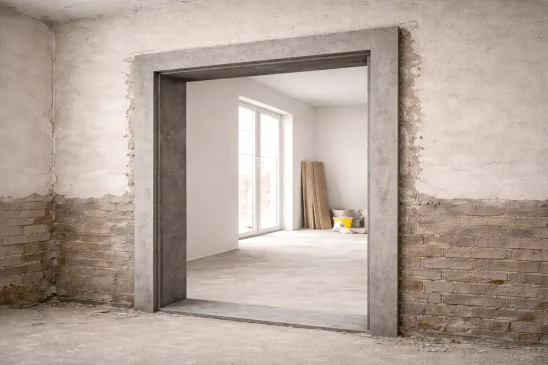
In some parts of India, especially older government housing or budget housing schemes, concrete door frames are used.
These are typically precast reinforced cement concrete (RCC) frames installed during masonry construction.
Why some projects still use concrete frames
Advantages include:
- Very durable
- Termite-proof
- Resistant to weather and moisture
Limitations contractors point out
Despite their strength, concrete frames have a few drawbacks:
- Heavy and difficult to install
- Limited design flexibility
- Hard to repair or modify
Because of these reasons, many modern buildings prefer steel or aluminium frames instead.
Standard Door Frame Sizes in Construction
When discussing door frame sizes, contractors often follow standard dimensions for efficiency and compatibility with doors.
Typical residential door frame sizes include:
| Door Type | Typical Size (Width × Height) |
| Main Door | 1000 × 2100 mm |
| Bedroom Door | 900 × 2100 mm |
| Bathroom Door | 750 × 2100 mm |
| Kitchen Door | 800 × 2100 mm |
Frame thickness usually depends on the wall thickness, often:
- 100 mm wall
- 115 mm wall
- 230 mm wall
Architects adjust frame dimensions depending on plaster thickness and finishing requirements.
Choosing the Right Door Frame Material
When selecting between different door frame types in construction, professionals typically consider five main factors.
1. Location of the door
Interior doors may work well with wood, while bathrooms benefit from uPVC or aluminium.
2. Budget
Wooden frames can be expensive depending on timber quality.
3. Durability needs
Steel frames offer the longest lifespan with minimal maintenance.
4. Design preference
Architects often choose materials that match the interior design style.
5. Environmental conditions
Coastal or humid areas require moisture-resistant materials.
In real projects, the decision usually balances engineering practicality and architectural aesthetics.
The Bottom Line
If you ask professionals on a construction site about the best types of door frames, the answer is usually: “It depends on the building and the purpose.”
- Wooden door frames bring warmth and classic appeal.
- Steel door frames offer durability and strength.
- Aluminium door frames provide a modern, lightweight solution.
- uPVC door frames are practical for wet areas.
- Concrete door frames are extremely durable but less flexible in design.
The key is choosing the right door frame materials and sizes based on the function of the door, building environment, and design goals.
After all, a well-chosen frame ensures the door works smoothly for decades—and that’s something every architect, engineer, carpenter, and contractor appreciates.
FAQs: Types of Door Frames in Construction
1. What are the main types of door frames used in construction?
The most common types of door frames include wooden door frames, steel door frames, aluminium door frames, uPVC door frames, and concrete door frames.
2. Which door frame material is best for homes?
For residential homes, wooden door frames are often preferred for interiors, while steel or aluminium frames are used for durability and low maintenance.
3. What is the standard size of a door frame?
Standard residential door frame sizes are typically around 2100 mm in height, with widths ranging from 750 mm to 1000 mm, depending on the door type.
4. Are steel door frames better than wooden frames?
Steel frames are more durable, termite-resistant, and low maintenance, but wooden frames offer a more traditional and aesthetic appearance.
5. Where are uPVC door frames commonly used?
uPVC frames are commonly installed in bathrooms, balconies, and utility areas because they resist moisture and corrosion.
6. Are concrete door frames still used today?
Yes, but less frequently. Concrete door frames are durable but heavy and less flexible in design, so many modern projects prefer steel or aluminium.
7. How thick should a door frame be?
Door frame thickness usually matches the wall thickness, commonly 100 mm, 115 mm, or 230 mm in residential construction.