Types of Aluminium Windows: Sliding, Casement, Tilt & Turn Explained

Have you ever been to a half-finished site? You will find bare walls, dust, and workers arguing about measurements. The one thing that the homeowner is always busy with is the aluminum windows. Windows aren’t just openings but a channel to proper ventilation.
When it comes to modern homes today, there are types of windows that lead the conversation. Not just because they look sharp but because they survive Indian conditions without drama.
They hold up well in rain, heat, and dust. But here’s where most people get stuck. Sliding? Casement? Tilt & turn? All sounds fancy. But what actually works for your home?
Read on to find out the details!
Why Are Aluminium Windows Showing Up Everywhere?
Before we jump into the different types of aluminum windows, it’s worth understanding why aluminum is everywhere now. Earlier, wood and steel dominated. But wood swells in monsoon and steel rusts. Thus, both need maintenance most homeowners don’t have time for.
That’s where aluminum windows changed the game. They’re:
- Lightweight but strong
- Doesn’t rust
- Low maintenance
- Sleek profiles for modern aluminum window design
- Works well with glass for insulation
What Are the Different Types of Aluminum Windows?
The different types of aluminum windows are explained below:
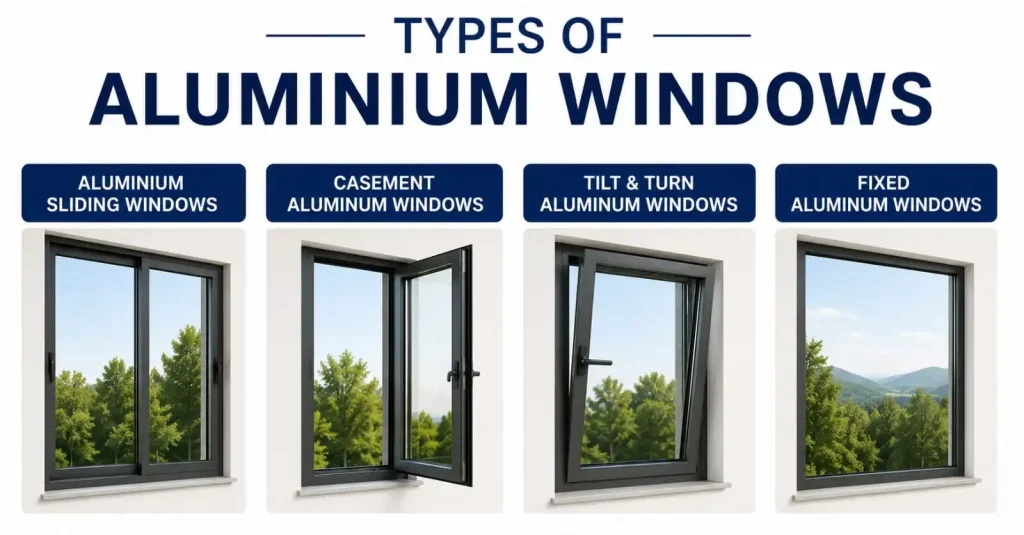
Aluminium sliding windows
If you’ve seen any modern apartment balcony, you’ve already seen this type. They run on horizontal tracks. Panels slide past each other with no opening outward or inward.
Where they work best:
- Bedrooms with limited space
- Balconies
- High-rise apartments
- Living rooms facing roads
Why people choose them:
- Save space, which means no swing area needed
- Easy to operate
- Clean, modern aluminum window design
- Less obstruction with grills
But here’s the honest part. Sliding windows don’t give full ventilation like casement ones. Only half the window opens at a time. We’ve seen this become a problem in kitchens or humid areas.
Tip: If you’re using aluminum sliding windows, make sure the track quality is solid.
Casement Aluminum Windows
It is an old concept, but it still ranks when it comes to airflow. These are the ones that open like a door. They are hinged on one side. Simple, right? But still one of the most effective types of aluminum windows.
Where they work best:
- Kitchens
- Bathrooms
- Independent houses
- Rooms needing cross ventilation
Why People Choose Them:
- Better sealing that keeps dust and noise out
- Full opening for ventilation
- Works well with mesh systems
Note: They need space to open. You can’t use them where furniture blocks movement.
Tilt & Turn Aluminum Windows
A lot of homeowners hear this name and think it’s complicated. It’s not. It’s just a window that does two things: tilt open slightly from the top or open fully like a casement
Think of it like a multi-mode fan.
Where they work best:
- Premium apartments
- Bedrooms with AC usage
- Noise-sensitive areas
Why people choose them:
- Controlled ventilation
- Safe for homes with kids
- Better insulation
Tilt and turn aluminum windows cost more than regular aluminum windows. They also require proper installation. Bad fitting results in no performance.
Tip: If budget allows, tilt & turn is one of the smartest types of aluminum windows today.
Fixed Aluminum Windows
This one’s often overlooked. Fixed windows don’t open at all. Sounds useless? Not really. They’re used when the goal is light, not ventilation.
Where they work best
- Staircases
- Living room feature walls
- Office spaces
- High-rise buildings
Why people choose them
- Best insulation (no air leakage)
- Low maintenance
- Clean, modern look
Note: Remember that there is no ventilation. So always combine them with other types of aluminum windows.
Choosing the Right Aluminium Window Design for Your Home
This is where most decisions go wrong. People pick based on looks alone. But windows are functional elements. Here’s a guide to follow when choosing the right aluminum window design:
- Think about space first
The space in your room matters a lot. Aluminum sliding windows are ideal for small rooms. However, large rooms should have casement or tilt-and-turn windows.
- Think about airflow
How’s the environmental condition in your area? If it’s a hot region, casement aluminum windows are perfect. But sliding works more for a moderate climate.
- Think about maintenance
Aluminum window design should also align with your lifestyle. It is usually advisable to use sliders in busy households. Otherwise, you can use tilt & turn windows for long-term homes.
- Think about budget
The prices for different types of aluminum windows vary. The sliding window is less expensive than a tilt-and-turn window. Choose the window type that aligns with your budget. Good homes usually mix different types of aluminum windows.
What Are the Tips to Maintain the Aluminum Windows at Home?
The truth is that aluminum windows require low maintenance. Given below are some tips you can follow:
- Clean tracks every few weeks (especially for aluminum sliding windows)
- Check hinges annually
- Avoid forcing stuck panels
That’s it. No repainting or polishing is required. In comparison to wood, it’s a relief.
Final Thought
Windows are one of those things you don’t think about until they start bothering you. And fixing them later becomes painful. So take time while choosing your types of aluminum windows. Look beyond catalog photos. Think about your daily life, including morning light, summer heat, and monsoon rain. Because a good aluminum window design doesn’t just look right. It quietly makes your home feel right.
FAQs: Types of Aluminium Windows
1. Which is better: sliding or casement aluminum windows?
It depends on your space and usage. Sliding aluminum windows are ideal for compact areas since they don’t open outward and save space. Casement windows are fully open and allow proper ventilation.
2. Are aluminum windows good for Indian weather?
Yes, aluminum windows perform very well in Indian conditions. They resist heat, humidity, rain, and dust without warping or rusting. Unlike wood or steel, aluminum requires minimal maintenance and maintains its strength even in extreme climates. It is a reliable long-term choice.
3. What is the most durable aluminum window design?
All types of aluminum windows are durable, but fixed and sliding windows tend to last longer. This is because they have fewer moving parts, which reduces wear and tear over time. Proper installation and good-quality hardware further enhance durability and ensure smooth performance for years.
4. Are tilt & turn windows worth the cost?
Tilt & turn aluminum windows are worth the investment if you value versatility. They allow both inward opening and top tilting for ventilation. This design improves insulation, safety, and ease of cleaning. This type of aluminum window is ideal for modern homes seeking both functionality and comfort.
5. Do aluminum sliding windows reduce noise?
Aluminum sliding windows can reduce outside noise to some extent, especially when sealed properly. However, it is advisable to use double-glazed or laminated glass for effective soundproofing. The combination of aluminum frames and high-quality glass significantly improves acoustic insulation in busy or noisy environments.