Tensile Structure in Architecture: Types, Materials and Design Applications

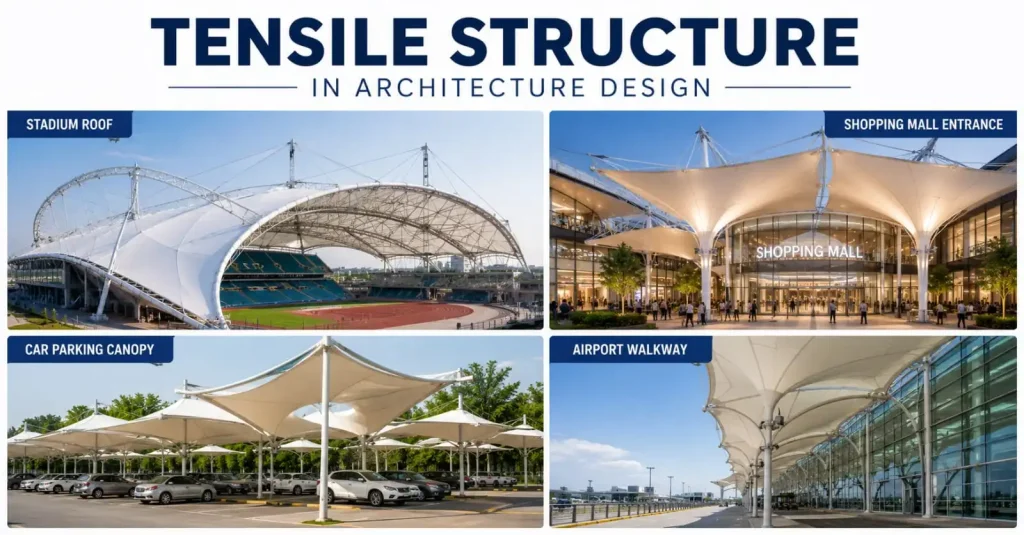
Take a look around any modern city and you will notice something interesting. The entrance of a shopping mall is covered in a sleek white canopy. A cricket stadium has a roof that appears to float in the air. The waiting area outside an airport stays cool under a graceful fabric shade.
Even residential villas now feature elegant car parking tensile structure designs. These structures seem lightweight and delicate at first. But don’t let appearances fool you. These are examples of tensile structures. It is one of the smart innovations in modern architecture. Tensile roof structures rely on balanced tension to create large spaces with little material. Read on this blog post to know more about tensile structures in architecture.
What Is a Tensile Structure?
A tensile structure is a system where the primary load carries through tension rather than compression. They resist loads through their weight and thickness. But why exactly does it work? A tensile roof structure works due to its fabric or membrane. It stretches tightly between supporting cables. The stable form distributes force efficiently.
The result?
- Large column-free spaces
- Faster construction
- Lower structural weight
- Modern architectural appeal
The concept isn’t new.
Traditional tents have existed for thousands of years. What has changed is the technology behind modern membranes, high-strength steel cables, and weather-resistant fabrics. Architects use engineering software in the present to design tensile forms.
How Does a Tensile Fabric Structure Work?
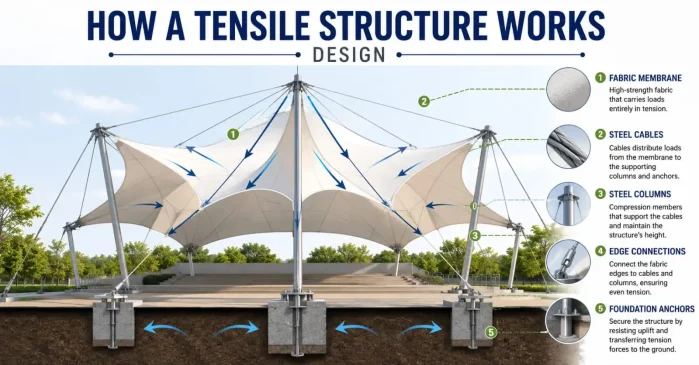

Imagine holding a bedsheet from all four corners. It hangs loosely. Now pull each corner tightly. The sheet immediately becomes stable. That’s the basic principle behind every tensile fabric structure. Instead of resisting forces through mass, the membrane stays under continuous tension while steel cables and support members maintain its shape.
Most tensile systems consist of:
- Steel columns
- High-tensile cables
- Fabric membrane
- Edge connections
- Foundation anchors
Every component works together. If one element loses tension, the entire geometry changes. That’s why precision during design and installation is extremely important.
What Are the Common Types of Tensile Structures?
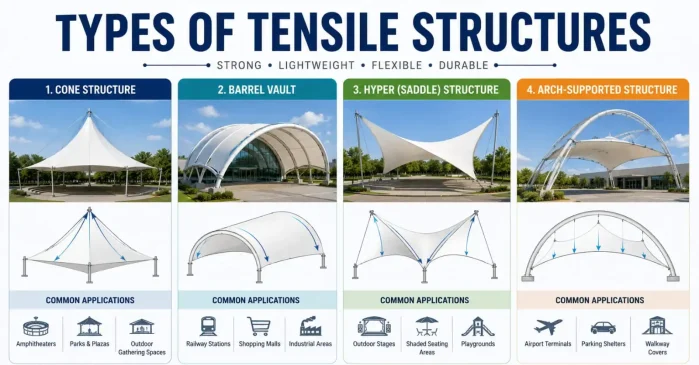
All the tensile structures are different. Architects select the most suitable tensile structure according to aesthetics and functionality. Given below are some common types of tensile structures:
- Steel Components
Galvanized structural steel provides the following:
- Corrosion resistance
- High strength
- Long service life
- Cables
High-tensile galvanized steel cables hold the membrane in place while transferring loads safely to the supporting framework.
- Cone Tensile Structure
They have a central mast with outward fabric stretches. The common applications of cone tensile structures are:
- Parks
- Rooftop cafes
- School courtyards
- Amphitheatres
The symmetrical shape also makes it efficient to drain the rainwater.
- Barrel Vault Structures
Have you seen a curved tunnel? Barrel vault structures resemble them. The architects mostly use them for the following:
- Walkways
- Metro stations
- Stadium entrances
- Commercial corridors
The continuous arch not only provides strength but also covers larger spans.
- Hyper Structures
A dramatic architectural appearance that occurs when handling structural loads is due to hyperstructures. They form twisting and saddle-shape roofs. There are many iconic tensile roof structures built through this geometry.
- Arch-supported Structures
These types of arches support the fabric membrane. You often find them at the below places:
- Airports
- Exhibition centres
- Sports complexes
- Event venues
Why Are Tensile Roof Structures Becoming So Popular?
There’s a reason why more architects recommend a tensile roof structure today than they did twenty years ago. It solves several practical problems at once. Given below are some of these problems:
- Lightweight Construction
A conventional RCC roof adds considerable dead load. A tensile structure is significantly lighter, reducing the load transferred to the foundation.
- Faster Installation
Depending on size, many tensile canopies can be completed in just a few weeks. This makes them attractive for commercial projects operating under tight deadlines.
- Large Column-Free Areas
Nobody likes pillars blocking movement. Whether it’s a stadium, exhibition hall or school assembly area, a tensile fabric structure provides uninterrupted open space.
- Energy Efficiency
Many membrane materials reflect sunlight while allowing diffused daylight inside. This reduces artificial lighting requirements during daytime. According to industry studies, high-performance architectural membranes can reflect up to 70–80% of solar radiation, helping lower indoor heat gain.
What Are the Design Applications of Tensile Structures?
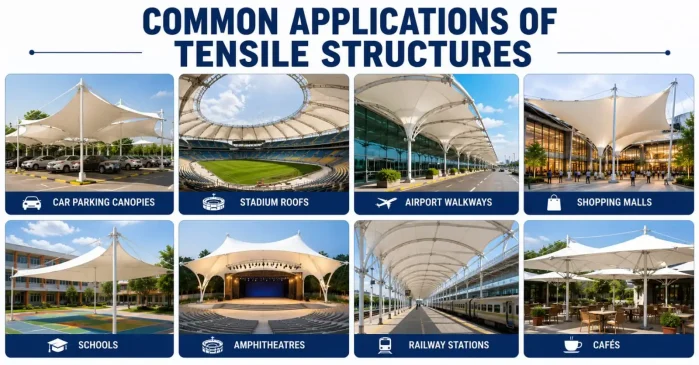
One of the biggest strengths of a tensile structure is its versatility. It fits equally well into residential, commercial and public infrastructure projects.
- Car Parking Tensile Structure
Perhaps the most common application today. A car parking tensile structure protects vehicles from the following:
- Harsh sunlight
- Rain
- Bird droppings
- Falling leaves
Compared to traditional concrete sheds, tensile parking covers are lighter, quicker to install and visually more attractive. Many residential societies, hospitals and office campuses now prefer this solution.
- Sports Stadiums
Large-span tensile roof structure systems allow spectators to stay protected without obstructing views. Several international stadiums use tensile membranes because they combine structural efficiency with striking architecture.
- Airports and Railway Stations
Passenger movement demands wide open spaces. The tensile roof provides shade but it maintains a clean and modern appearance.
- Schools and Institutions
Assembly areas, playgrounds and open courts often use tensile roofs to create comfortable shaded spaces.
Final Thoughts
Good architecture is not always about building heavily; sometimes it is about building smart. A tensile structure with a good design proves that strength comes from various factors. The right balance of engineering and a lightweight tensile fabric structure covers enormous spaces. It makes the space elegant and durable.
FAQs
1. What is a tensile structure in architecture?
A tensile structure is a lightweight architectural system that uses high-strength fabric, steel cables, and supporting masts to create large, open spaces. Unlike conventional roofs, it relies on tension rather than heavy beams, making it durable, flexible, and visually striking.
2. Which material is commonly used in a tensile fabric structure?
The most common tensile fabric structure materials include PVC-coated polyester, PTFE-coated fiberglass, and ETFE membranes. These materials are lightweight, weather-resistant, UV-stable, and durable, making them ideal for long-span roofs, canopies, and architectural coverings.
3. What is a car parking tensile structure?
A car parking tensile structure is a fabric canopy supported by steel columns and tension cables. It protects vehicles from sunlight, rain, dust, and UV exposure while providing an attractive, low-maintenance, and cost-effective parking solution for residential and commercial spaces.
4. How long does a tensile roof structure last?
The lifespan of a tensile roof structure typically ranges from 15 to 30 years, depending on the membrane material, installation quality, and maintenance. Premium materials like PTFE and ETFE can last even longer under suitable environmental conditions.
5. Are tensile structures waterproof?
Yes. Modern tensile structures are manufactured using waterproof membranes with UV-resistant coatings. When properly designed and installed with effective drainage systems, they provide reliable protection against heavy rainfall, wind, and other outdoor weather conditions.
6. Where are tensile structures commonly used?
Tensile structures are widely used for stadiums, airports, shopping malls, hotels, restaurants, schools, exhibition centers, walkways, amphitheaters, car parking canopies, and residential outdoor spaces where lightweight, long-span roofing is required.
7. Is a tensile structure environmentally friendly?
Yes. Tensile structures are considered environmentally friendly because they use fewer construction materials, reduce structural weight, maximize natural daylight, and often lower energy consumption. Many tensile membrane materials are also recyclable, supporting sustainable building practices.