Stone Wall Texture: Types, Designs, Finishes and Applications

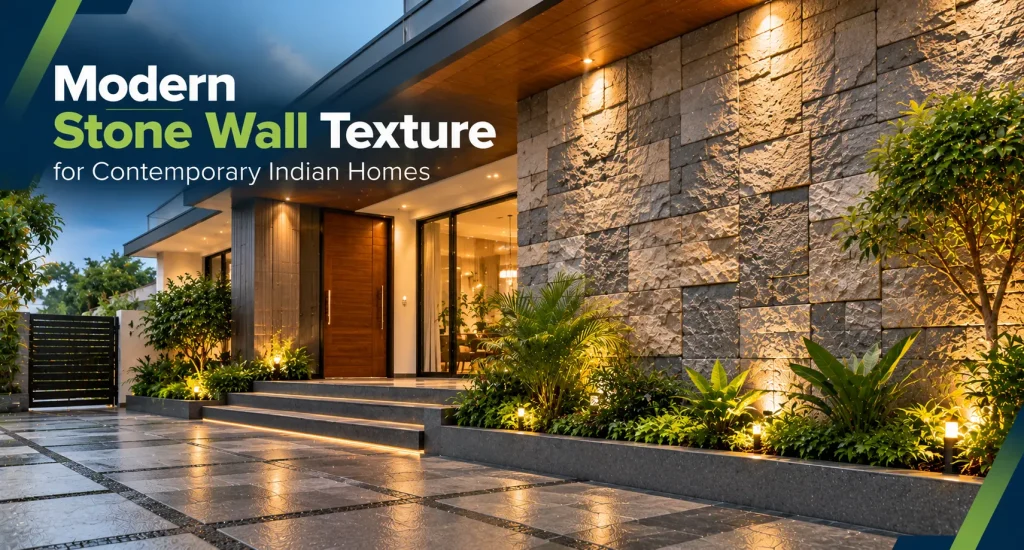
Walls do more than divide rooms. They set the visual tone of a space. A plain painted wall can keep things clean and simple. But a stone wall texture can bring depth into the same room without adding furniture or decorative pieces. That is why stone finishes continue to find a place in modern homes, villas, offices, and outdoor spaces.
The appeal is easy to understand. Natural stone comes with variations. Even when two pieces come from the same batch, they rarely look exactly alike. That natural variation gives a wall character.
Stone can also work across very different design styles. Read on this blog post to find out about stone wall texture in detail.
Quick Answer
A stone wall texture is the surface appearance. It provides a feel of natural stone on a wall. Given below are some common stone wall textures:
- Stacked stone
- Slate stone
- Sandstone
- Limestone
- Granite
- Split-face finishes
Designers often advise using stone wall textures for accent walls and feature areas in the home. However, they use it for the below applications for exteriors:
- Façades
- Boundary walls
- Garden walls
- Outdoor seating areas
The exact choice of stone wall textures depends on various factors. This is why it is necessary to consult a professional before a final purchase.
What Are the Different Types of Stone Wall Textures?
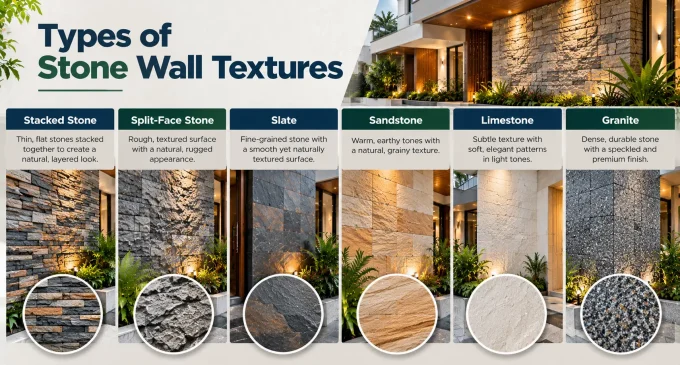

Given below are different types of stone wall textures:
- Stacked Stone Texture
This type of stone uses pieces of stone arranged in layers. The pieces may vary in length, thickness, and color. This creates a natural wall with visible joints and shadows. It works well when you want a rustic or earthy appearance.
The common applications of stacked stone wall texture are as follows:
- Living room feature walls
- Exterior façades
- Garden walls
- Entrance walls
- Boundary walls
- Outdoor seating areas
The texture can look particularly strong under warm directional lighting.
- Split-Face Stone Texture
Split-face stone has a naturally rough surface. The face of the stone gets split rather than polished flat. That leaves ridges, uneven edges, and variations across the surface. The result feels raw and architectural. This type of stone wall texture is more suitable for modern homes that use concrete.
It can also work with more traditional exteriors. Because the surface has more depth, lighting becomes important. A wall light placed too close to the surface can create strong shadows. A little distance can produce a softer effect.
- Slate Stone Texture
Slate usually brings dark earthy tones to a wall. Depending on the variety, you may see shades of grey, black, brown, or muted green. Its layered appearance gives the wall a natural pattern. Given below are the common applications of slate stone texture:
- Living rooms
- Bedrooms
- Entryways
- Commercial interiors
- Outdoor feature walls
A darker slate wall can make a large room feel more grounded. It may need light surrounding colors and good lighting in a compact room.
- Sandstone Wall Texture
Sandstone has a softer and warmer visual character. Beige, cream, brown and reddish shades are common. This makes sandstone useful for homes where you want an earthy appearance. It can suit traditional architecture as well as contemporary designs.
Sandstone textures are often considered for façades, boundary walls, courtyards and landscape features. For exterior use, the stone and installation system should suit the local climate and exposure conditions.
- Limestone Texture
Limestone can give a wall a clean and understated appearance. Its relatively subtle texture works when you want stone without a heavily rustic look. It can complement neutral interiors and modern façades.
- Granite Texture
Granite is popular because it has a hard surface. The best part? It is available in different colors and patterns. Polished granite can look sleek and formal. A rougher finish creates a more natural appearance. Granite can therefore work across several design directions depending on the finish and application.
What Are the Common Types of Stone Wall Finishes?
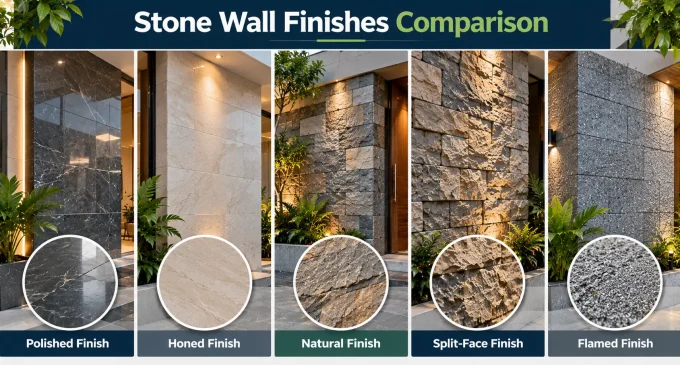
Given below are the common stone wall finishes:
- Polished Finish
A polished surface has a smooth appearance with more visual sheen. It suits formal interiors and spaces where you want a refined look.
- Honed Finish
Honed stone has a smooth surface without the same level of shine as polished stone. It gives a quieter appearance. Thus, it is more suitable for contemporary interiors that do not need excessive gloss.
- Natural Finish
A natural finish retains more of the stone’s original character. Variations in color and texture remain visible. It is a good fit for earthy and organic design themes.
- Split-Face Finish
This finish creates a rough and uneven surface. It brings depth to feature walls and exterior applications. The shadows created by the uneven face can become an important part of the design.
- Flamed Finish
A flamed finish creates a textured surface through controlled treatment of certain stone types. It can be useful where a more textured appearance is required. The suitability depends on the specific stone and application.
What Are the Common Applications of Stone Wall Texture?
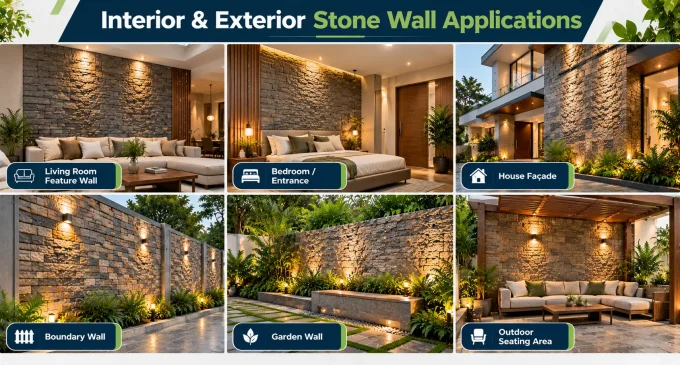
The following are the common interior and exterior uses of stone wall textures:
Interior Applications of Stone Wall Texture
- Living room
- Bedroom
- Entrance area
- Staircase
Exterior Applications of Stone Wall Texture
- House façades
- Boundary walls
- Garden walls
- Terrace features
- Outdoor seating areas
- Entrance walls
- Landscape structures
The Final Words
Sometimes a narrow strip near the entrance is enough. Sometimes one living room wall changes the entire character of the space. The better approach is to start with the wall rather than the trend. Look at the architecture. Study the light. Consider the climate. Think about cleaning and maintenance. Then choose the stone, pattern and finish. Good design is often less about adding more and more. It is about choosing the one surface that gives the space the character it was missing.
FAQs
1. What is the best stone wall texture for a living room?
There is no single best option for every living room. Split-face stone can add strong texture, while smoother finishes can create a more refined appearance. The choice should match the room size, lighting, furniture, and overall interior style.
2. Which stone is commonly used for wall cladding?
Common stones for wall cladding include sandstone, slate, limestone, and granite. The right material depends on the location, desired appearance, maintenance needs, and installation requirements.
3. Is stone wall texture suitable for exterior walls?
Yes, stone textures can work on façades, boundary walls, garden walls, and other exterior features. For outdoor use, select a material and installation system suited to the local weather and moisture conditions.
4. Is stone wall texture good for small rooms?
Yes, but use it selectively. A single accent wall or a smaller feature area can add depth without making the room feel visually crowded. Lighter colors and suitable lighting can also help maintain an open appearance.
5. How do I choose a stone wall finish?
Start with the location and the look you want. Polished finishes offer a smoother appearance. Honed surfaces are more understated. Natural and split-face finishes retain more texture and create a stronger rustic or architectural character.
6. Does stone wall texture require maintenance?
Yes, the amount depends on the stone, surface finish, and location. Exterior walls generally face more dust and weather exposure than interior walls. Regular cleaning and timely attention to joints or moisture-related issues can help maintain the finish