Stone Wall Cladding: Types, Benefits & Exterior Design Ideas for Homes

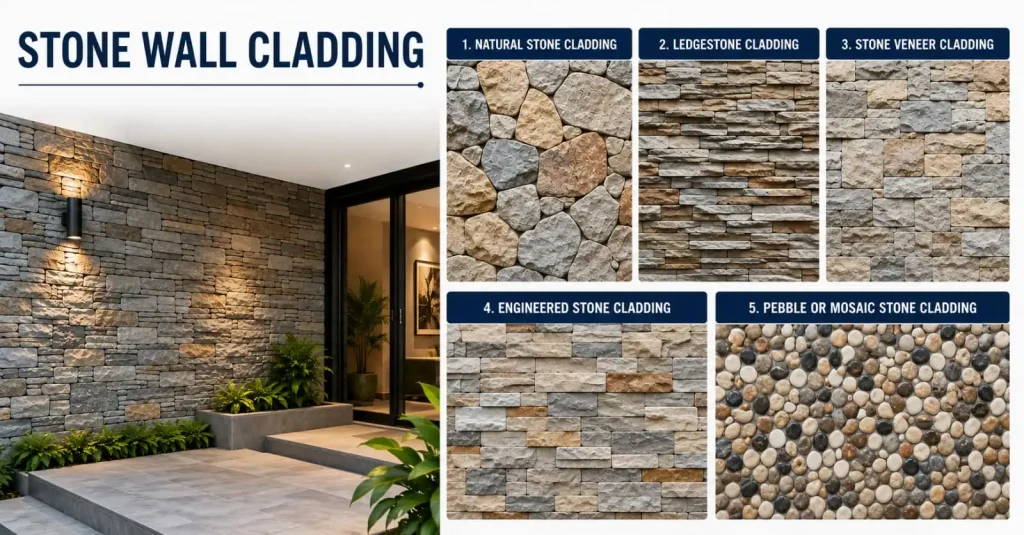
In India, it’s difficult for the home exterior to look solid, timeless, and a little premium without going overboard. Stone wall cladding is one of the smartest choices.
It protects your walls, handles weather better, and instantly upgrades the look — whether it’s a small house or a large villa.
From modern Wall Cladding design ideas to rustic finishes, the right cladding can completely change how your home feels from the outside.
Simple homes in tier-2 cities look like architect-designed spaces just by adding the right Wall Cladding tiles on one feature wall.
That’s the power of getting the basics right.
What Is Wall Cladding?
At its simplest, Wall Cladding is an extra layer added to your wall surface.
It’s not structural – it’s protective and decorative.
Think of it like a jacket for your house.
The structure remains the same, but the outer layer handles sun, rain, dust, and ageing.
With stone Wall Cladding, you’re adding natural strength plus visual texture.
Unlike plain paint, which fades or peels over time, cladding stays consistent for years.
And in Indian conditions – harsh sun, monsoon moisture, and pollution – that extra layer actually makes a difference.
Types of Stone Wall Cladding You’ll See in Real Homes
Walk into any site or supplier yard, and you’ll notice a few common types of Wall Cladding tiles being used.
1. Natural Stone Cladding
- This is one of the most commonly seen.
- Made from granite, slate, and sandstone.
- Gives a raw, uneven finish.
- Works well for outdoor Wall Cladding design
2. Ledgestone Cladding
- Works well in feature walls and elevation highlights.
- They look like stacked stone strips.
- Creates a layered look.
3. Stone Veneer Cladding
- One of the most budget-friendly wall cladding options.
- They look like thin slices of natural stone.
- Lightweight and easier to install.
4. Engineered Stone Cladding
- These are man-made but designed to look natural.
- Give a uniform finish.
- Often used with modern Wall Cladding tiles.
5. Pebble or Mosaic Stone Cladding
- These look like small stones arranged in patterns.
- Often used for a decorative look.
- Used in small sections, not entire walls.
Most homeowners end up mixing 1–2 types depending on budget and the overall Wall Cladding design.
Why Stone Wall Cladding Actually Makes Sense
Let’s be honest – nobody adds something to a house unless it solves a problem.
Here’s what stone Wall Cladding actually does:
Protects walls from the weather
Rainwater doesn’t directly hit plaster
Reduces maintenance
No frequent repainting
Adds insulation
Keeps interiors slightly cooler
Improves resale value
A well-done Wall Cladding design stands out immediately
Handles wear and tear better
Especially useful for boundary walls and entrances
Some boundary walls with Wall Cladding tiles look fresh even after 8–10 years, while painted walls start fading.
Where Stone Wall Cladding Works Best
Not every wall needs cladding. That’s where many people go wrong.
Here’s where Wall Cladding really works:
Exterior Front Elevation
- Creates a first impression.
- Works best with a bold Wall Cladding design.
Entrance Gate Area
- High-visibility zone.
- Adds character without overdoing it.
Boundary Walls
- Durable against the weather
- Looks better than plain plaster
Balcony or Sit-Out Area
- Adds warmth and texture
Garden Walls
- Works beautifully with plants and lighting
A common mistake is overusing Wall Cladding tiles everywhere.
Keep it focused – one or two highlight areas work best.
Design Ideas That Actually Work
This is where practical thinking beats fancy ideas.
1. Feature Wall with Lighting
- Use stone Wall Cladding on one wall and add warm lights.
- Simple, but very effective.
2. Mix Stone with Paint
- Combine textured cladding with smooth painted surfaces.
- Balances cost and look.
3. Vertical Panels
- Create vertical strips. Instead of covering the full wall,
- Modern and budget-friendly Wall Cladding design.
4. Rustic Look for Farmhouses
- Go with rough natural stone.
- No need to over-polish.
5. Minimal Modern Finish
- Use engineered Wall Cladding tiles with clean lines.
- Works well for city homes.
The best designs are not the most expensive ones – they’re the ones that know where to stop. Spend more on visible areas. Keep secondary walls simple.
Installation Tips Most People Learn Too Late
This part is usually ignored – until problems show up.
Surface preparation matters
Poor base = cladding issues later
Use proper adhesives
Don’t compromise here
Check water drainage
Especially for exterior Wall Cladding
Hire experienced labour
Stone alignment is a skill
Seal if needed
Some stones absorb moisture
Stone cladding isn’t about showing off.
It’s about building something that holds up – both visually and structurally.
In Indian homes, where weather and time test everything, stone Wall Cladding quietly does its job. It protects, it enhances, and it lasts.
And honestly, that’s what good construction is all about – making choices you don’t have to fix later.
FAQs
1. What is wall cladding used for?
It protects walls and improves appearance.
Wall Cladding adds both durability and design.
2. Is stone wall cladding suitable for all climates?
Yes, especially in India.
Stone Wall Cladding handles heat, rain, and dust well.
3. Are wall cladding tiles better than paint?
For long-term use, yes.
Wall Cladding tiles last longer and need less maintenance.
4. Can cladding be used indoors?
Yes, but in limited areas like feature walls.
Too much can feel heavy.
5. How long does stone cladding last?
With proper installation, Wall Cladding can last decades.
6. Is stone cladding expensive?
It depends on the material, but there are budget-friendly options available.
7. What is the best wall cladding design for small homes?
Keep it minimal.
Use one feature wall with a simple Wall Cladding design.