Patio Meaning Explained: Patio vs Balcony vs Terrace

A few years ago, outdoor spaces in Indian homes were mostly practical. Terraces were for drying clothes. Balconies were where steel chairs gathered dust. And open areas near the entrance? Usually, parking spots.
But things have changed. Now people want breathing space inside their homes. A quiet corner for morning chai. A spot where grandparents sit during winter afternoons. A small outdoor setup where friends gather during IPL nights.
That’s exactly why terms like patio, balcony, and terrace are suddenly everywhere in home design conversations.
The funny part? Most people use these words interchangeably. Someone points to a balcony and calls it a terrace. So, what exactly is the difference between patio, balcony, and terrace? Read on this blog post to find out.
What is Patio?
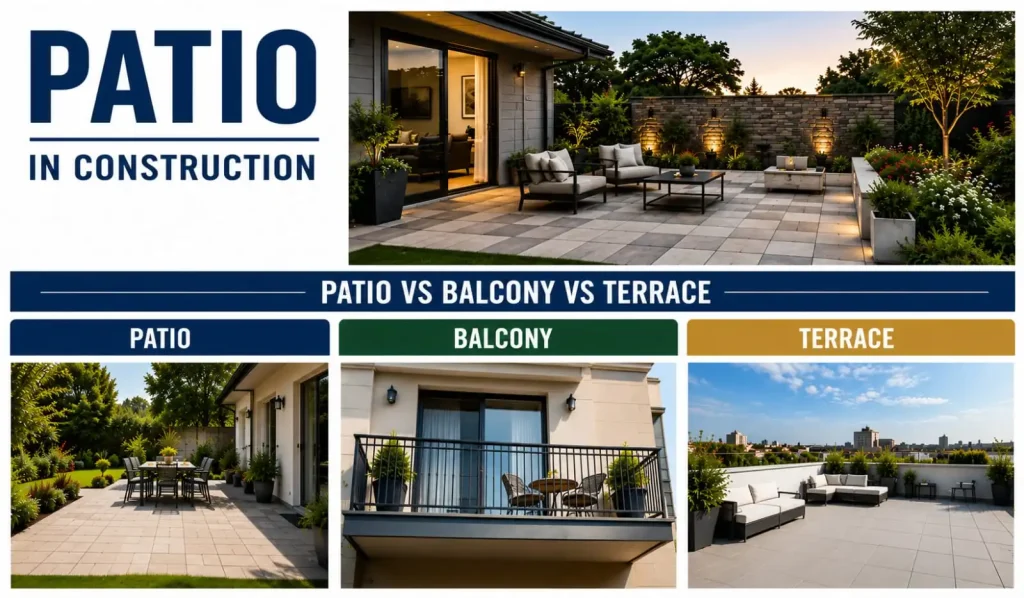
A patio is an outdoor space built at ground level, usually connected directly to the house. Think of it like an open-air extension of your living room. No walls. Usually, there is no roof. Just a comfortable outdoor flooring area designed for relaxing, dining, gardening, or spending time with family.
The easiest way to understand the meaning of the patio is this: A patio is to a house what a courtyard café is to a restaurant. Open, welcoming, and made for conversations.
In Indian homes, patios are becoming popular in villas, farmhouses, duplex homes, and even compact independent houses where small front or backyard spaces are available.
Common Features of a Patio
A good patio usually includes:
- Ground-level construction
- Stone, concrete, brick, or tile flooring
- Seating arrangements
- Outdoor plants
- Shade elements like pergolas or umbrellas
- Open access from the living room or garden
Unlike balconies, patios don’t project outward from a building. And unlike terraces, patios are not built on rooftops. That’s the biggest distinction people miss while understanding what a patio is.
Popular Patio Uses in Modern Homes
Today, patios are no longer luxury-only spaces. Even smaller Indian homes are using patios creatively. Some common patio ideas include:
- Outdoor breakfast corners
- Evening tea seating
- Barbecue setups
- Mini garden lounges
- Yoga corners
- Children’s play spaces
- Pet-friendly outdoor zones
We’ve all seen this happen after the pandemic.
People suddenly realised how valuable even a tiny outdoor area can feel.
Especially in cities where homes are getting more compact every year.
Best Materials Used for Patio Construction
The material selection matters because patios stay exposed to weather all year. Popular patio materials include:
- Concrete: Many modern homes use textured concrete finishes for patios because they look clean without being slippery.
- Natural Stone: Kota stone, sandstone, and slate are common choices. They age beautifully and stay relatively cool under sunlight.
- Outdoor Tiles: Vitrified anti-skid tiles work well in compact patios. Especially useful during monsoons.
- Brick: Brings a warm, rustic look. Perfect for farmhouse-style patio designs.
A durable cement base becomes extremely important in outdoor spaces like patios because constant weather exposure can weaken poor-quality flooring over time.
What is a Balcony?
A balcony is a platform that projects outward from a building wall. It’s elevated above ground level and enclosed with railings or parapet walls. In simple words: If a patio belongs to the ground, a balcony hangs in the air.
Balconies are extremely common in apartments and urban homes because they provide outdoor access without needing extra land. When people ask the difference between patio vs balcony, elevation is one of the biggest factors. A patio sits on the ground. A balcony extends outward from upper floors.
Types of Balcony
Different homes use balconies differently. Here are the most common types:
- Cantilevered Balcony: Projects outward without visible support. Very common in modern apartments.
- Juliet Balcony: Mostly decorative. You’ll usually see railings with large glass doors but very little standing space.
- Attached Balcony: Connected to bedrooms or living rooms. Most Indian apartments use this design.
- Wraparound Balcony: Extends along multiple sides of the house. Seen mostly in luxury apartments or villas.
Advantages of Balconies
Balconies remain popular for good reason.
- Better Ventilation: Cross airflow improves naturally. Especially useful during humid Indian summers.
- Natural Light: Balconies prevent rooms from feeling boxed in.
- Small Relaxation Space: Even a tiny balcony can become a peaceful reading corner.
- Visual Connection with Outdoors: In crowded cities, balconies provide psychological breathing room. That matters more than people realize.
You’ll notice many homeowners today adding plants, vertical gardens, and wooden decking to balconies to soften the concrete-heavy feel of urban life.
What is Terrace?
A terrace is a large open outdoor area built on the rooftop or upper floor of a building. Unlike balconies, terraces are usually much bigger. And unlike patios, terraces are elevated spaces.
Many Indian homes traditionally used terraces for utility purposes. Drying clothes. Water tanks. Storage. But modern terrace design has completely changed that.
Today, terraces are becoming lifestyle spaces.
Terrace vs. Rooftop
People often confuse rooftops with terraces. They are related, but not identical. A rooftop simply means the top surface of a building.
A terrace is a usable outdoor area designed intentionally for activities or relaxation. So every terrace is on a rooftop. But not every rooftop becomes a terrace. That’s the difference.
Common Features of a Terrace
Modern terraces often include:
- Seating lounges
- Pergolas
- Outdoor kitchens
- Green patches
- Waterproof flooring
- Lighting systems
- Planters
- Wooden decking
In Indian metro cities where private gardens are rare, terraces often become the main outdoor recreational zone.
Modern Terrace Designs
Current terrace trends in India include:
- Terrace gardens: Very popular in Bengaluru and Pune.
- Rooftop cafeteria-style layouts: Mostly used in duplex homes.
- Minimal Concrete Terraces: Clean flooring with subtle lighting
- Rustic Terraces: Brick walls, warm lights, wooden seating. Terrace waterproofing becomes extremely important here.
Patio vs. Balcony vs. Terrace: What is the Difference?
The differences between a patio, balcony, and terrace are given below:
| Parameter | Patio | Balcony | Terrace |
| Location | Ground level | Projecting from upper floor | Rooftop or upper floor open space |
| Size | Small to medium | Usually compact | Usually larger |
| Access | Direct from yard/ living room | Through rooms | Staircase or upper case |
| Structure | Built on ground | Elevated | Built on roof slab |
| Privacy | More private | Semi-private | Depends on height/ location |
| Best For | Relaxation, dining | Fresh air, compact seating | Parties/ gardening |
| Common in | Villas, bunglows | Apartments | Independent homes |
| Exposure | Open outdoor | Open outdoor | Fully exposed rooftop |
What Are the Patio Design Ideas For Indian Homes?
The best patio designs are the ones that actually suit Indian weather and lifestyles. Not just imported Pinterest ideas. Here are some practical patio ideas that work beautifully in Indian homes.
- Courtyard-style patio: Perfect for traditional homes. Use natural stone flooring and indoor plants.
- Small urban patio: Compact seating with vertical plants works surprisingly well in city homes. Even a 6×8-foot patio can feel welcoming.
- Rustic patio setup: Brick textures, warm lights, cane furniture. Simple but timeless.
- Covered patio with pergola: Extremely practical for Indian monsoons. Provides partial shade while keeping openness intact.
- Multi-Functional Patio: One side for seating. One side for gardening. This works especially well for family homes.
A strong flooring base and weather-resistant finish become important in such outdoor areas.
How to Choose Between a Patio, Balcony, and Terrace?
Honestly, the answer depends on your home type and lifestyle. Not trends. Ask yourself these questions:
- Do you live in an apartment? A balcony makes the most sense.
- Do you have ground-level open space? A patio is ideal.
- Do you have rooftop access? A terrace gives maximum flexibility.
What’s more? You should also think about:
- Privacy needs
- Weather exposure
- Maintenance
- Family size
- Budget
- Available area
A retired couple may prefer a peaceful patio. Young apartment owners may enjoy balcony gardening. Large families often love terraces for gatherings. There’s no universal winner in the patio vs balcony vs terrace debate. The right outdoor space is simply the one you’ll actually use.
What Are the Benefits of Outdoor Spaces in Modern Homes?
People underestimate how much outdoor spaces affect daily life. Especially mentally. A simple balcony with sunlight can completely change the mood of a home.
Outdoor spaces help with:
- Better airflow
- Natural lighting
- Stress reduction
- Family interaction
- Small gardening activities
- Visual openness
- Improved aesthetics
In dense Indian cities where homes feel increasingly compact, even small outdoor corners create emotional comfort. That matters.
What Are the Common Mistakes People Make When Identifying Patio, Balcony, and Terrace?
This confusion happens everywhere. Even among contractors sometimes. Here are the most common mistakes:
- Calling every outdoor space a terrace: A balcony is not a terrace.
- Assuming patios are only luxury features: Not true anymore. Compact patios are becoming common in modern Indian homes.
- Confusing rooftops with terraces: A rooftop becomes a terrace only when designed for usability.
- Ignoring structural differences: Balconies require load-bearing support calculations. Patios usually don’t.
- Overdesigning small spaces: Sometimes people overcrowd balconies and patios with furniture. Then the whole area feels cramped instead of relaxing.
The Final Words
Outdoor spaces have quietly become one of the most valuable parts of modern homes. Not because they look luxurious. But because they make homes feel alive.
Understanding the real patio meaning helps avoid confusion while planning homes that are practical, comfortable, and suited to real life. A patio connects you to the ground. A balcony connects you to the outside world. A terrace gives you open sky above your head.
All three serve different purposes. And honestly, none of them need to be extravagant.
FAQs
1. What is a patio in a house?
A patio is a ground-level outdoor space attached to or located near a house, mainly used for relaxation, seating, or outdoor dining.
2. What is the difference between a patio and a balcony?
A patio is built on the ground, while a balcony is an elevated platform attached to upper floors of a building.
3. Is a terrace the same as a rooftop?
Not exactly. A rooftop is simply the top surface of a building, while a terrace is a usable rooftop space designed for activities or seating.
4. Which is better: patio or terrace?
It depends on the home layout. Patios are ideal for ground-level homes, while terraces work better in homes with accessible rooftops.
5. Can small homes have patios?
Yes. Even compact front-yard or backyard spaces can be converted into functional patios.
6. Are balconies safe during monsoons?
Yes, if proper waterproofing, drainage slope, and anti-skid flooring are used during construction.
7. What materials are best for patios in India?
Concrete, natural stone, anti-skid outdoor tiles, and brick are commonly used because they handle Indian weather conditions well.