Open Plan Vs Closed Plan Home Layouts

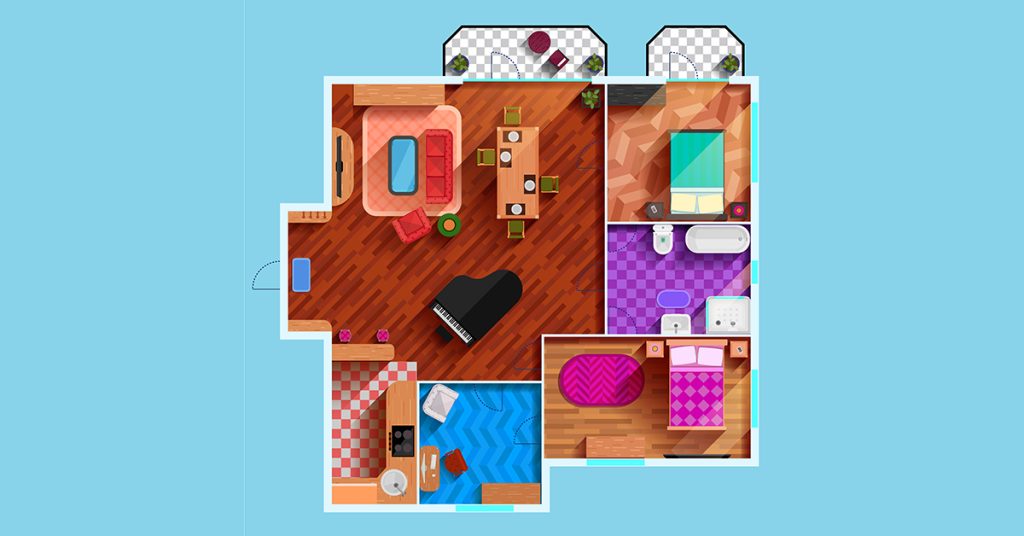
Building a home isn’t something you do often. For most people, it’s once in a lifetime. So every choice matters – where you place your kitchen, how sunlight falls into your rooms, and most importantly, how your spaces connect.
One of the first big decisions during planning is about the layout. Do you go for an open plan or a closed plan?
Both have their own advantages and issues. Open layouts feel modern and airy, while closed ones are private and practical. But before you decide, it’s worth knowing what each of them really means in everyday life – not just on paper.
What Is an Open Plan Layout?
An open plan home is simple – fewer walls, more flow.
The living room, dining area, and kitchen all sit together in one big space. There are no solid barriers, just furniture or half-walls marking zones.
Builders achieve this by using beams and columns to carry the load instead of brick partitions. It gives flexibility in how you arrange furniture or lighting. Most newer flats and villas use this concept to make homes look larger and brighter.
Where Open Plans Work Well
- Feels bigger than it is: With no walls cutting through, natural light spreads better. Even a small flat feels more open and easier to breathe in.
- Saves on space: Brick walls eat up square footage. Removing them adds usable carpet area.
- Encourages social connectivity: The family stays connected — someone can cook while chatting with others in the living area.
- Gives a modern appeal: The layout feels sleek and uncluttered. Perfect for new-age interiors and minimal furniture.
- Good ventilation: Cross breeze and sunlight move freely, which helps in tropical climates like most of India.
Where Open Plans Don’t Work So Well
- Privacy Challenges: Concealing activities of other parts of the home may not be effective.
- Smells and smoke: In Indian cooking, this layout can facilitate kitchen odours across the entire house.
- Temperature inefficiency: It takes more time and energy to cool or heat one big open area.
- Meticulous design planning required: Furniture placement, lighting, and electrical points have to be planned in minute detail. One small mistake can make or break the layout.
What Is a Closed Plan Layout?
Closed plan homes are the classic setup – separate rooms, each with a door and walls.
The living room stays apart from the kitchen and dining space. Bedrooms have their own enclosures. It’s what most Indian houses used to have before open plans became popular.
This layout works best when privacy and noise control are priorities. Every room is a distinct area- whether for work, rest, or family time – without overlapping.
Why Closed Plans Still Make Sense
Privacy rules: Noise transmissions are minimal, which gives each family member freedom of movement and sound.
Easy to manage temperature: Smaller rooms cool faster and use less electricity — more efficient in summer.
Defined space purpose: No overlapping and no doubling. Each room is used for its purpose, making the home look organised.
No Visual eyesore: The privacy and activities of each room are protected within its walls, saving you from visual pressure.
Better Fire constraints: Walls slow down the spread, giving people time to react.
More design control: You can decorate each room differently without having to settle for one common idea.
Why Closed Plans Don’t Work
- Restricted Space: Too many walls can make the home look boxed up, especially in apartments.
- Air & Light Restrictions: The walls may obstruct the flow of air and natural light.
- Low Flexibility: Harder to remodel later without major civil work.
- Aesthetics: While functional, it doesn’t match the open, contemporary look that’s trending now.
Open Plan vs Closed Plan Home – Which One Wins?
When you are in the open plan vs closed plan home dilemma, here’s how to think about it.
An Open Plan Layout works well if:
- You have a smaller home or apartment.
- You want an airier, open-looking layout.
- You live alone or with a partner.
- You want to save space.
- Your lifestyle involves functionality.
A Closed Plan Layout may be best suited when:
- You have a large family with varied routines.
- You prefer separate rooms for cooking, eating, relaxing, and working.
- You are privacy-oriented.
- You have guests over often. This allows for less access to people.
- You want to contain cooking smells and sounds.
The Middle Ground
Why get into the open plan vs closed plan home debate when you can have the best of both? A mixed layout gives you the best of both worlds – openness where needed, and privacy where required. Many homeowners today are choosing a combination of both.
- Open Living-Dining Area, but Closed Kitchen: You get the airy feel of an open space, but can hide the kitchen mess and smells. Most apartments these days opt for this layout.
- Open Layout on Ground Floor, Private Bedrooms Upstairs: Keeps common areas open, but sleeping areas private. This brings a balance of privacy and access.
- Partial Walls or Glass Dividers: Instead of full walls, partial dividers or sliding glass can offer separation more subtly. The living and dining are demarcated, without losing openness and light.
Considerations To Keep In Mind
- Your Daily Routine: How your family uses the house should decide the layout. If a joint family has to live in the house, everyone will prefer to have their own space and privacy. A close layout home plan is best in this case.
- Your Plot Size: Smaller plots can go for open layouts as they provide a spacious look and airiness, while larger homes can manage separate rooms with more ease without making the home look cramped.
- Local Climate: In areas that experience extreme climates and temperatures, it is easier to manage temperature in closed plan layouts, as smaller areas adapt quickly to temperature regulation. In open plans, the entire home is one large open space, which can make temperature management challenging.
- Consult with Your Architect: Discuss your needs with the architect clearly and understand the nuances of both layouts before finalising your floor plan.
To sum up, there’s no one-size-fits-all answer for a home layout. At the end of the day, choosing between an open plan vs a closed plan home comes down to what fits your lifestyle best.
Both layouts come with their share of advantages and challenges. A blend of both is the middle ground that can work well for most homes. In the end, your home should suit the way your family lives, not just look good in photos. Choose what works for you.
Whichever layout you go with- open, closed, or a mix- the quality of construction plays a huge role in how your space feels and functions. Materials like JK Cement’s grey cement offer the durability and strength your home needs to support wide open spaces or solid room divisions. A strong foundation ensures that whether you’re opening up walls or keeping things enclosed, your home stays secure, stable, and long-lasting.
FAQs
1. What’s the basic difference between an open and closed layout?
Open layout means fewer walls- living, dining, maybe even kitchen, all in one open space. Closed layout means each room is separate, with its walls and doors.
2. Which is better for a small house?
An open layout makes small houses feel bigger without walls cutting up the space. But keep in mind that it may feel less private with guests over, and kitchen smells will be present.
3. Why do some people prefer closed layouts?
Closed layouts allow more privacy and, hence, are more comfortable and safe.
4. Can I mix both styles?
Yes. Many people do. Like keeping the living and dining open, but the kitchen closed. Bedrooms always work better as separate rooms.
5. What should I choose for my house?
Consider your basic daily lifestyle- how much you entertain at home, and how many family members will be sharing the home. For a small family, an open layout may suit them more. For a bigger family or elders at home, a closed plan is more comfortable.