Modern Facade Design Ideas for Residential and Commercial Buildings

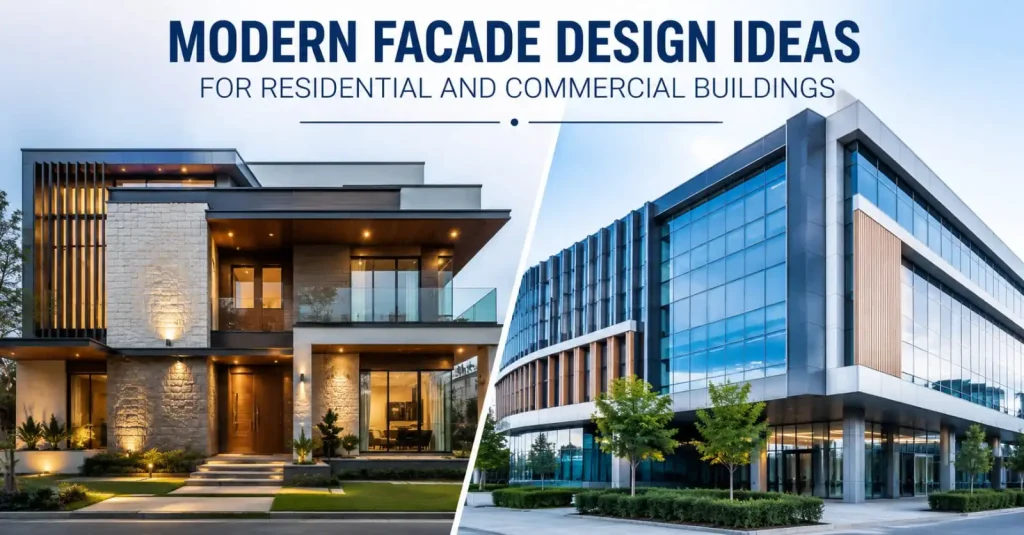
People often judge a building before they ever step inside it. Think about it. A modern villa with clean lines and a striking glass facade immediately feels premium. A corporate office with a smart facade design communicates professionalism before a single meeting takes place. Even a retail store can attract more footfall simply because its exterior catches attention. That is the role of facade design.
But what exactly do you mean by facade design in modern construction? What are the latest facade design patterns? Read on this blog post to find the answers.
Key Takeaways
- Facade design performs and sustains while maintaining the aesthetics.
- The heat gain reduces that saves the cost of cooling.
- The glass facade system is expensive. The designer recommends it in commercial and luxury buildings.
- Mixed material facade design patterns trends in 2026.
- The durability and cost depend on the type of facade material.
What is Modern Facade Design?
A facade is the front-facing side of a building. It is the side that people see first. This is why modern facade design goes beyond appearance. The visual appeal blends with functionality when you apply modern facades. The building not only creates a memorable identity but also performs better.
Let’s understand it this way: You choose a good outfit to look attractive. It protects you from the weather and reflects your personality. The modern facade design is the same. It creates a distinctive character while protecting the building from external factors.
Many architects coordinate facade design with interior themes and room aesthetic decor. Why? This is because it provides an appealing visual experience from outside to inside.
Why Modern Facade Design Matters in Residential & Commercial Buildings?
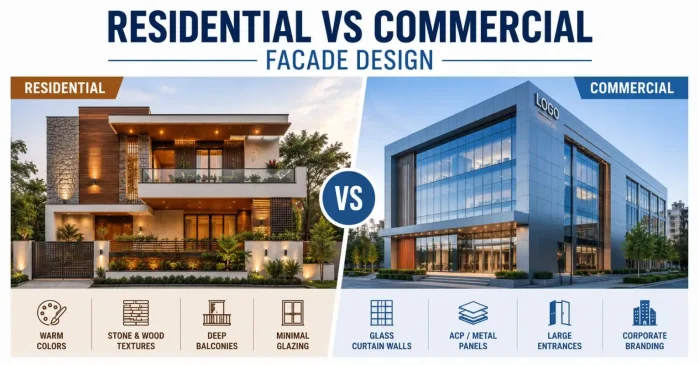

A building facade is the first thing people notice about your home. Given below are some reasons why modern facade design matters in residential and commercial buildings:
- Create First Impression
People form opinions within seconds when they see a building. A facade with a beautiful design makes a property look modern and more attractive. People feel warm if they find a facade design pattern.
- Bring Comfort Inside the Building
A good facade is more than about looks. It influences the comfort of your everyday life. How? It helps you control the following:
- Gain heat from direct sunlight
- Ventilation and airflow
- Outdoor noise level
- Privacy
You require fewer artificial lights and fewer cooling methods. Hence, this makes you feel bright and more comfortable indoors
- Boost Energy Efficiency
Modern facades in buildings also improve energy efficiency. They reduce heat transfer to regulate indoor temperature. The demand for air conditioning systems is low. The final result? It reduces the electricity bills and improves sustainability. Facade systems reduce energy consumption by 20-40% in commercial buildings.
- Protect the Building
The facade is the first line of defense in the building. It protects the structure from moisture penetration and weather damage. The important point to remember is to choose durable facade materials. The quality material reduces maintenance costs that extend the building’s life.
- Increase Property Value
A contemporary facade often translates into higher resale value. The properties that look modern and attractive attract buyers naturally to properties. Moreover, customers appeal to commercial properties with an impressive facade. This strengthens the market appeal of the building.
- Create a Cohesive Design
Do you know what makes the building feel complete? It happens when both exterior and interior work together. Thoughtful room decor with a modern facade creates a seamless experience.
What Are the Latest Trends in Modern Facade Design For 2026?
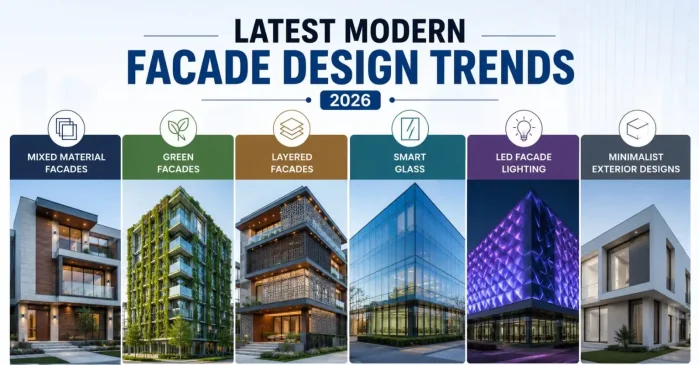
Given below are the latest trends in modern facade designs:
- One of the great facade design trends in 2026 is to add depth to a building. Architects create facades with layers and screens to make the building look more attractive.
- Another buzz in facade design patterns is using a mix of materials. Many homes and commercial buildings now combine different materials to add texture and create a modern look.
- Green facades provide a more natural and welcoming look to your building. Architects install plants and vertical gardens at the front of your building.
- Architects now also focus on facade lighting, like LED strip lights and hidden uplights. They uplift the entire design of the building after sunset.
- Commercial buildings adopt bold and unique facade designs. The architects may suggest large frames and decorative screens for offices to create a strong brand image.
- A simple and elegant facade is always popular for residential homes. The homeowners can choose from deep window frames and a clean design.
What is the Cost of Installing a Modern Facade Design?
The cost of a modern facade design depends on various factors. Given below are some of these factors:
- Building Size
Large buildings require more facade materials and structural support. They need extra time to install the facades. Hence, the overall facade construction cost increases with the surface area and labor cost.
- Design Complexity
Simple facade design patterns are budget-friendly in comparison to designer textures. They require expert knowledge that increases both labor costs and project timelines.
- Material Selection
The type of facade material you choose also influences the budget. There are different materials, like glass, natural stone, metal panels, and more, that vary in price. Moreover, the quality of materials also impacts the durability and overall visual appeal of the balcony.
- Installation Cost
The process of installing a facade is much more than purchasing materials. The final project cost usually burns a hole in your pocket.
- Maintenance Needs
Some facade materials require regular cleaning and polishing for maintenance. However, the others need minimal upkeep. It is advisable to choose a low-maintenance material that requires less maintenance.
How to Choose the Right Facade Design for Your Building?
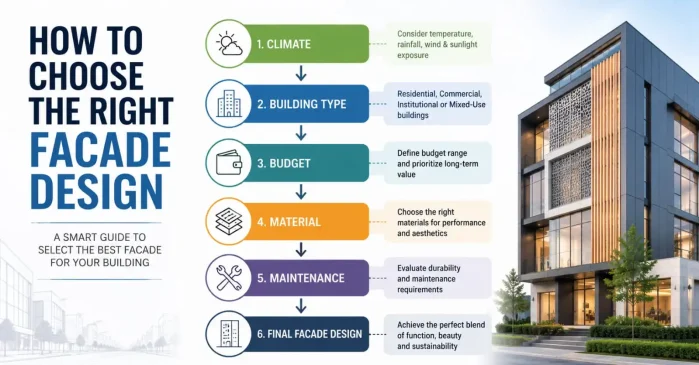
Given below are the points to keep in mind when choosing the right facade design for your building:
- Climate Conditions
Every region has different weather conditions. Thus, it is ideal to choose facade materials that suit the local climate. It not only keeps the structure durable but also reduces the maintenance costs.
- Prioritize Performance Over Looks
An attractive facade is necessary. But that’s not enough. Modern facade patterns should also provide insulation and durability. The building performs well for a longer period when you balance aesthetics with functionality.
- Minimal Use of Glass
It is indeed true that large glass facades create a modern appearance. However, the excess glaze increases the indoor heat and cooling costs. It is ideal to use a high-performance glass with proper shade that provides comfort.
- Quality Material Selection
The risk of cracks and water seepage reduces when you choose high-quality facade materials. What’s more? Investing in durable materials helps you save on long-term maintenance and replacement costs.
- Proper Maintenance Planning
Every facade needs regular cleaning and inspections. So, it is necessary to plan the maintenance from the beginning. This is because it helps you preserve the appearance of the balcony and avoid unnecessary expenses.
The Final Words
Buildings tell stories. Some are quiet with clean lines and subtle textures. However, others make a bold statement through dramatic facade design patterns. The facade design pattern is not about following the trends. It is to create an exterior that performs well and remains attractive for years. So, be careful when you choose the modern facade design ideas for residential use and commercial buildings.
FAQs
1. What is facade design in construction?
Facade design is the process of designing a building’s exterior to improve its appearance, durability, and performance. It includes selecting materials, finishes, insulation, windows, and shading systems that enhance energy efficiency, weather protection, and the overall architectural style of residential and commercial buildings.
2. Why is a glass facade popular in modern buildings?
A glass facade is popular because it creates a modern look, allows abundant natural daylight, and improves indoor comfort. When paired with high-performance glazing, it reduces heat gain, enhances energy efficiency, lowers lighting costs, and provides better views while maintaining an elegant architectural appearance.
3. Which facade material is best for residential buildings?
The best facade material depends on climate, budget, and maintenance needs. Popular options include stone, concrete, wood finishes, metal panels, porcelain tiles, and glass facade systems. Choosing durable, weather-resistant materials ensures long-lasting performance, energy efficiency, and an attractive exterior.
4. How much does facade design cost in India?
Facade design costs in India generally range from ₹80 to over ₹2,500 per sq. ft., depending on materials, design complexity, installation, and finish quality. Premium glass facades, custom cladding, and advanced shading systems typically cost more than basic exterior finishes.
5. What is a facade design pattern?
A facade design pattern is the visual arrangement of materials, textures, colors, shapes, and architectural elements on a building’s exterior. It creates a distinctive appearance while improving balance, functionality, weather protection, and the overall identity of residential or commercial buildings.
6. Can facade design improve energy efficiency?
Yes. A well-designed facade improves energy efficiency by reducing heat gain, enhancing insulation, maximizing natural daylight, and improving ventilation. Features like double-glazed glass, shading devices, and insulated cladding can lower cooling costs and create more comfortable indoor spaces.
7. How often should a facade be maintained?
Most building facades should be inspected at least once a year to identify cracks, water leakage, corrosion, or damaged finishes. Regular cleaning and timely repairs help maintain appearance, improve safety, extend the facade’s lifespan, and prevent costly structural damage.
8. Are green facades suitable for residential buildings?
Yes. Green facades are an excellent choice for homes because they improve insulation, reduce heat absorption, enhance air quality, and create a natural appearance. They also support sustainable building design while making residential properties more attractive and environmentally friendly.
9. How does facade design affect room aesthetic decor?
Facade design influences natural light, outdoor views, ventilation, and the architectural character of interior spaces. A thoughtfully designed facade creates brighter rooms, improves visual comfort, and complements room aesthetic decor by connecting exterior design with interior styling.
10. What facade trend is expected to dominate in 2026?
In 2026, smart glass facades, sustainable green facades, mixed-material cladding, and energy-efficient facade systems are expected to dominate. Architects are increasingly focusing on environmentally responsible designs that combine modern aesthetics, advanced technology, and long-term building performance.