Modern Bungalow Design: Contemporary Home Styles with Smart Planning

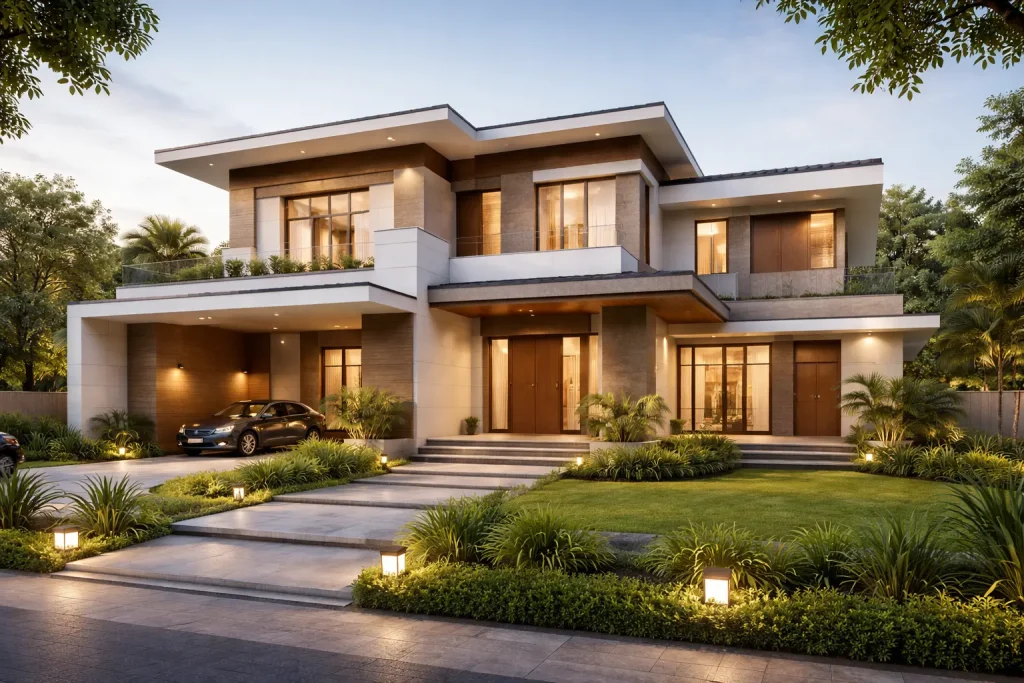
A bungalow is not defined by luxury alone. In Indian housing, it represents independence, control over space, and long-term living comfort. What has changed in recent years is not the desire for bungalows, but the expectations from them.
Modern bungalow design is now judged less by elevation and more by planning efficiency. Homeowners are asking sharper questions: Will the layout age well? Is the house comfortable across seasons? Can it adapt to changing family needs?
Understanding contemporary bungalow house design begins with planning logic — aesthetics follow later.
What Is a Bungalow in Modern Housing?
A bungalow is a standalone residential structure designed for independent living, typically spread across one or two floors. Unlike apartments or row houses, a bungalow offers full control over layout, open spaces, circulation, and expansion potential.
In modern housing, bungalow design is no longer about size alone. It is about how intelligently the plot is used — balancing built-up area, open spaces, light, ventilation, and privacy.
A well-designed modern bungalow prioritises:
- Efficient circulation without wasted corridors
- Privacy without isolation
- Strong connection between indoor and outdoor spaces
What Defines Modern Bungalow Design?
Modern bungalow design is driven by planning discipline, not decorative expression. The focus is on how spaces work together on a daily basis.
Core defining principles include:
- Simple structural geometry that reduces construction complexity
- Clear zoning between living, private, and service areas
- Minimal circulation loss between rooms
- Material choices that balance durability and maintenance
The success of a modern bungalow is measured by comfort, usability, and adaptability — not visual drama.
Contemporary Bungalow House Design Approaches
While modern bungalows may vary stylistically, they share common planning logic.
Minimalist Modern Bungalow Design
Minimalist bungalow design uses restraint to create longevity.
Typical features:
- Clean building lines
- Flat or low-pitched roofs
- Large openings for daylight
- Neutral exterior finishes
This approach works well on urban plots where simplicity helps the home age gracefully.
Courtyard-Centric Bungalow Design
Courtyard planning has re-emerged as a practical response to Indian climate conditions.
Advantages include:
- Natural cooling and airflow
- Improved daylight penetration
- Private outdoor space within the home
Courtyard-based bungalow design works especially well in warm regions where inward-focused planning improves thermal comfort.
Nature-Integrated Bungalow House Design
These bungalows dissolve the boundary between inside and outside.
Common elements:
- Verandas and decks
- Garden-facing living spaces
- Semi-open transition zones
The emphasis is on everyday connection with nature rather than ornamental landscaping.
Smart Planning Elements in Modern Bungalow Design
Planning quality is what separates a comfortable bungalow from an oversized house.
Plot Size and Built-Up Area Balance
In Indian cities and suburban areas, bungalow plots typically range from 1,500 to 4,000 sq ft. A practical built-up area usually falls between 45–60% of the plot.
Exceeding this often compromises ventilation and open space, while under-utilisation leads to inefficient layouts.
Zoning the Home Correctly
A well-planned bungalow clearly separates:
- Public zones: living and dining
- Private zones: bedrooms
- Service zones: kitchen, utilities, staff movement
Clear zoning ensures privacy without unnecessary walls or circulation waste.
Single-Level vs Two-Level Planning
While bungalows are traditionally single-storey, modern bungalow house design may extend vertically based on plot constraints.
Decision logic:
- Single-level bungalows support ageing-in-place and long-term comfort
- Two-level bungalows optimise smaller plots but require careful stair placement
A best practice is to keep all daily-use spaces accessible on the ground floor, even in two-storey designs.
Light, Ventilation, and Orientation
Climate-responsive planning is essential.
Effective modern bungalow design considers:
- Orientation of living and sleeping spaces
- Cross ventilation paths
- Shading through overhangs, verandas, or courtyards
This reduces energy dependence and improves year-round comfort.
Common Mistakes in Bungalow House Design
Most design failures result from planning oversights rather than budget limitations.
Frequent mistakes include:
- Oversized living rooms with undersized bedrooms
- Poor kitchen-to-utility connectivity
- Ignoring future mobility and ageing needs
- Prioritising façade design over internal comfort
A modern bungalow must function well every day, not just look impressive at handover.
Modern Bungalow Design for Indian Lifestyles
Indian living patterns place specific demands on bungalow planning:
- Frequent guests
- Multi-generation households
- Domestic help circulation
- High indoor–outdoor usage
Good bungalow house design accommodates these realities discreetly, without clutter or circulation conflicts.
FAQs: Modern Bungalow Design
What is modern bungalow design?
Modern bungalow design focuses on efficient planning, climate responsiveness, and long-term usability rather than decorative elevation.
What plot size is ideal for a bungalow in India?
Most bungalows are built on plots ranging from 1,500 to 4,000 sq ft, subject to local regulations.
Is a single-storey or double-storey bungalow better?
Single-storey bungalows suit long-term living, while double-storey designs help optimise smaller plots.
Can modern bungalow design work on compact plots?
Yes. With efficient zoning and circulation, modern bungalow designs perform well even on limited land.
What is the biggest planning mistake in bungalow design?
Ignoring zoning and future needs, which leads to inefficient layouts and costly changes later.
Final Word
Modern bungalow design is not about building larger houses. It is about building homes that work better.
A well-planned bungalow respects climate, lifestyle, and time. When planning is strong, style follows naturally — and the home remains comfortable, adaptable, and valuable long after trends fade.