Kitchen Slab: Meaning, Types, Height, Materials & Design Guide for Indian Homes

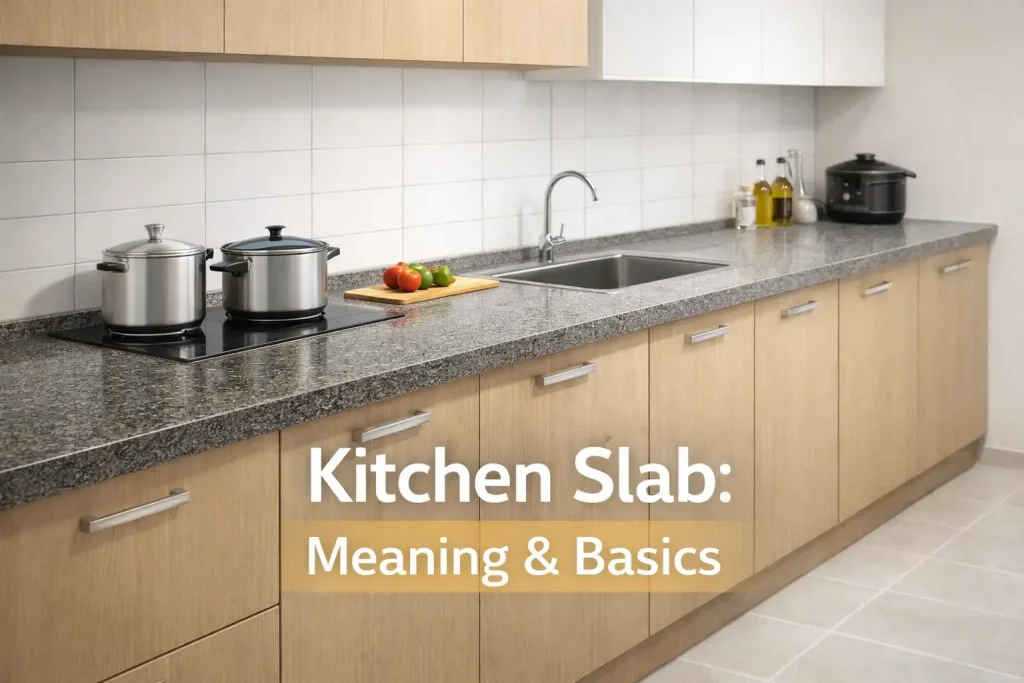
What is Kitchen Slab
Whether you’re building or renovating a kitchen, get the kitchen slab right, and half your daily work becomes easier. Get it wrong, and you’ll feel it every single day – while chopping, cooking, or cleaning. The slab isn’t just a stone surface. It’s your main work zone.
This guide explains what a kitchen slab really is, the right kitchen slab height, the best materials for Indian cooking, and how to choose a practical kitchen slab design that actually works in real homes.
What Is a Kitchen Slab?
In simple words, a kitchen slab is the horizontal platform where you cook, chop, keep utensils, and place your stove and sink. It’s usually made of stone, supported by masonry or cabinets underneath.
In Indian homes, the kitchen slab does heavy-duty work. It handles hot pressure cookers, oil spills, wet utensils, grinding stones, and sometimes even kids sitting on the edge while chatting.
That’s why choosing the right material and deciding the correct kitchen slab height is not something to rush. It affects comfort, cleaning, and even posture.
Why Kitchen Slab Height Matters More Than You Think
Let’s talk about something most people ignore – kitchen slab height.
Standard height in Indian homes is usually around 32 to 36 inches from the floor. But “standard” doesn’t mean perfect for everyone.
- If the slab is too low, you’ll bend constantly, and back pain becomes common.
- If it’s too high, shoulders feel strained and chopping becomes uncomfortable.
The right kitchen slab height depends on who uses the kitchen most. A well-planned kitchen slab feels natural. You shouldn’t have to adjust your body to it.
Simple contractor tip: The slab should sit just below your elbow level when standing straight.
Types of Kitchen Slab Materials
Material choice makes a big difference in durability and maintenance. Let’s look at common options in Indian homes.
1. Granite Kitchen Slab
- Strong and heat-resistant
- Handles heavy vessels
- Low maintenance
Granite is the most popular kitchen slab material. Black granite is especially common because it hides stains well.
2. Kitchen Marble Slab
- Smooth, aesthetic finish
- Cool surface
- Can stain if not cleaned properly
Choosing a kitchen marble slab for its appearance is good, but it requires extra care and sealing.
3. Quartz Slab
- Uniform finish
- Scratch-resistant
- Modern look
Quartz works well in modular kitchen slab design, especially in urban homes.
4. Concrete Slab
- Customisable
- Strong
- Needs proper sealing
- Polished concrete options available
If you’re building from scratch, concrete quality and curing matter a lot.
Kitchen Slab Design: Practical Over Fancy
When it comes to kitchen slab design, the simpler the better.
What matters more than decorative edges:
- Easy cleaning – Smooth surface
- Safety – Rounded front edge
- Alignment – Proper sink cut-out
- Adequate counter space near the stove
Indian kitchens involve heavy use of oil, spices, and utensils. A complicated kitchen slab design with too many grooves or textures becomes difficult to clean.
Functional Layouts Most Homeowners Prefer
- Straight-line slab layouts
- L-shaped kitchen slab
- U-shaped kitchen slab
- Integrated drainboard near sink
The design should support workflow.
Thickness and Support
The slab is usually placed on:
- Brick masonry support
- RCC platform
- Modular cabinet frames
General guidelines:
- Most granite kitchen slab installations use 18–20 mm thickness
- Heavier stones need strong support underneath
- Improper support can cause cracks over time, especially near sink cut-outs
A good kitchen slab isn’t just about the top stone. What’s underneath matters equally.
Real-World Tips from Indian Homes
- Always leave enough counter space on both sides of the stove
- Don’t push the sink too close to the corner
- Avoid very light colours if heavy cooking is common
- Ensure proper slope near the sink to prevent water stagnation
- If choosing a kitchen marble slab, seal it properly
- When planning kitchen slab height, consider footwear – many Indian kitchens are used barefoot
Common Mistakes to Avoid
- Copying a showroom kitchen slab design without checking actual space
- Ignoring kitchen slab height during construction
- Choosing marble without understanding maintenance
- Skipping proper waterproofing near the sink
Small planning mistakes become daily inconveniences.
Conclusion
A kitchen slab may look like just a stone platform, but in reality, it’s the backbone of your kitchen.
- The right kitchen slab height protects your back.
- The right material reduces maintenance.
- A practical kitchen slab design makes cooking smoother.
Whether you choose granite, quartz, or a kitchen marble slab, focus on how you actually cook and clean. Don’t rush the decision. Measure carefully. Build properly.
A well-built kitchen slab will quietly serve your home for decades.
FAQs
1. What is the standard kitchen slab height in India?
Usually between 32 and 36 inches, but it should match the user’s elbow level.
2. Which material is best for a kitchen slab?
Granite is the most durable and low-maintenance option.
3. Is a kitchen marble slab good for heavy cooking?
It looks beautiful but needs sealing and careful maintenance.
4. How thick should a kitchen slab be?
Typically 18–20 mm for granite slabs.
5. Can kitchen slab height be customised?
Yes, it should ideally be adjusted to suit the primary user.
6. Does a kitchen slab need waterproofing?
Yes, especially around sink areas to prevent leakage.
7. What is the lifespan of a kitchen slab?
With proper installation and care, 20 years or more.