Glass Door Design Ideas: Stylish & Functional Options for Every Room

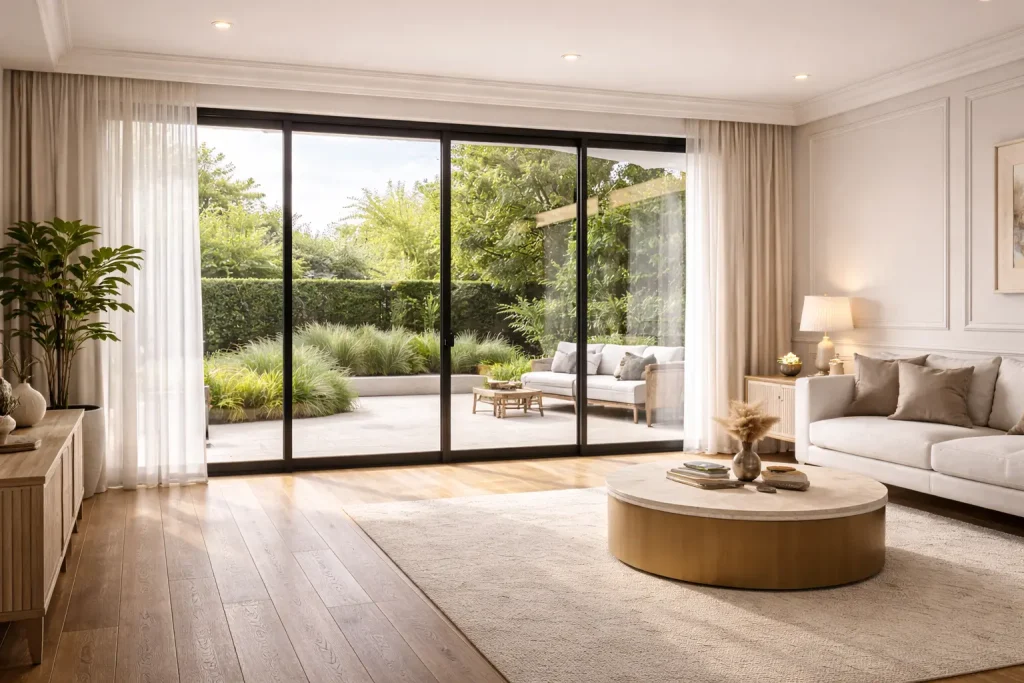
Glass door design in 2026 is not about “more glass”.
It’s about control.
Control of light.
Control of heat.
Control of privacy.
Control of movement between spaces.
In Indian homes — especially urban apartments — glass doors are solving one big problem: how to make smaller homes feel bigger without removing functional separation.
But here’s the catch.
A glass door chosen only for looks will fail.
A glass door chosen with structure, sealing, and hardware logic can last 20+ years.
This guide breaks it down properly.
Quick Answer
Glass door design refers to interior or exterior doors made primarily of toughened or laminated glass that allow light flow while maintaining separation, privacy, and security.
When selected correctly, glass doors:
- Increase perceived space
- Improve natural light penetration
- Reduce need for artificial lighting
- Enhance resale appeal
- Maintain safety
When selected casually, they:
- Leak during monsoon
- Rattle under wind load
- Crack due to stress
- Jam due to poor rollers
The difference is specification.
Why Glass Doors Are Dominating Indian Homes in 2026
Modern homes are:
- Smaller in footprint
- More open-plan
- Balcony integrated
- Light dependent
- Automation-ready
A solid door blocks light.
A glass door filters it.
In apartments under 1,500 sq ft, replacing a wooden balcony door with a sliding glass system can visually expand space dramatically.
It’s not just psychological. It’s measurable. More daylight reduces artificial lighting demand and improves spatial depth perception.
In simple terms: glass doors are space multipliers.
First Rule: Choose Glass by Safety Grade, Not Aesthetics
Many homeowners make this mistake.
They choose texture first. Safety second.
That’s backwards.
Types of Glass Used in Door Systems
| Glass Type | Strength | Best For |
| Toughened (Tempered) | 4–5x stronger than normal glass | Interior doors |
| Laminated | Break-resistant, holds together | Main doors, balconies |
| Frosted / Acid Etched | Privacy control | Bathrooms |
| Fluted / Reeded | Diffused light | Partitions |
| Tinted | Heat & glare control | Sun-facing areas |
| DGU (Double Glazed Unit) | Thermal + sound insulation | Exterior openings |
Exterior Rule:
Use laminated toughened glass for balcony or main door applications.
If it breaks, it doesn’t shatter into dangerous fragments. The interlayer holds it together.
Never use annealed (normal) glass in door panels. Ever.
Glass Door Design Trends 2026 (What’s Actually Being Installed)
1. Fluted (Reeded) Glass Doors
The most searched glass door design in 2026.
Vertical ribbed texture.
Lets in light.
Hides clutter.
Softens visual noise.
Perfect for:
- Kitchen partitions
- Home offices
- Bedroom separators
It allows around 85–90% light transmission but blurs direct visibility.
Pair it with slim matte aluminum frames for a clean modern look.
2. Slim-Profile Sliding Glass Doors
Frame thickness now goes as low as 20mm in premium systems.
Why this matters:
Less frame = more glass. More glass = more light.
Best suited for:
- Balconies
- Patios
- Living room openings
Technical must-haves:
- 8–12mm toughened glass
- Proper bottom drainage channel
- Stainless steel rollers
- EPDM rubber sealing
In coastal cities, powder-coated aluminum frames perform far better than mild steel.
3. Pivot Glass Main Doors
A strong architectural statement.
Instead of side hinges, the door rotates on a top-bottom spindle.
Used in:
- Villas
- High-end apartments
- Designer entrances
Important:
Pivot systems require reinforced floor anchors and high-load hardware. The glass weight must be calculated properly.
Security requires multi-point locking.
4. Black Frame Industrial (Crittall Style)
Slim grid aluminum frames dividing glass panels.
Popular for:
- Living-dining separation
- Study partitions
- Studio apartments
Creates zoning without blocking light.
Very practical in 2BHK apartments.
5. Frameless Glass Doors
Minimal hardware visibility. Clean aesthetic.
Common in:
- Bathrooms
- Office cabins
- Internal partitions
Requires perfectly aligned walls. If your civil finish is uneven, frameless systems expose it immediately.
Main Door Glass Design: Is It Safe?
Yes — if specified correctly.
Minimum specifications:
- 10–12mm laminated toughened glass
- Multi-point lock system
- Reinforced aluminum or steel frame
- Weather seals
- Security hardware
Privacy can be managed with:
- Sandblasted patterns
- Gradient frosted films
- Smart switchable glass
- Decorative etching
A glass main door is not weak. Poor hardware is weak.
Sliding Glass Door Design for Balconies
This is the most common application in Indian homes.
Where it fails:
- No drainage slope
- Poor sealing
- Cheap rollers
- Thin frames
Where it succeeds:
- Low-E coated glass reduces heat gain
- DGU improves insulation
- Proper drainage prevents monsoon seepage
- Stainless rollers ensure smooth glide
In hot climates, Low-E glass can reduce solar heat gain by up to 25%. That’s real energy efficiency.
Fancy Interior Glass Door Design Ideas
Used in:
- Pooja rooms
- Wardrobes
- Bedrooms
- Study rooms
Options include:
- Etched sacred motifs
- Digital printed glass
- Brass-accent metal frames
- Back-painted glass
For pooja rooms, frosted etched glass is ideal. It protects the sanctum from dust while keeping visual connection.
When Glass Doors Fail (Real Site Problems)
Glass quality is rarely the problem. Installation is.
Common failures:
- Uneven wall opening → stress cracks
- No expansion allowance → frame distortion
- Poor sealing → water seepage
- Low-quality rollers → sliding jams
- Undersized hardware → hinge sag
I’ve seen balcony sliders jam within 8 months because of ₹800 cheap rollers.
Hardware determines lifespan more than glass thickness.
Glass Door Cost Guide (India 2026)
| Type | Cost per sq ft |
| Standard sliding aluminum | ₹450–₹700 |
| Premium slim-profile slider | ₹900–₹1,400 |
| Frameless interior door | ₹600–₹1,100 |
| Pivot glass main door | ₹1,000–₹2,500 |
| DGU upgrade | +₹200–₹350 |
Installation: ₹100–₹250 per sq ft. Hardware: ₹5,000–₹15,000 per door.
Costs vary by city and profile thickness.
Glass Doors vs Wooden Doors vs UPVC
| Factor | Glass | Wood | UPVC |
| Light | Excellent | None | Moderate |
| Visual Openness | High | Low | Medium |
| Privacy | Customizable | High | Medium |
| Maintenance | Moderate | Moderate | Low |
| Space Effect | Expansive | Compact | Neutral |
Wood wins for acoustics. Glass wins for light. UPVC wins for low maintenance. Choose based on room function.
Smart Glass & Automation (2026 Upgrade)
Increasingly common in metro homes:
- Motion-sensor sliding systems
- App-controlled balcony sliders
- Switchable smart glass (clear to opaque)
- Soft-close hydraulic hinges
Planning tip: Install conduits during civil work. Retrofitting wiring later damages finishes.
If This Were My Own Home
I would choose:
- Laminated sliding glass doors for balconies
- Fluted glass partitions inside
- Powder-coated aluminum frames
- Premium stainless steel hardware
- Proper weather sealing
And I would never compromise on rollers or locking systems.
FAQs
1. Which glass is best for main door glass design?
Laminated toughened glass is best for main doors because it offers impact resistance and enhanced security.
Even if it breaks, the interlayer film prevents shattering, making it safer than standard tempered glass.
2. Are sliding glass doors safe for homes?
Yes, sliding glass doors are safe when made with toughened or laminated glass and multi-point locks.
Safety also depends on frame strength and proper installation with secure tracks.
3. What is the difference between 8mm and 10mm glass for doors?
10mm glass is stronger and provides better sound insulation than 8mm glass.
For large panels or high-wind areas, 10mm or thicker is recommended.
4. Do glass doors reduce heat inside homes?
Yes, when Low-E or double-glazed glass is used, glass doors reduce heat gain significantly.
This improves energy efficiency and lowers air-conditioning load.
5. How much does a sliding glass door design cost in India?
Sliding glass doors cost between ₹450 and ₹1,400 per sq ft depending on frame and glass type.
Premium slim-profile systems are at the higher end.
6. Are frameless glass doors durable?
Yes, frameless doors are durable when made with 10–12mm toughened glass and quality hardware.
However, they require precise wall alignment and careful installation.
7. What glass door design is best for kitchens?
Frosted or fluted sliding glass doors are best for kitchens.
They block visual clutter while allowing light flow and controlling cooking fumes.
8. Can glass doors improve property value?
Yes, glass doors increase perceived space and natural light, improving buyer appeal.
Modern glass installations are associated with premium interiors.
9. Are glass doors high maintenance?
No, glass doors require simple weekly cleaning with microfiber cloth and glass cleaner.
Fluted or textured glass hides fingerprints better than clear glass.
10. What is DGU glass in door systems?
DGU (Double Glazed Unit) glass consists of two glass layers with a sealed air gap for thermal and acoustic insulation.
It is used for exterior balconies and main doors for energy efficiency.
11. Can glass doors be automated?
Yes, sliding and pivot doors can be automated with motion sensors, soft-close systems, and app-controlled motors.
Preplanning wiring is essential during construction.
12. Which frame material is best for glass doors?
Powder-coated aluminum is best for durability and minimal maintenance.
Stainless steel frames are also strong, while mild steel can rust if not maintained.