Eco-Friendly Homes: How Energy-Efficient Buildings Save Power and the Planet

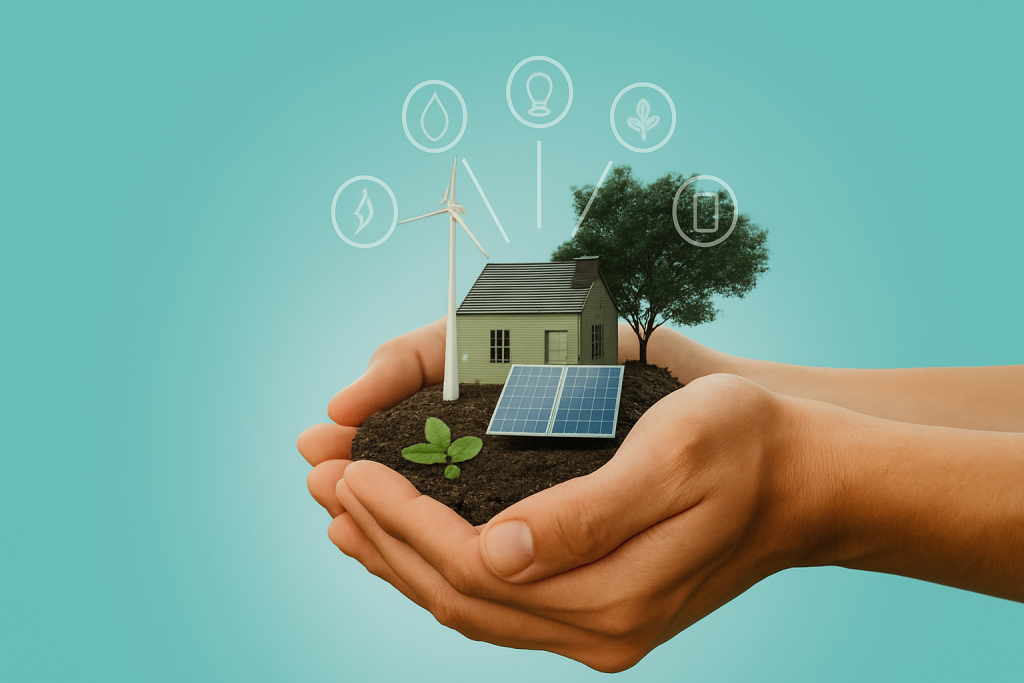
If you’ve ever stepped into a well-designed eco-friendly home during peak summer and wondered why it somehow feels cooler inside — even without the AC running full blast — you’re already experiencing the magic of smart, energy-efficient building design.
A lot of people think “what is an eco-friendly home?” is some fancy modern concept that only architects in big cities talk about. But honestly, the idea has been around for decades. Our grandparents lived in thick-walled homes with high ceilings, natural ventilation, shaded courtyards, and mud tiles — all practical, eco-friendly home designs long before the term became trendy.
Today, with power bills going up, summers getting harsher, and families wanting healthier living spaces, eco-friendly sustainable homes are no longer “nice to have” — they’re becoming the smarter way to build.
Let me break it down the way we discuss things on real sites, under a tree with a chai in hand — simple concepts, real examples, and zero jargon.
Why Eco-Friendly Homes Feel Different
Ever walked into a home where the breeze moves naturally through the rooms? Where the sunlight feels warm but not harsh? That’s what thoughtful design does.
Well-built eco friendly homes are not just about adding a few solar panels. It’s a mindset.
Think of your home like a living organism — it breathes, absorbs, stores, cools down, warms up, and adapts. When we build keeping climate, orientation, materials, and lifestyle in mind, the house itself starts doing half the job your appliances would otherwise do.
That’s how a building becomes energy-efficient.
Not by fancy gadgets alone, but by being designed right from day one.
Small Design Choices That Make a Big Difference
One thing that stands out when talking to homeowners across cities — everyone loves the idea of green living, but most people simply aren’t sure where to begin. Here are a few real, everyday choices that transform a structure into an eco friendly sustainable home:
1. Orientation: where your house “faces” matters
A home that faces the rising sun gets soft morning light and avoids harsh afternoon heat. Simple, old-school stuff… but it works.
Less heat = less AC = less power bill.
2. Cross-ventilation: let the wind do its job
Two windows facing each other can cool a room better than a ceiling fan sometimes.
We’ve seen this in older homes with big verandas and jalis. Modern homes can borrow the same logic.
3. Materials that keep the heat out
Fly-ash bricks, AAC blocks, and good-quality blended cement actually help maintain stable indoor temperatures.
Many builders also use reflective roof coatings or cool roof tiles to reduce heat absorption.
These choices support eco-friendly homes designs without adding major cost.
4. Smart shading
A simple sunshade above a window can cut heat gain by nearly 40%.
Tall trees on the south side? Even better. Nature becomes your air-conditioner.
5. Efficient appliances — the final step
Once the building envelope is efficient, appliances can work at half their capacity.
LEDs, inverter ACs, solar geysers… all add up.
This is the real recipe for low-energy living.
Solar Power: The Most Popular “Green Upgrade”
Whenever someone plans eco-friendly homes, solar panels usually show up in the conversation — and for good reason.
India gets plenty of sunlight. A basic 3 kW system can power most of a small home. Many families have cut their energy bills by 50–80% after switching to solar.
Of course, it’s not magic. You need a good installation, decent battery backup, and regular cleaning.
But once it’s running, it feels like the house has its own power plant.
And honestly, who doesn’t enjoy a nearly zero electricity bill?
Eco Friendly Home Décor That Actually Works
Now, décor is where people get confused. They think eco-friendly home decor means buying everything that looks like bamboo or jute.
But real sustainability is simpler:
- Choose natural fabrics like cotton and linen.
- Use reclaimed wood furniture — old timber lasts longer than new.
- Add indoor plants that genuinely improve air quality (snake plant, areca palm, money plant).
- Avoid plastics where possible.
- Let natural light dominate instead of heavy curtains and dark interiors.
You don’t need a “green aesthetic.”
You just need mindful choices.
How These Homes Help the Planet
Here’s the part many people forget — eco-friendly homes don’t only save power for the homeowner. They also:
- reduce strain on the grid
- lower CO2 emissions
- consume fewer natural resources
- generate less waste
- last longer due to better materials
It’s like putting less weight on the planet with every choice you make — one brick, one window, one lightbulb at a time.
When you multiply that by lakhs of homes, the impact becomes huge. If you talk to engineers or contractors, you’ll hear a common line:
“Building smart is easier than fixing it later.”
And it’s true.
Making a home energy-efficient during the planning stage costs very little.
Trying to “convert” an existing home later? Much harder.
With rising temperatures, erratic rainfall, and longer summers, families want comfort without crazy electricity bills. And that’s where eco-friendly home designs really shine.
They’re not a luxury anymore.
They’re just common sense.
The Heart of It All: A Home That Cares Back
When someone asks “what is an eco friendly home?”, I tell them this:
It’s a home that works with nature, not against it.
A home that stays cool, uses less power, breathes easier, and feels healthier.
A home that saves money without feeling like a compromise.
Most importantly, it’s a home that doesn’t just shelter you… it supports your lifestyle and future generations.
And honestly, that’s what every home should do.
FAQs
1. Are eco-friendly homes more expensive to build?
Not necessarily. Most energy-efficient features — orientation, ventilation, materials — cost the same as regular construction. Solar or rainwater systems add some cost but save money later.
2. What is the easiest eco upgrade for an existing home?
Switch to LED lights, improve insulation, add plants, and use efficient appliances. These small steps have a big impact.
3. Do eco friendly sustainable homes need special maintenance?
No. They actually require less maintenance because they’re designed to work naturally with climate.
4. Can small apartments also be eco friendly?
Absolutely. Good ventilation, natural lighting, and smart décor can significantly improve energy efficiency and make small apartments eco friendly.
5. Does solar power work during cloudy days?
Yes, though at reduced efficiency. Most systems use battery backups or hybrid connections.
6. How do eco friendly home decor choices make a difference?
They reduce plastic use, improve air quality, and support natural cooling. Plus, natural materials last longer.
7. Can I make my home eco-friendly without renovating?
Yes — start with what you can control: lighting, fans, curtains, plants, and appliances.