What Is a Door Jamb? (The Part That Decides Whether Your Door Works or Keeps Annoying You)

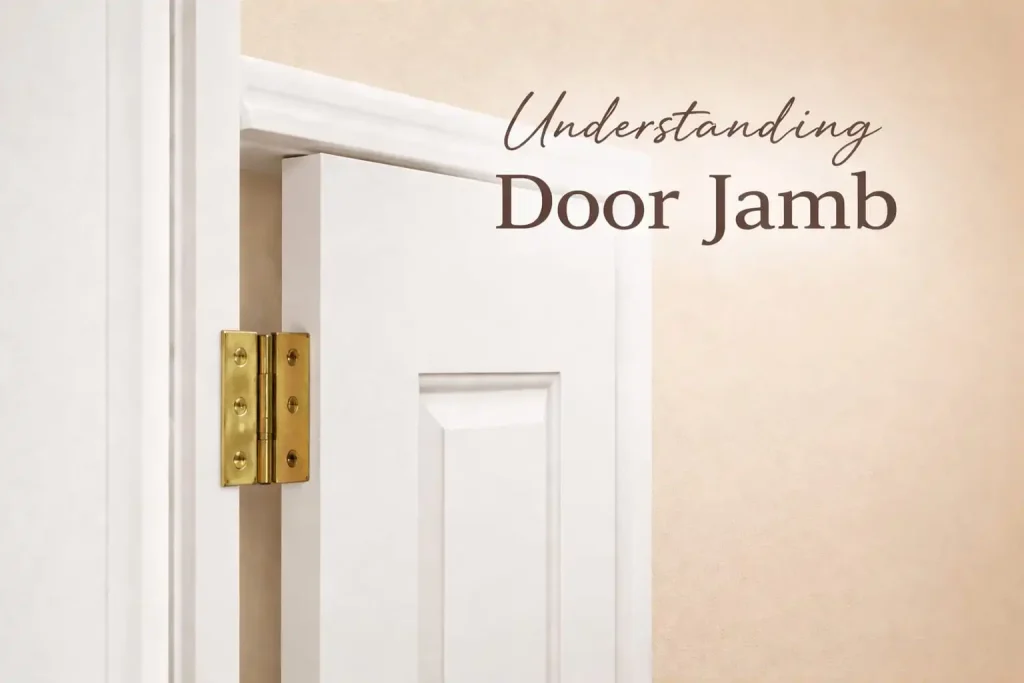
(Most people blame the door. It’s usually the jamb.)
The quick answer
A door jamb is the structural frame around a door — the sides and top where hinges and locks are fixed.
If this is not straight and correctly sized, the door won’t open, close, or align properly.
What a door jamb actually does on site
The door slab is just a panel.
The jamb is what makes it functional.
It:
• Holds the hinges
• Takes the door’s weight
• Aligns the door with the wall
• Receives the latch when it closes
So when a door feels “off,” the issue usually starts here.
Jamb vs frame vs casing (where confusion starts)
Door jamb
The actual structure — two vertical sides + top.
This is where everything is fixed.
Door frame
The complete system — jamb + sometimes threshold + stops.
Think of it as the full assembly.
Casing / architrave
Just the finishing trim.
Covers gaps. No structural role.
On site, all three get mixed up.
But if the jamb is wrong, no amount of casing fixes it.
Types of door jambs — what you’ll actually encounter
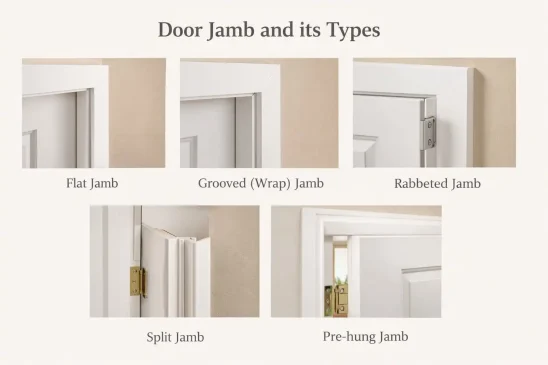

Flat jamb
Simple and most common.
Straight pieces fixed into the wall, then covered with trims.
Flexible. Easy to adjust.
Grooved (wrap) jamb
The wall board slides into grooves in the jamb.
Gives a clean, seamless finish.
But requires precise construction — no room for error.
Rabbeted jamb
Has a built-in step where the door sits when closed.
No need for separate door stops.
Common in pre-made systems.
Split jamb
Two pieces that clamp onto the wall from both sides.
Useful in renovations where wall thickness isn’t standard.
Pre-hung jamb
Door + jamb come as one unit.
Installed together.
Saves time and reduces mistakes.
Door jamb sizes — what actually matters
Width (most important)
Jamb depth must match wall thickness.
Typical reference:
• ~116 mm → standard internal walls
• ~165–170 mm → thicker/external walls
If this is wrong, the frame either sits inside or sticks out.
Both look bad. Both cause finishing issues.
Thickness
Usually around 17–27 mm depending on type.
More about durability and profile than major performance change.
Height
Depends on door size and opening.
But consistency is key — uneven heights create alignment problems.
Installation basics — where most problems begin
Step 1: Opening check
The opening should be slightly bigger than the door.
Allows adjustment using shims.
Step 2: Position the jamb
Place it in the opening.
Don’t fix it immediately.
Step 3: Plumb and level
This is the critical step.
• One side perfectly vertical
• Top perfectly level
If this is off, everything else follows that error.
Step 4: Shim properly
Small wedges between wall and jamb.
Used to adjust alignment.
Most doors fail because shimming was rushed.
Step 5: Fix it in place
Secure through the jamb into the wall.
Especially at hinge points — that’s where load sits.
Step 6: Check door movement
Before finishing anything:
• Door should swing freely
• Gaps should be even
• Latch should align perfectly
If not, adjust now — not after finishing.
What usually goes wrong
Not material.
Execution.
• Jamb not plumb
• Poor shimming
• Weak fixing at hinges
• Wrong jamb width for wall
Then you see:
• Door rubbing
• Uneven gaps
• Lock not aligning
And people start blaming hardware.
Exterior vs interior difference
Interior jambs → mainly alignment
Exterior jambs → alignment + weather protection
So exterior ones often include:
• Weather seals
• Deeper sections
• Better material protection
Because water and air leakage become issues.
If this was my own house
I wouldn’t compromise on:
• Correct jamb width
• Proper alignment
• Strong hinge-side fixing
Because once installed and finished, fixing it later is messy.
And expensive.
FAQs — how people actually think about it
What is a door jamb in simple terms?
It’s the frame that holds the door and keeps it aligned. Hinges and locks are fixed to it, so it controls how the door moves and closes.
Is door jamb the same as door frame?
Not exactly. The jamb is part of the frame. The frame includes other elements like thresholds and stops as well.
What are the main types of door jambs?
Flat, grooved, rabbeted, split, and pre-hung systems. Each works differently depending on wall type and finish requirement.
What is the standard door jamb size?
It depends on wall thickness. Around 116 mm for standard walls and ~165 mm for thicker ones are common reference points.
Do interior and exterior doors use different jambs?
Yes. Exterior jambs usually include sealing and are designed for weather resistance, while interior ones focus on alignment.
What causes a door to stick or not close properly?
Usually misaligned jamb — not the door itself. Poor leveling or shifting over time leads to uneven gaps.
Can I reuse an old jamb with a new door?
Possible if the jamb is straight and undamaged. But alignment and hinge positions must match exactly.
What tools are needed to install a jamb?
Basic tools like level, shims, drill, screws, and measuring tools. Accuracy matters more than complexity.
Are split jambs good for renovation?
Yes, they adjust to wall thickness variations and are easier to install in older structures.
What is the biggest mistake during installation?
Rushing alignment. If the jamb isn’t perfectly plumb and level, the door will never work properly.
Final thought
A door doesn’t fail randomly.
It follows the frame it’s given.
If the jamb is right, even a basic door works smoothly.
If the jamb is off, even an expensive door feels wrong every single day.