Cement Jali Design for Balcony: Privacy, Ventilation & Stylish Ideas

You’ve probably seen them in Jaipur lanes, old Delhi homes, or even coastal houses in Goa.
Sunlight slipping through tiny geometric cut-outs. Wind flowing freely even during peak summer.
Enough privacy to sip chai on your balcony without feeling like the whole neighborhood is watching.
That’s the charm of a cement jali.And interestingly, this design element is making a serious comeback in modern homes.
Not because it’s trendy. Because it actually works.A smart cement jali design quietly solves multiple problems together.
It gives privacy without blocking air. It cuts harsh sunlight without making the balcony dark.
And unlike fragile décor trends, a good concrete jali design ages beautifully with the building.Read on to find out stylish ideas and cement jali designs for the balcony.
What is a Cement Jali Design?
A cement jali design is basically a perforated screen made using cement or concrete.
It comes with repeated cut-out patterns that allow light and air to pass through while partially blocking visibility.
Think of it like nature-friendly ventilation built into the wall itself.
Traditional Indian architecture used stone jalis in havelis and courtyards to keep homes cooler.
Modern concrete jali systems follow the same logic but use cement-based precast blocks for strength and affordability.
Today, these designs come in countless patterns:
- Geometric shapes
- Floral motifs
- Minimal square grids
- Traditional jaali work
- Contemporary abstract cuts
Some homeowners prefer bold statement patterns. Others keep the cement jali subtle and functional.
A well-designed concrete jali design doesn’t feel heavy or outdated anymore.
In fact, many architects use it to soften modern boxy elevations.
And unlike solid balcony walls, a cement jali design keeps spaces breathable.
Why is Cement Jali Perfect for Balconies?
Balconies need balance. Too open, and you lose privacy.
Too closed, and the space starts feeling boxed in.
A cement jali sits perfectly in between.
Privacy Without Suffocation
This is probably the biggest reason people choose a cement jali design for balconies.
You can sit comfortably without feeling exposed while still getting natural air and light.
In apartments facing other buildings, this makes a huge difference.
Better Ventilation
Metal sheets or glass panels often trap heat.
But a concrete jali allows cross ventilation naturally.
You’ll especially notice this during summers or humid coastal weather.
Even a small breeze passes through.
Reduced Heat and Glare
Direct sunlight can make balconies unusable during afternoons.
A patterned concrete jali design breaks harsh sunlight into softer filtered light.
Almost like natural shading.
Low Maintenance
Unlike wood, cement doesn’t demand constant polishing or termite treatment.
A properly installed cement jali lasts for years with minimal upkeep.
Adds Character to the Building
Modern apartments sometimes look too plain.
A textured cement jali design instantly adds depth and personality to the façade.
What Are the Popular Cement Jali Designs for Balconies?
Not every balcony needs elaborate patterns.
Sometimes even simple designs look stunning when sunlight hits them right.
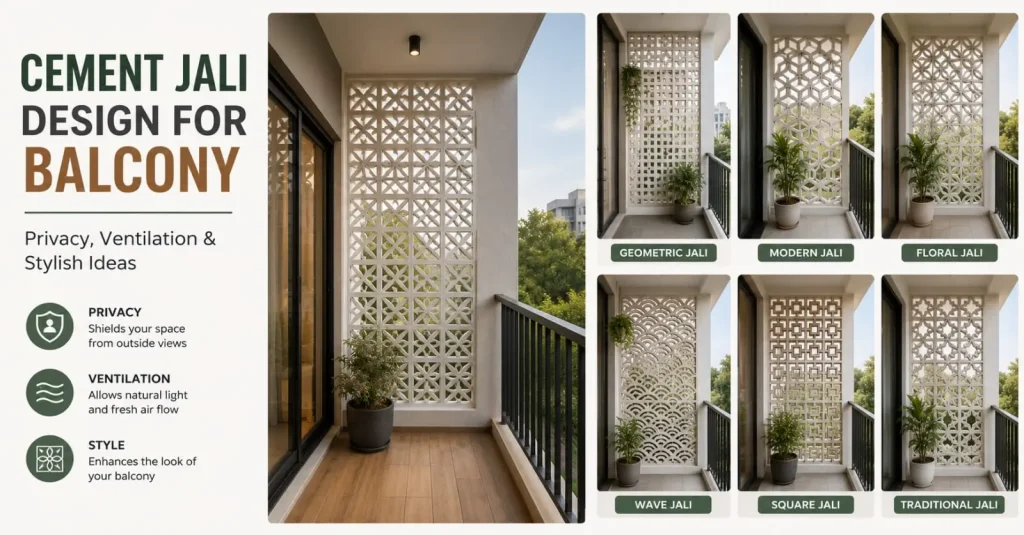
Geometric Concrete Jali Design
Probably the most common modern option.
Squares, hexagons, circles, and triangles create clean shapes that suit contemporary homes.
Minimal but stylish. These patterns work especially well in apartments.
Floral Cement Jali Design
Inspired by traditional Indian craftsmanship.
You’ll often see these in heritage homes, villas, or homes aiming for a softer aesthetic.
The shadows created by floral concrete jali patterns feel beautiful during mornings.
Brick-Style Jali
Simple staggered openings created using exposed concrete blocks.
Affordable. Practical. Very common in budget-friendly homes and utility balconies.
Vertical Slit Jali Design
Slim vertical cuts that create a sleek modern appearance.
Good for narrow balconies where privacy matters more.
Abstract Concrete Jali Design
More artistic and custom-made.
Architects often use these as statement elements in luxury homes or cafés.
A little bold. But when done right, it completely transforms the balcony.
What Are the Best Cement Jali Designs Based on Balcony Types?
Small Apartment Balconies
It is advisable to use lighter geometric patterns and avoid thick bulky blocks for compact balconies.
Choose brighter shades like off-white or light grey.
Also, using a minimal concrete jali keeps the balcony airy instead of cramped.
Corner Balconies
These usually receive stronger winds and more sunlight.
A medium-density cement jali design works best here.
It controls glare without blocking views completely.
Utility Balconies
The ones used for washing machines, drying clothes, or storage.
Simple square-grid concrete jali designs are practical and affordable.
They hide clutter while allowing ventilation.
Luxury Villa Balconies
This is where decorative cement jali patterns shine.
Custom floral or abstract designs create a premium architectural look.
Especially when paired with textured finishes or warm lighting.
Balcony Gardens
If you grow plants, airflow matters a lot.
A breathable concrete jali design protects plants from harsh winds while still allowing sunlight.
What Are the Best Colours and Finishes for Cement Jali?
Natural Cement Finish
Raw cement texture looks earthy and modern.
Works beautifully in industrial-style homes.
White Cement Jali
Bright. Clean. Elegant.
White-toned cement jali designs reflect heat better and pair nicely with greenery.
Textured Concrete Finish
Adds depth and shadow play.
Very popular in premium villas and cafés.
Matte Grey Finish
Minimal and contemporary.
Pairs well with black railings and wooden flooring.
Sandstone Shades
Warm beige or sandstone-colored concrete jali patterns work beautifully in tropical-style homes.
Especially in Rajasthan-inspired architecture.
What Are Cement Jali Design Installation Tips?
This part matters more than people realise.
Even the best cement jali design can fail if installation is poor.
Check Structural Load
A concrete jali is heavier than metal or glass.
The balcony slab should support the load properly.
Always involve a structural engineer for larger installations.
Use Good Quality Cement
Poor-quality material leads to cracks over time.
Reliable cement products matter for durability and weather resistance.
You can explore construction-grade solutions from JK Cement.
Plan Ventilation Properly
Don’t blindly copy Pinterest designs.
The jali opening size should suit the wind direction, sunlight, and privacy needs.
Waterproof the Balcony
Balconies constantly face rain and heat.
Proper waterproofing prevents seepage near the cement jali joints.
Choose Skilled Fabricators
A badly aligned concrete jali design becomes visually awkward very quickly.
Pattern symmetry matters, especially in front elevations.
The Final Words
Good balcony design isn’t only about appearance. It’s about comfort.
A place where air moves naturally. Where sunlight feels softer.
Where you get privacy without shutting yourself away from the outdoors.
That’s why the cement jali still survives every design trend that comes and goes.
Because it solves real problems.
A thoughtful cement jali design can make even a small balcony feel calmer, cooler, and more connected to Indian architectural roots.
Sometimes the smartest solutions are the ones our older homes already figured out decades ago.
FAQs
- 1. Is cement jali good for small balconies?
- Yes. A lightweight cement jali design works especially well for small balconies because it allows natural airflow and ventilation without making the space feel closed.
- 2. Which is better: concrete jali or metal grill?
- Both have their advantages, but a concrete jali offers better aesthetics, privacy, and heat reduction for residential spaces.
- 3. Does cement jali reduce sunlight?
- Yes. A cement jali design helps filter harsh sunlight and reduces direct heat entering balconies or terraces.
- 4. Can concrete jali withstand rain?
- Absolutely. A properly cured and well-installed concrete jali performs strongly in rain, humidity, and changing weather conditions.
- 5. What is the best color for cement jali?
- White, light grey, sandstone, and natural cement shades remain the most preferred choices for modern cement jali designs.
- 6. Is cement jali expensive?
- The cost of a cement jali depends on the pattern complexity, thickness, size, and customization required.
- 7. Does cement jali need maintenance?
- No. Cement jali designs are relatively low-maintenance and durable for long-term outdoor use.