Types of Tile Adhesives

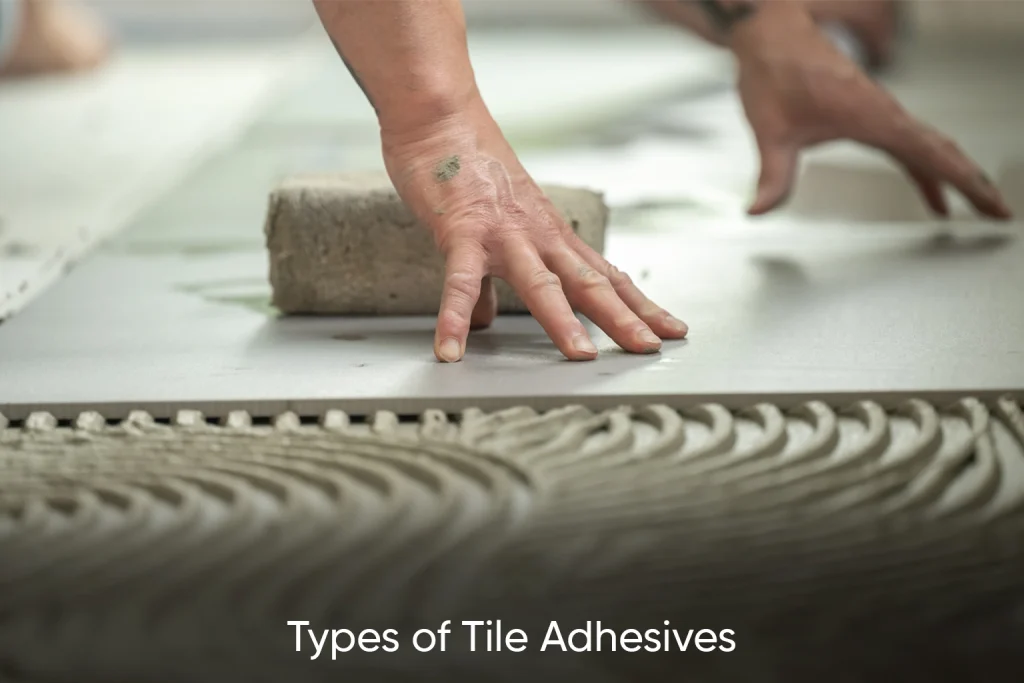
To provide a clear understanding of modern construction materials, it is helpful to first define the broad concept of an adhesive before detailing the specialized properties and types of tile adhesives as outlined in the JKTylo® range.
Tile adhesive is a specialized bonding agent factory-engineered specifically to fix tiles and stones to various surfaces. Modern tile adhesives, such as those in the JKTylo range, are polymer-modified. This means they are fortified with high-grade chemicals that create a powerful chemical bond. This is essential for modern, non-porous tiles like vitrified or porcelain, which do not have the natural pores required for traditional cement to “grip.”
Types of Tile Adhesive
According to the JKTylo technical specifications, adhesives are categorized into five types based on their performance and the specific environments they are designed for:
· Type 1 (Standard): Polymer-modified, cement-based adhesives for interior dry areas. Ideal for ceramic and semi-vitreous tiles.
o Examples: JKTylo 111 Classik Grey, JKTylo 112 Classik White.
· Type 2 (Advanced): Designed for vertical applications and tile-on-tile installations. These offer anti-skid properties and extended open time.
o Examples: JKTylo 211 Anti-Skid Grey, JKTylo 212 Anti-Skid White.
· Type 3 (High Performance): Engineered for demanding environments like swimming pools, saunas, and heavy-traffic areas.
o Examples: JKTylo 555 Platinum Grey, JKTylo 606 Platinum White.
· Type 4 (High Flexibility): Highly polymer-modified for superior flexibility, designed for large-format tiles and stones in both interior and exterior settings.
o Examples: JKTylo 777 Ultra Flex White, JKTylo 888 Max Pro White.
· Type 5 (Specialized PU): Polyurethane-based adhesives for “impossible” substrates like plywood, metal, glass, and drywall.
o Examples: JKTylo 909 PU Anchor, JKTylo 999 PU Grip.
Key Advantages
The JKTylo range is designed to offer “Unshakeable Power” through several key properties:
· Anti-Skid & Sag Resistance: For wall applications, the chemical composition ensures heavy tiles stay in place during the setting process.
· Thermal Flexibility: The polymers allow the bond to remain flexible, acting as a shock absorber against thermal expansion and contraction.
· No VOCs: Modern adhesives are formulated without Volatile Organic Compounds, ensuring they are environmentally friendly and safe for indoor air quality.
· Full Bedding: When applied with a notched trowel, the adhesive ensures 100% coverage, eliminating hollow air pockets that lead to cracked tile corners.
In summary, while a general adhesive is a broad term for any “glue,” a tile adhesive is a sophisticated material engineered to withstand the weight, moisture, and environmental stresses specific to tiled surfaces. Selecting the correct type, such as JKTylo 111 Classik Grey, ensures a finish that is as durable as it is beautiful
FAQs
1. What is an adhesive and how does it work?
An adhesive is a bonding substance used to join two surfaces permanently. It works through adhesion (sticking to the surface) and cohesion (internal strength), allowing materials like tile, stone, wood, and metal to be bonded without mechanical fasteners.
2. What is tile adhesive and why is it better than traditional cement?
Tile adhesive is a factory-engineered bonding agent designed specifically for fixing tiles and stones. Unlike traditional cement, modern polymer-modified tile adhesives create a strong chemical bond, making them ideal for non-porous tiles like vitrified and porcelain.
3. What are the main types of tile adhesives?
Tile adhesives are classified into five types based on performance and application:
- Type 1 (Standard): For interior dry areas and ceramic tiles
- Type 2 (Advanced): For wall tiles and tile-on-tile fixing
- Type 3 (High Performance): For wet areas and heavy-traffic zones
- Type 4 (High Flexibility): For large-format tiles and exterior use
- Type 5 (PU Adhesives): For plywood, metal, glass, and drywall
4. Which tile adhesive should I choose for my project?
The correct adhesive depends on tile type and surface:
- Ceramic tiles: JKTylo 111 Classik Grey
- Vitrified wall tiles: JKTylo 211 Anti-Skid Grey
- Light marble and stones: JKTylo 606 Platinum White
- Large-format tiles: JKTylo 777 Ultra Flex White
- Metal, glass, plywood: JKTylo 909 PU Anchor
5. What are the benefits of using polymer-modified tile adhesives?
Polymer-modified tile adhesives offer strong bonding, thermal flexibility, anti-skid properties, full bedding coverage, and zero VOCs. They prevent tile slippage, cracking, and hollow spots, ensuring a long-lasting and professional finish.