Seepage: Causes, Types & Effective Solutions for Wall Seepage in Homes

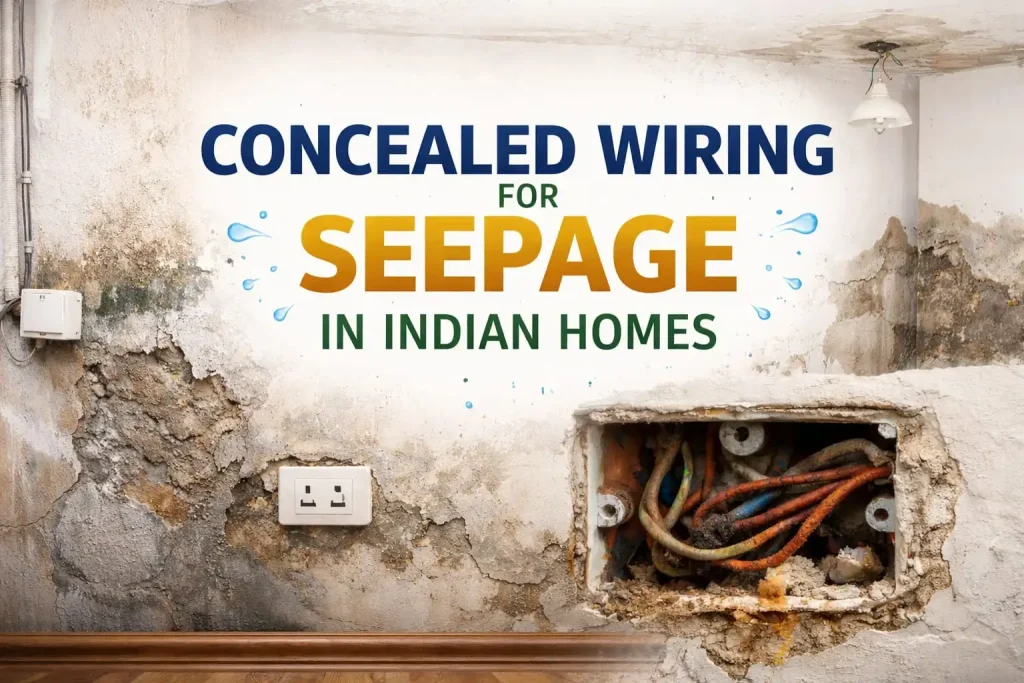
If you’ve ever seen damp patches, peeling paint, or that musty smell that just won’t go away, you’re already dealing with seepage.
In simple terms, the meaning of seepage is water slowly entering or passing through walls, ceilings, or floors where it shouldn’t.
It’s not just an eyesore, but left unchecked, water seepage can weaken your walls, damage finishes, and even affect your health.
This blog will break this down the way it actually shows up on real sites and homes.
What is the meaning of seepage, really?
It doesn’t need a big opening.
Just a weak point is enough. And once it starts, it rarely stops on its own.
Why Seepage Happens in Indian Homes
If you’ve spent even one monsoon in a typical Indian house, you’ve seen seepage in action.
Here are the most common reasons behind water seepage:
1. Poor Waterproofing
Most homes skip proper waterproofing during construction. But later it becomes expensive.
Without proper treatment, wall seepage is almost guaranteed.
2. Cracks in Walls
Small cracks look harmless. But they act like entry gates for seepage.
Thermal expansion, settling, or just bad workmanship can create these cracks.
3. Plumbing Leaks
Hidden leaks behind walls are a major cause of water seepage. Bathrooms and kitchens are usual suspects.
You won’t see the leak. You’ll only see the damage.
4. External Factors
- Rain hitting the external walls.
- Poor drainage around the house.
- Water stagnation on terraces.
All of these slowly lead to wall seepage.
Types of Seepage You’ll Commonly See
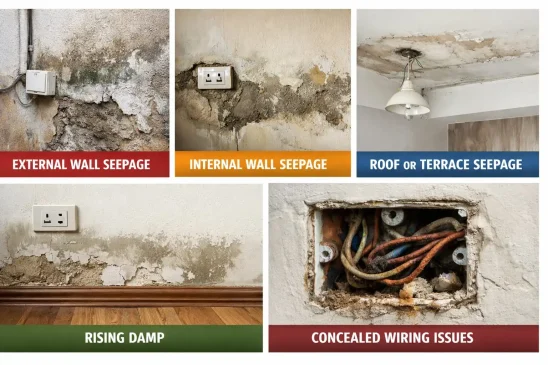

Not all seepage looks the same. Knowing the type helps you fix it properly.
1. External Wall Seepage
When rainwater enters through the outer walls, what happens? You’ll see damp patches, mostly during monsoons.
This is a classic case of water seepage from outside.
2. Internal Wall Seepage
Usually occurs from leaking pipes or bathrooms. The meaning of seepage here is internal water movement, not rain.
Peeling paint is the first sign.
3. Roof or Terrace Seepage
This is very common in older buildings.
Water collects on the roof and slowly seeps in. This type of wall seepage often shows up as ceiling stains.
4. Rising Damp
Water from the ground moves upward through walls. You’ll notice dampness near the floor.
This is one of the most stubborn forms of seepage.
Early Signs of Water Seepage You Shouldn’t Ignore
Most people ignore seepage until it becomes serious.
Here’s what to watch for:
- Damp patches on walls
- Bubbling or peeling paint
- White powder (efflorescence)
- Musty smell
- Mold growth
These are all early warnings of water seepage. Ignored, these can cause repairs that could be costlier.
That’s the reality.
Wall seepage starts quietly but spreads aggressively.
Effective Solutions for Wall Seepage
Fixing the seepage isn’t about covering it up. It’s about stopping water at the source.
1. Proper Waterproofing
This is the most reliable solution.
Use good quality waterproofing systems during construction or renovation.
For example, using high-quality cement like JK Super Cement can help create a dense, less porous surface that reduces water seepage risks.
2. Crack Repair
Seal all visible cracks.
Use fillers or sealants designed for construction. Even a hairline crack can cause wall seepage.
3. Fix Plumbing Issues
Check pipelines regularly. A small leak can lead to massive seepage damage over time.
4. Exterior Coating
Weatherproof paints and coatings protect external walls.
They act like a raincoat against water seepage.
5. Improve Drainage
Make sure water doesn’t collect near your building.
Good drainage reduces the chances of wall seepage significantly.
6. Terrace Treatment
Use proper slope and waterproofing on terraces.
Standing water is the biggest trigger for seepage here.
Prevention Tips for Seepage
Here’s something every homeowner learns the hard way:
Fixing seepage later costs more than preventing it. Simple steps can save you a lot:
- Use quality materials during construction
- Don’t skip waterproofing
- Inspect walls before the monsoon
- Fix leaks immediately
- Even design choices matter.
For example, proper structural planning can help manage moisture better indoors.
Another Ground Reality We’ve all seen this happen during monsoons…
When one house in the lane gets damp patches, the next year, two more houses show the same issue. That’s how seepage spreads across poorly built structures.
It’s not bad luck. It’s usually the same construction shortcuts repeating.
What You Should Remember
The meaning of seepage is unwanted water entering your structure:
- Water seepage damages both appearance and strength.
- Wall seepage can come from rain, plumbing, or ground moisture.
- Early signs should never be ignored.
- Proper waterproofing and maintenance are key.
If you’re building or renovating, this is one area where cutting corners will come back to haunt you. Handle it early. Handle it right.
Because a dry wall isn’t just about looks – it’s about the life of your home.
FAQs
1. What causes seepage to occur in walls?
Seepage results from poor waterproofing, cracks, or plumbing leaks.
2. Is seepage harmful to health?
Yes. Water seepage can lead to mold growth, which affects air quality and can cause respiratory issues.
3. Can I fix seepage permanently?
Yes, but only if the root cause is treated. Surface fixes won’t solve wall seepage in the long term.
4. How can I identify hidden seepage?
Signs like paint bubbles, damp smell, or unexplained stains are classic indicators of seepage.
5. Does repainting fix seepage?
No. Paint only hides the problem temporarily. Water seepage will come back if untreated.
6. Which areas are most prone to seepage?
Bathrooms, terraces, basements, and external walls are most vulnerable to wall seepage.
7. How can I prevent seepage in new construction?
Use good materials, proper waterproofing, and skilled workmanship to avoid future seepage issues.