Flooring: Types of Flooring, Materials & Best Flooring for House

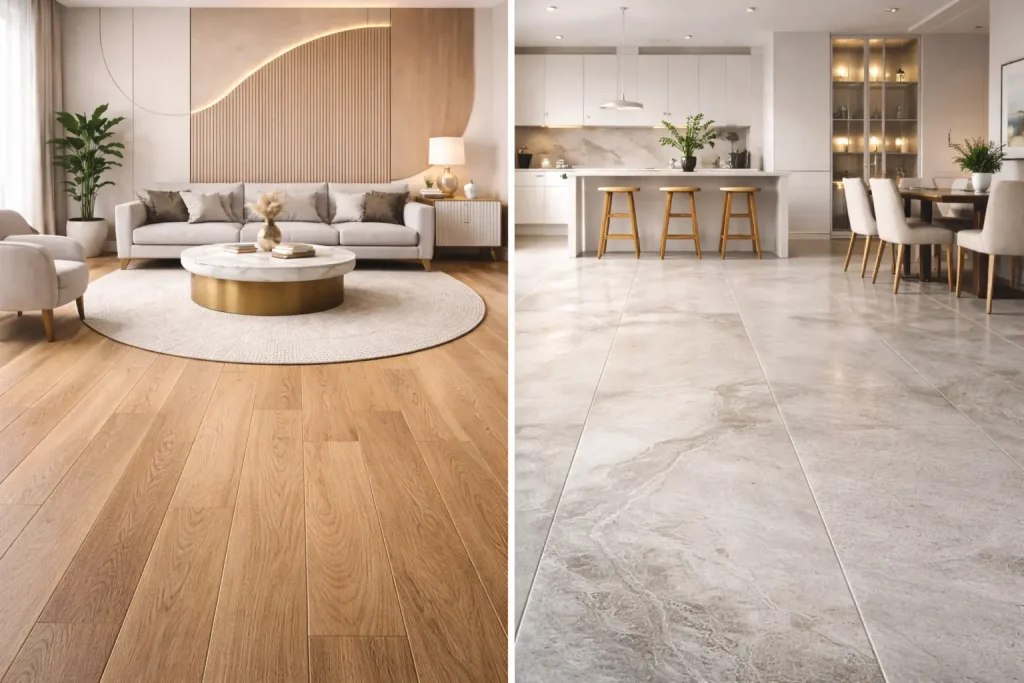
Flooring is not a colour decision.
It’s a wear decision.
In Indian homes, floors quietly absorb:
- Daily foot traffic
- Dragged dining chairs
- Wet mopping twice a day
- Monsoon humidity
- Summer heat expansion
- Kids, pets, delivery boxes, everything
A wrong flooring choice reminds you every single day.
The right one disappears under comfort.
This is a practical 2026 guide — not showroom advice. We’ll break down material behaviour, room-wise logic, installation mistakes, cost reality, and what truly survives Indian climate.
Quick Answer
The best flooring for a house in India depends on three things:
- Moisture exposure
- Traffic load
- Maintenance tolerance
In real-world Indian conditions:
- Matt vitrified tiles are the safest long-term choice
- SPC (stone plastic composite) vinyl offers waterproof flexibility
- Engineered wood works only in dry, controlled rooms
- Natural stone looks premium but demands maintenance discipline
- Concrete Flooring: Reliable and strong for long-term performance
And remember this:
Flooring performance is 60% installation.
Material is only 40%.
What Flooring Actually Does on Site
On drawings, flooring is a “finish layer.”
On site, it is a sacrificial surface.
It absorbs:
- Abrasion
- Impact
- Cleaning chemicals
- Thermal movement
- Moisture migration from below
When flooring fails, it doesn’t usually fail on day one.
It starts quietly:
Tiles sound hollow.
Wood edges lift.
Grout darkens permanently.
Stone loses shine.
Most failures begin below the surface.
Substrate preparation decides lifespan more than tile brand.
Main Types of Flooring Used in Indian Homes (2026 Reality)
1. Vitrified Tiles (Most Reliable All-Rounder)
Material: Porcelain-based composite
Best for: Living rooms, bedrooms, kitchens
Why they work:
- Very low water absorption
- Strong surface hardness
- Easy maintenance
- Wide size options (60×60, 80×80, 120×60)
Biggest mistake:
Tiles laid on wet screed → hollow sound within months.
Verdict: For Indian homes, matt vitrified tiles remain the safest long-term bet.
2. Ceramic Tiles
Material: Clay-based
Best for: Bathrooms and low-load areas
Lower cost, but:
- Higher water absorption than vitrified
- More prone to chipping
- Not ideal for heavy living room traffic
Use anti-skid variants in wet zones.
3. Marble Flooring
Material: Natural stone
Looks premium. Ages beautifully — if maintained.
But:
- Needs sealing
- Prone to staining
- Scratches over time
- Requires periodic polishing
Marble doesn’t fail structurally. It fades if neglected.
Choose only if you’re ready for maintenance discipline.
4. Granite
Extremely strong. Ideal for:
- Stairs
- Corridors
- Outdoor thresholds
Highly polished granite can be slippery when wet. Choose flamed or leather finish for better grip.
5. Engineered Wood Flooring
Multi-layer plywood core with real wood veneer.
Best for:
- Bedrooms (air-conditioned)
- Dry indoor spaces
Risk:
Moisture swelling if installed without vapor barrier.
It feels warm and premium. But Indian humidity is unforgiving.
Use only in moisture-controlled rooms.
6. Laminate Flooring
HDF core with printed wood texture.
Affordable wood look. But:
- Weak against standing water
- Edge swelling common
- Not repairable
Good for rental flats or budget bedrooms.
7. SPC / Vinyl Flooring (Rising Strong in 2026)
Stone Plastic Composite core.
Why it’s growing:
- Waterproof
- Termite-proof
- Quick installation
- Comfortable underfoot
Handles Indian humidity better than laminate.
SPC is outperforming laminate in real homes — especially in coastal cities.
8. Kota Stone
Understated, durable, traditional.
Great for:
- Verandahs
- Balconies
- Utility areas
Needs polishing and sealing.
Best Flooring by Room (Indian Planning Logic)
Living Room / Hall
Safe 2026 choices:
- 80×80 matt vitrified tiles
- Marble (if budget + maintenance allow)
- SPC vinyl (budget comfort option)
Avoid glossy tiles — glare + slip risk.
Bedrooms
Best choices:
- Engineered wood (AC rooms only)
- SPC vinyl
- Matt porcelain
Bedrooms should feel warm, not reflective.
Kitchen
Choose:
- Anti-skid porcelain
- Matt vitrified
Never wood-based flooring here.
Water + oil + heat = long-term damage.
Bathrooms
Only:
- Anti-skid ceramic/porcelain
- R11 slip rating preferred
Never laminate. Never engineered wood.
Balcony / Utility
Use moisture-resistant surfaces:
- Outdoor vitrified
- Kota stone
- Granite
Balconies are moisture zones.
Treat them accordingly.
Tile vs Wood vs SPC Vinyl (Performance Comparison)
Water resistance:
Tiles and SPC win.
Comfort:
Wood > SPC > Tile.
Maintenance:
Tile and SPC easiest.
Repair:
Plank systems are easier than tiles.
For Indian climate stability:
SPC vinyl outperforms laminate significantly.
What Actually Goes Wrong on Indian Sites
Seen repeatedly:
- Tiles laid before screed dries
- No expansion gaps near walls
- Wrong adhesive grade
- Cheap grout → permanent staining
- Wood installed during peak monsoon without acclimatization
At handover, everything looks perfect.
After one monsoon? Complaints start.
Subfloor moisture below 4% is non-negotiable.
Flooring Thickness Guidelines
Don’t go ultra-thin to save money.
- Ceramic: 8–10 mm
- Vitrified: 9–12 mm
- SPC: 4–6 mm
- Laminate: 8–12 mm
Thin materials crack, dent, or warp faster.
Installation Logic That Prevents 80% of Failures
✔ Screed moisture below 4%
✔ Level tolerance within 3 mm over 2 meters
✔ Correct adhesive type
✔ 5–8 mm expansion gaps
✔ Proper skirting alignment
Installation quality decides most failures.
Not the brand printed on the box.
Flooring Cost Guide (India 2026)
Approximate material cost per sq ft:
- Ceramic: ₹40 – ₹90
- Vitrified: ₹80 – ₹150
- Marble: ₹200 – ₹500+
- SPC vinyl: ₹100 – ₹250
- Engineered wood: ₹200 – ₹450
A 1,000 sq ft home typically ranges:
₹1 lakh to ₹3 lakh depending on material mix.
Labour and adhesive add separately.
If This Were My Own House
Hall → 80×80 matt vitrified
Bedrooms → SPC or engineered (if AC)
Kitchen → Anti-skid porcelain
Balcony → Outdoor vitrified
All installed only after moisture testing.
Durability first. Pattern second.
FAQs
Which is the best flooring for a house in India?
Matt vitrified tiles are the safest all-round option for durability and moisture resistance.
Is wooden flooring suitable for the Indian climate?
Only in dry, air-conditioned rooms with proper moisture barrier.
Which flooring is fully waterproof?
SPC vinyl and ceramic/porcelain tiles are waterproof.
Do tiles crack easily?
Not if laid on cured, level screed using correct adhesive.
Is vinyl flooring durable?
Yes. SPC vinyl lasts 15–20 years when properly installed.
What flooring is best for kids and pets?
SPC vinyl or textured vitrified tiles resist scratches and spills well.
Can flooring be installed over old tiles?
Yes, if the base is level and firmly bonded.
Is glossy flooring slippery?
Yes, especially when wet. Matt finishes are safer.
How long does flooring last?
10–25 years depending on material and installation discipline.
Do all flooring materials expand?
Yes. Expansion gaps are always required.
Final Thought
The floor is touched every day.
It should:
- Feel stable
- Resist water
- Clean easily
- Age quietly
When flooring performs well, nobody talks about it.
When it fails, it becomes the most expensive regret in the house.
Choose for performance.
Install with discipline.
Test moisture before fixing.
That’s how flooring survives Indian conditions — not just design trends.