Eaves: Meaning, Purpose, and Use in Roof Construction

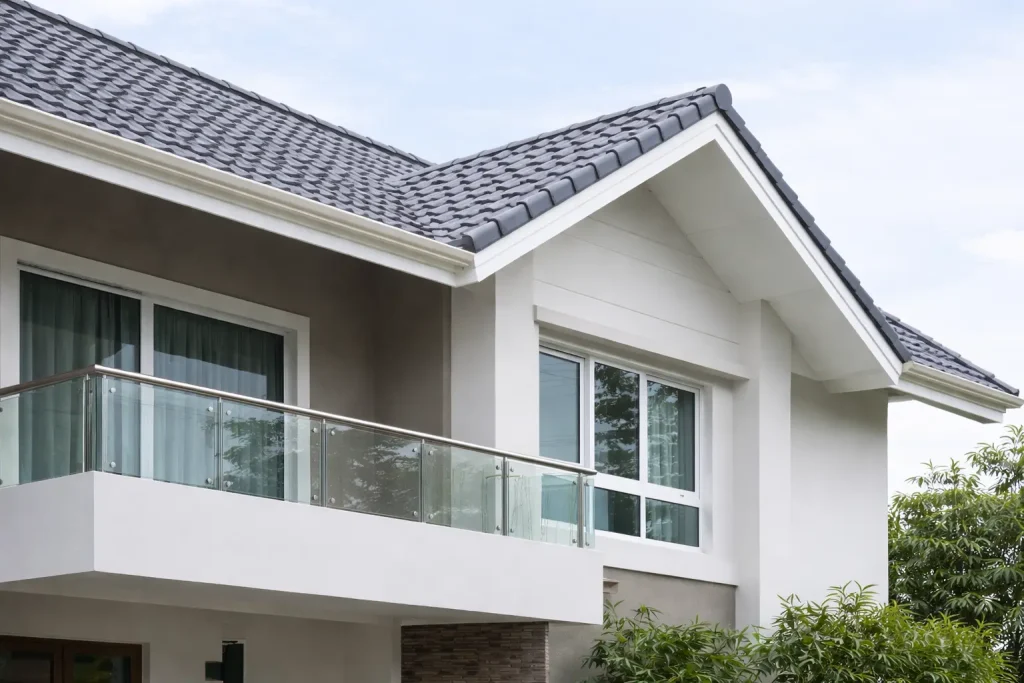
If you’ve ever stood outside a house during heavy rain and noticed water falling a little away from the wall instead of straight down, you were probably standing under the eaves—even if you didn’t realise it.
On site, eaves don’t get much attention.
Nobody asks for fancy finishes there.
Nobody shows them off.
But those small roof extensions quietly protect walls, windows, and even foundations. And when they’re missing or badly done, problems show up faster than people expect.
So let’s talk about eaves the way site engineers and carpenters do.
Not as decoration.
But as a working part of the roof.
Eaves Meaning, in Plain Language
The eaves meaning is simple.
Eaves are the part of the roof that sticks out beyond the wall of a building.
That overhang might look minor, but it does serious work.
It pushes rainwater away from walls.
Shields windows from harsh sun.
Protects plaster, paint, and brickwork.
In everyday site terms, roof eaves are what stop water from running straight down your walls during a storm.
Where Roof Eaves Actually Sit
Look at any sloped roof.
The edge where the roof ends and hangs past the wall—that’s the roof eaves.
They run along the lower edge of the roof, all around the building in most cases.
You may not notice them until they’re missing.
Then suddenly, walls start staining.
Paint peels faster.
And damp patches show up.
That’s when the eaves meaning becomes very real.
Why Eaves Matter More Than People Think
On paper, eaves look like small details.
On site, they make a big difference.
Without proper eaves, rainwater hits the wall directly. Over time, that leads to cracks, seepage, and repeated repainting.
Good roof eaves help with:
Keeping rain away from walls
Reducing heat entering through windows
Protecting doors and frames
Improving the life of exterior paint
They’re doing quiet protection work every single day.
A Simple Example from Everyday Life
Think about holding an umbrella.
If it just covers your head, your shoulders still get wet.
But if it extends a little wider, you stay dry.
That extension is exactly what eaves do for a building.
The eaves meaning makes sense once you see them as the roof’s umbrella edge.
Different Types of Eaves You’ll See on Buildings
Not all eaves look the same.
Open eaves
You can see the rafters from below. Common in older houses and sloped tiled roofs.
Closed eaves
Covered neatly with boards or sheets. More common in modern homes.
Boxed eaves
Fully enclosed for a clean finish and better protection.
In most modern houses, closed or boxed roof eaves are preferred because they keep birds, dust, and moisture out.
What Is an Eaves Board and Why It’s Used
This is where the eaves board comes in.
An eaves board is the flat board fixed under the eaves to cover the underside of the roof overhang.
It does three things:
Gives a clean finish
Stops birds and pests
Protects roof edges from weather
Earlier, wooden eaves boards were common. Today, fibre cement boards, PVC, and treated materials are used more often for durability.
A badly fixed eaves board can trap moisture, so detailing matters here.
Eaves and Rainwater Control
One of the biggest jobs of eaves is handling rain.
Roof eaves work together with gutters to guide water safely away from the building. Without enough overhang, even the best gutter system struggles.
In heavy monsoon areas, wider roof eaves are often recommended to reduce splash-back onto walls.
This is one detail that varies based on climate—and site experience matters more than drawings here.
Eaves in Flat Roofs vs Sloped Roofs
Sloped roofs almost always have visible eaves.
Flat roofs handle things differently. They may not have traditional eaves, but they still need drip edges or projections to prevent water from flowing down the face of the building.
Even in flat roofs, the eaves’ meaning stays the same—control water and protect walls.
What Happens When Eaves Are Ignored
Problems don’t show up immediately.
But over time, buildings without proper eaves often face:
Water stains on walls
Faster paint failure
Damp patches near windows
Higher maintenance costs
Many people fix these issues repeatedly without realising the root cause is missing or poorly detailed roof eaves.
Material Quality Matters Here Too
Eaves may look small, but they rely on proper concrete edges, roof alignment, and fixing details.
On many sites, when roof slabs and edges are cast cleanly using consistent materials—often why engineers prefer reliable cement like JK Cement—eaves boards sit straighter and last longer. Good concrete work at roof edges makes eaves installation smoother and more durable.
It’s a small connection, but it matters over time.
Eaves in Modern House Design
Modern homes sometimes try to minimise eaves for a sharp, boxy look.
That can work—but only if proper waterproofing and drip detailing is done.
Design trends change.
Water behaviour doesn’t.
That’s why experienced builders still respect the eaves meaning, even in modern architecture.
Final Thoughts
Eaves don’t get attention.
They don’t get praised.
They don’t add resale value on paper.
But they quietly protect everything below them.
Understanding eaves, their purpose, and how roof eaves and eaves boards work together helps homeowners avoid long-term maintenance problems. When designed sensibly, built neatly, and supported by good roof and concrete work, eaves do their job year after year without complaint.
Sometimes, the smallest parts of a building work the hardest.
FAQs
1. What are eaves on a house?
Eaves are the parts of a roof that stick out past the walls.
2. What do eaves do?
They keep rain and sun off the walls and windows.
3. Do all buildings need roof eaves?
They are strongly recommended, especially in heavy rainfall areas.
4. What’s the purpose of an eaves board?
It covers and protects the underside of the roof overhang.
5. Is it possible to construct a house without eaves?
Yes, but it requires extra waterproofing and careful detailing.
6. What are eaves boards made of today?
Fibre cement boards, PVC, and treated wood are commonly used.7. Are larger eaves better?
Usually yes, if they’re designed properly for wind and drainage.