How to Upgrade a Traditional Village House with Modern Touches

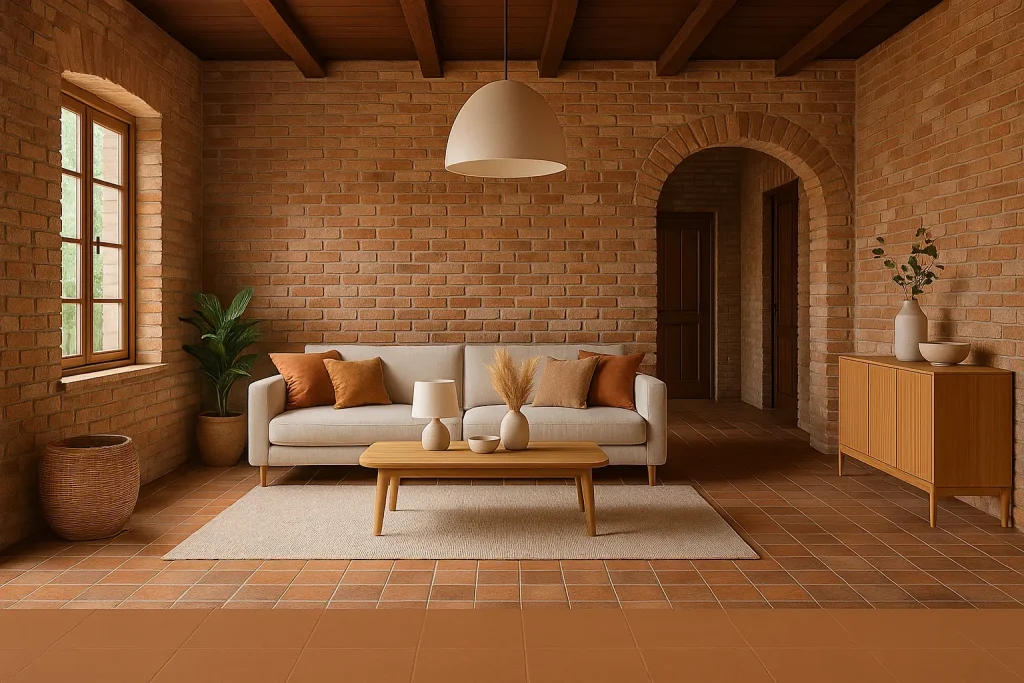
When you inherit or own a home in the countryside, there’s something special about it – weathered walls, kids’ laughter in a courtyard, that slow rhythm of village life. But over time, you might feel the need to bring it up to date – better insulation, sharper lines, a bit of style without losing the soul. That’s where a simple village house design can meet subtle upgrades. With the right tweaks, you can merge the best of old and new, and get a house that feels rooted yet responsive to today.
A good village home design upgrade keeps the existing structural elements – wooden beams, an inner courtyard or open terrace, while introducing a smarter layout or materials. For instance, you might retain the veranda but replace the old tile roof with a gently sloped metal roof with thermal coating. Or keep the stone façade, but add wide sliding glass doors so your living space opens to the fields.
Instead of tearing down, retrofit. Use local craft such as thatch, stone, and wood, in combination with modern additions like steel frames, glass, and modular furniture – clever, and full of character. Here’s how to upgrade your traditional village home with modern touches.
Keep the Courtyard & Nature Flow
In many traditional village homes, the “angan” or courtyard is central. It’s where mornings happen, kids play, and meals might be cooked outdoors.
- If you’re working on a simple village house design, pave it with locally made stone tiles, introduce planter boxes and a shaded bench. Use it as part of your living space, not just a leftover.
- For your village home design upgrade, consider connecting indoor and outdoor: large glazed doors, a roof overhang, and a floor that visually extends from inside to outside. In rainy zones, this helps keep the mud away; in hot areas, it offers shade. The transition is subtle but powerful.
Use Materials That Respect Both Past and Present
If you browse modern village house designs, the key pattern is: traditional materials given new life.
- Locally quarried stone or laterite walls still work, but add a slim steel frame and a thermally coated roof.
- Timber might be used in flooring or for rafters, but paired with modern insulation underneath. It’s hybrid, not contradictory.
- For a new house design in a village, pick materials that don’t feel alien. That way, you keep the texture and grain of rural life, but gain durability and lower maintenance.
- Exposed brick walls in one zone, painted smooth in another
- Reclaimed wood for a feature wall; powder-coated aluminium windows that mimic wooden frames but require less care.
Layout & Comfort Upgrades That Work
A traditional village home might have small rooms, heavy roofs, and limited ventilation. For your simple village house design upgrade, think about comfort and layout:
- Higher ceilings
- A cross-ventilated section for summer nights, and
- Better insulation for those chill mornings.
- Use the attic space or a loft as a guest room or workspace.
- Add a slick ensuite in a corner, or open up a kitchen-dining zone so the cook doesn’t feel isolated.
- You could join the kitchen and dining area with one large opening
- Place the living room to capture morning light
- Orient bedrooms to the quiet side of the house.
All these tweaks help you live more flexibly without ruining the simplicity.
Budget-Smart Modern Touches
You don’t need a massive budget for a new house design in a village to feel fresh. Little changes add up.
- Swap old steel windows for UPVC with mosquito mesh
- Replace fluorescent lighting with LEDs
- Install a solar-powered pump for the borewell
- Upgrade your bathrooms with water-efficient fixtures and pastel tiles.
- In your simple village house design, focus on one impactful zone—say, the living area. Fix the floor, repaint the walls, introduce ambient lighting and a ceiling fan instead of a blower.
- Reuse existing beams, reclamation timber, and local stone and pair it with modern finishes. This is one of the smartest upgrades when you aim for a modern village house design feel without alienating the surroundings.
These may sound small, but they make a big difference.
Let your simple village house design be enriched by thoughtful light, storage, finishes and layout. Over time, you’ll find that your refreshed village home design doesn’t demand more; it just feels better. You’re in a home that walks with you—rooted, comfortable, alive.
Upgrading a house in the village is a little like mending a well-worn pair of shoes. You don’t throw them away; you patch them, polish them, sometimes refinish the soles. They remain yours. They carry history. They just need a bit of care and smart detailing to give you comfort and relevance today.
By embracing a simple village house design, mixing it with inspired main village home design upgrades, layering in modern village house design touches, and committing to a thoughtful new house design in the village, you’ll end up with something worth living in – not just owning.
FAQs
1. What are the basic cost-effective upgrades for a village house?
Re-windowing with mosquito mesh, ceiling fans instead of blowers, roof insulation or thermal coating, repainting key zones and re-paving the courtyard.
2. How can I keep the rural charm while giving it a modern feel?
Preserve one or two signature elements (veranda, wooden beams, stone wall) and complement them with clean finishes, larger glass windows, and minimalist furniture.
3. Which areas require maintenance after modernising?
Roof and insulation systems, weather-proofing of doors/windows, sealing joints to keep out dust/insects, and checking drainage near courtyards.
4. What materials are suitable for village climate?
Use local stone or brick for thermal mass, timber or composite for accents, UPVC or powder-coated windows for durability, and overhangs for rain protection.
5. Can I include future-proof features like solar or EV charging in a village home design?
Yes, absolutely. When planning a modern village house design, create space on the roof for solar panels, a concealed conduit for an EV charger can be installed, and ensure a good grid connection.
6. How much of the budget should go into aesthetics vs. function?
A rough guidance: 70% on structure, comfort, insulation, ventilation and water systems; 30% on aesthetics, finishes and décor. The village home design should feel beautiful and work well.