Strap Footing: Foundation Design & Construction Guide

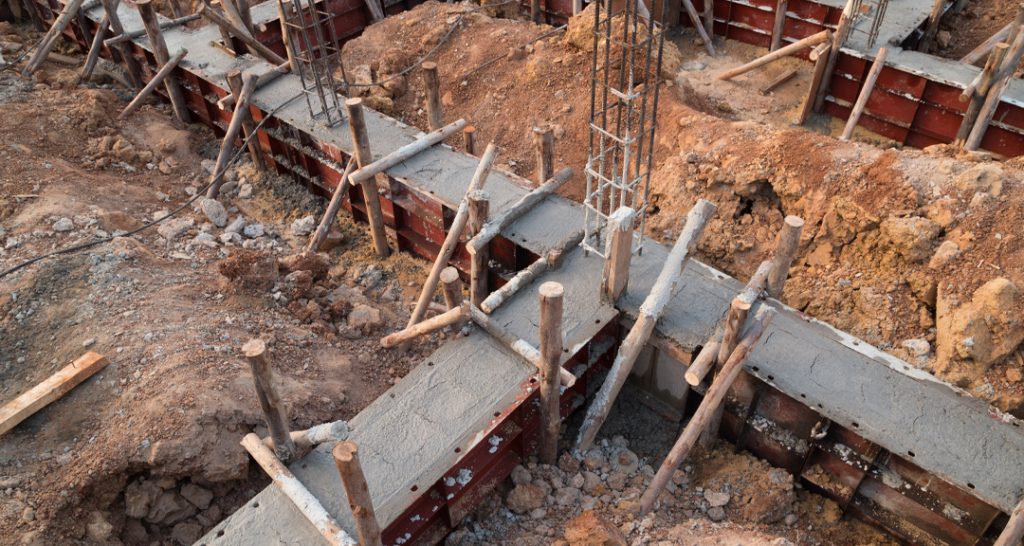
The foundation of a structure is the most important element in construction. Strap footing is one type of foundation that supports columns placed close to the boundary wall of the structure when the building is on challenging terrains or when the weight distribution of the building is uneven. This type of foundation is getting popular in modern constructions as it helps create structural balance and is cost-effective in comparison to other types. Here, we will delve into clarifying what is strap footing, its design and its advantages.
What is Strap Footing?
Strap footing foundation connects more than one column footings with a horizontal beam. The interesting bit about the cantilever footing is that though it distributes the load of the building evenly, it does not carry the load itself.
Strap footing works on a special design technique- when a column is close to the building’s boundary wall and the footing cannot be extended in that direction, the strap beam creates uniform pressure on the soil by transferring the load from the column to the centre of the footing, creating a balance.
When is Strap Footing Used?
Strap footing foundations are best suited for individual columns situated close to or near the property boundary wall. These work best where the soil’s load-bearing capacity is high or when effective load distribution is required where the column load is uneven.
Strap Footing Design Essentials
Constructing a Strap footing foundation requires accurate calculations and considerations. There are some factors that determine the strap footing design like – the size of the property, condition of the soil and the load it is intended to carry. Some important considerations in strap footing design are-
1. Load Calculation
A primary aspect to consider is the load that the column is intended to carry. The vertical load must be calculated, including everything that entails the structure. This helps in gauging the load that the footing will be transferring to the ground.
2. Footing Size
The area and size of the footing is important to be calculated to ensure that the soil has a bearing capacity that can hold the structure safely and the load pressure falls within safe limits.
3. Beam Design
The strap beam design must be strong enough to transfer all load from the offset footing to the centre of the footing. It must be kept in mind that the beam must not take any vertical loads, but acts as the transferer of the load only.
Types of Strap Footing-
1. Balanced Strap Footing:
This type of strap footing is designed to connect two separate footings by one beam ensuring uniform load sharing.
2. Cantilever Strap Footing:
Cantilever strap footings are used at sites where the load on the structure is uneven- that is in case one part of the structure is heavier than the other.
3. Overhanging Strap Footing:
These are used in construction when the property size is small and there is limited space for the entire footing to be placed under the structure. In this case, the beam protrudes over the edge of the footings to evenly transfer the load.
Construction Guide for Strap Footing Foundation
A strap footing requires careful and precise calculations and planning. Here are some guidelines to consider when constructing strap footing foundations–
Step 1: Preparing the Site
The site is thoroughly inspected and prepared by clearing all debris and excavating as per the measurements of the footings.
Step 2: Placing Reinforcement Bars
Placement of reinforcement bars requires accurate placements which are critical for effective load transfer and durability.
Step 3: Installing Formwork
Formwork is installed using plumb lines to ensure the beams are perfectly upright. This keeps the footings and the beam aligned.
Step 4: Pouring Concrete
Concrete is then poured for the beam and footing. It must be ensured that the concrete meets the strength requirements.
Step 5: Curing
Proper curing is required – at least 7-28 days – for the footing to acquire the desired compressive strength before any type of construction can take place.
Advantages of Strap Footing
Strap footing is one of the most cost effective type of foundations as compared to other types. It is useful where the space is limited and helps in efficient use of space especially near boundary walls. Strap footings are exceptionally strong while distributing structural load where the terrain is uneven or when different parts of the structure carry different loads.
Strap footing foundation is an efficient solution for safe, durable and excellent performance of the structure. Whether it is a residential building or a commercial one, the right strap footing design and precision ensures that you make well-informed construction decisions.
FAQs
1. What exactly is a strap footing, and where do we use it?
Strap footing is that clever little solution engineers pull out when two columns need individual footings — but space or soil conditions won’t let them behave independently. Imagine two columns, close together, and one of them sits right on the property boundary. You can’t center the footing under it (because, well, it would spill into your neighbour’s land). So what do we do? We connect the two footings with a “strap” — a reinforced concrete beam that balances the load.
You’ll spot this often in urban construction, especially near plot boundaries in cities like Jaipur or Pune, where tight spaces are the norm.
2. Is a strap footing the same as a combined footing?
Nope. It’s a subtle but important difference.
In combined footings, both columns share the same big slab — they rest on one large footing. But in strap footings, each column has its own isolated footing, and the strap beam just links them so the load gets distributed properly.
Think of combined footings like a shared sofa, while strap footings are two chairs tied with a plank between them.
3. Why not just go for a raft or mat foundation instead?
You could, especially if the entire structure is heavy or the soil is poor across the site. But strap footing is more economical when:
- Only a few columns need this kind of adjustment
- The loads aren’t too massive
- You want to avoid full-site excavation or overdesigning
It’s like using a scalpel instead of a sword. When done right, it saves money, time, and unnecessary material use.
4. How deep should the strap beam be?
There’s no one-size-fits-all number — it depends on the column loads, the spacing between footings, and the soil bearing capacity.
But here’s a real-world thumb rule many engineers use onsite: keep the strap deep enough so it doesn’t bend like a noodle under eccentric loads. You want it to act like a rigid arm, transferring load without causing rotation. And of course, proper reinforcement with high-quality cement (we often use JK Super Strong for such RC members) is key.
5. Does the strap beam touch the soil?
In proper strap footing design — no, it shouldn’t.
The strap beam is typically designed to span over the soil, not rest on it. If it bears on soil, it starts behaving like a combined footing. The idea is to let the footings bear the soil pressure and keep the strap just as a force distributor.
So, the beam is either slightly suspended or cast over lean concrete with separation — we’ve even seen bricks used as temporary supports during shuttering.
Strap footing is that clever little solution engineers pull out when two columns need individual footings — but space or soil conditions won’t let them behave independently. Imagine two columns, close together, and one of them sits right on the property boundary. You can’t center the footing under it (because, well, it would spill into your neighbour’s land). So what do we do? We connect the two footings with a “strap” — a reinforced concrete beam that balances the load.
You’ll spot this often in urban construction, especially near plot boundaries in cities like Jaipur or Pune, where tight spaces are the norm.
Nope. It’s a subtle but important difference.
In combined footings, both columns share the same big slab — they rest on one large footing. But in strap footings, each column has its own isolated footing, and the strap beam just links them so the load gets distributed properly.
Think of combined footings like a shared sofa, while strap footings are two chairs tied with a plank between them.
You could, especially if the entire structure is heavy or the soil is poor across the site. But strap footing is more economical when:
Only a few columns need this kind of adjustment
The loads aren’t too massive
You want to avoid full-site excavation or overdesigning
It’s like usi
There’s no one-size-fits-all number — it depends on the column loads, the spacing between footings, and the soil bearing capacity.
But here’s a real-world thumb rule many engineers use onsite: keep the strap deep enough so it doesn’t bend like a noodle under eccentric loads. You want it to act like a rigid arm, transferring load without causing rotation. And of course, proper reinforcement with high-quality cement (we often use JK Super Strong for such RC members) is key.
In proper strap footing design — no, it shouldn’t.
The strap beam is typically designed to span over the soil, not rest on it. If it bears on soil, it starts behaving like a combined footing. The idea is to let the footings bear the soil pressure and keep the strap just as a force distributor.
So, the beam is either slightly suspended or cast over lean concrete with separation — we’ve even seen bricks used as temporary supports during shuttering.