Shoring in Construction: Types, Methods, Uses and Safety Considerations

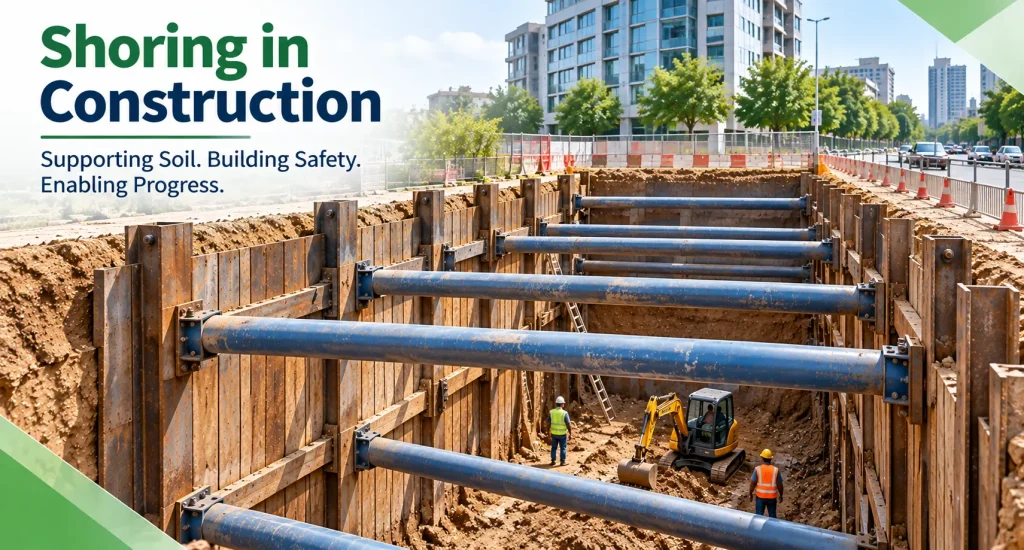
Excavation work often looks simple from the surface. Dig the soil. Create the required depth. Build the foundation. But once excavation gets deeper, the risk changes quickly. Loose soil can move. Nearby walls can crack. Water can enter the excavation. In busy urban areas, even a small movement in the ground can affect a neighbouring building or road. This is where shoring is important in construction. Engineers recommend shoring because it provides temporary support to soil and other structures. Read on this blog post to learn more about shoring in construction.
What Is Shoring in Construction?
Shoring means providing temporary support to a building wall, trench, or excavation. It not only prevents soil collapse but also protects nearby structures during construction. The right shoring system depends on the following factors:
- Excavation depth
- Soil type
- Groundwater
- Nearby structures
- Project duration
A simple rule applies on site. Never treat shoring as an optional support when ground conditions call for it.
Why Is Shoring Important in Construction?
Excavation damages the natural balance of the soil. When you remove soil, the surrounding ground moves into the space. This may result in the collapse of trench walls.
What’s more? It can also affect nearby foundations and utility lines. This is where shoring helps. A proper shoring system supports the sides of an excavation. It also controls soil movement. It also gives workers a safer area to carry out activities such as foundation work, basement construction, and underground utility installation.
We often see excavation work move quickly once the machinery reaches the site. That is exactly when teams need to slow down and check the ground conditions. Soil does not always behave as expected.
What Are the Types of Shoring in Construction?
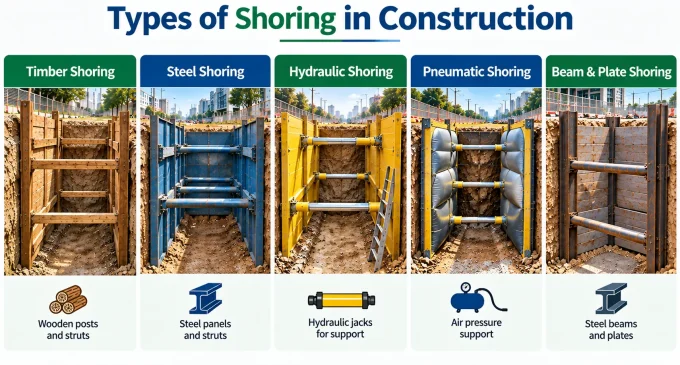

Given below are different types of shoring in construction:
- Timber Shoring
This type of shoring uses wooden members like boards, posts, and struts. It is a traditional method that engineers recommend for smaller excavations. The most important thing to consider is that timber must be strong and free from serious defects.
- Steel Shoring
Steel shoring provides temporary support using steel members. It is mostly used in construction because it offers good strength. Moreover, this type of shoring is more durable for sites with demanding conditions.
- Hydraulic Shoring
Hydraulic shoring is popular in construction because it is easy to install and adjust. This type of shoring uses hydraulic cylinders with support panels or other components. Thus, it is highly useful for trenching and excavation work. This is because the workers need to make frequent adjustments in these conditions.
- Pneumatic Shoring
These systems provide support through air pressure. Sometimes they work as an alternative to hydraulic systems. However, the exact choice depends on the excavation design and project needs.
- Beam & Plate Shoring
Engineers use vertical beams with plates or panels between them. The beams provide the main support. The plates help retain the soil. It can suit deeper excavations where the project requires a stronger support arrangement.
What Are the Common Methods for Shoring in Construction?
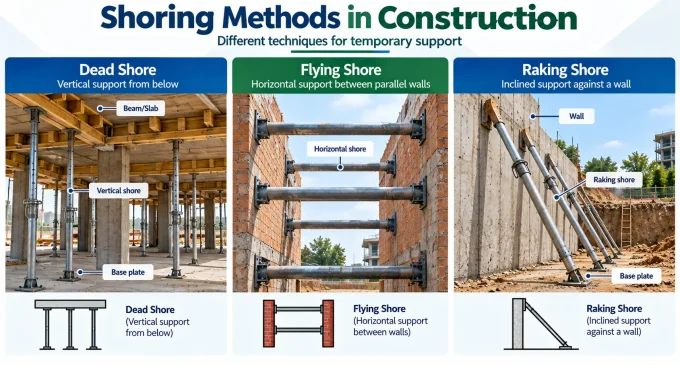
The following are the common ways for shoring in construction:
- Dead Shore
A dead shore supports a wall or structure from below. It is useful when workers need to remove or alter part of a supporting wall. The temporary support carries the load until the permanent arrangement is ready.
- Flying Shore
Flying shores support two parallel walls without obstructing the space between them. Horizontal struts connect the walls. This method can help when workers need clear access through the area.
- Ranking Shore
Raking shores use inclined members to support a wall. The inclined supports transfer the load towards the ground. They can help stabilize walls that show signs of movement or during repair and alteration work.
What Are the Uses of Shoring in Construction?
Given below are the common uses of shoring in construction:
- Deep excavation for foundations
- Trench construction
- Basement construction
- Underground utility work
- Repair of damaged walls
- Structural renovation
- Demolition work near existing structures
- Construction close to roads and neighboring buildings
What Are the Safety Measures to Consider Before Shoring at Construction?
The following are the safety considerations for shoring:
- Inspect Shoring Regularly
Check the supports before workers enter the excavation. Inspect them again after heavy rain, flooding or any major change in ground conditions. Monsoon conditions deserve extra attention. Water can quickly weaken soil and affect excavation stability.
- Never Modify Supports Without Approval
A worker may want to remove one brace to create more working space. That small change can affect the entire support system. Do not remove or reposition shoring members without approval from the responsible engineer.
- Provide Safe Access
Workers need a proper way to enter and leave an excavation. Use suitable ladders, ramps or access systems as required by the site plan. Do not expect workers to climb unstable soil faces.
- Inspect the Ground Before Excavation
It is necessary to check the soil type and ground condition before digging. Heavy equipment near the excavation edge can increase pressure on the soil.
The Final Words
Shoring may remain hidden behind soil or temporary walls. Its role is still critical. It protects workers. It helps control soil movement. There is no single shoring method that works for every site. Good construction starts with understanding these conditions before work begins. As with every major construction activity, safety should come before speed. A few extra hours spent planning the shoring system can prevent much bigger problems later.
FAQs
1. What is the main purpose of shoring?
The main purpose of shoring is to provide temporary support to soil, trenches, walls, or structures during construction, excavation, repair, or alteration work. It helps maintain stability, reduce the risk of collapse, and protect workers and nearby structures during temporary construction activities.
2. What are the main types of shoring?
The main types of shoring include timber shoring, steel shoring, hydraulic shoring, pneumatic shoring, and beam and plate shoring. The right shoring system depends on factors such as soil condition, excavation depth, site conditions, structural requirements, and the type of construction work.
3. What is the difference between shoring and scaffolding?
Shoring provides temporary structural or excavation support, while scaffolding provides a working platform for workers and materials. Shoring helps maintain stability during construction or excavation. Scaffolding mainly provides safe access and working space at height or around a structure.
4. Is shoring required for every excavation?
No, shoring is not required for every excavation. The need depends on excavation depth, soil conditions, groundwater, nearby structures, and applicable safety requirements. A competent engineer should assess the site and determine whether shoring or another protective system is required.
5. Can shoring be used near existing buildings?
Yes, shoring can be used near existing buildings to support excavations or structures during construction work. A suitable shoring system can help control soil movement and protect nearby structures. Engineers must select the system based on site conditions and structural requirements.