Roofing Sheets for Houses: Types, Iron vs Fiber, Price & Uses Explained

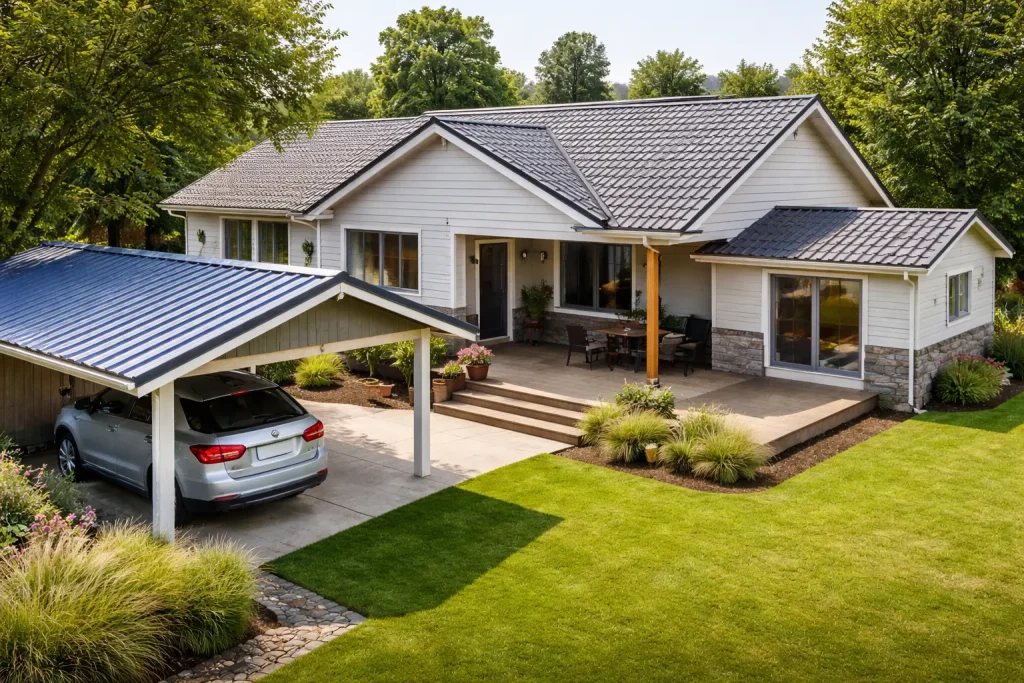
If you’ve ever taken shelter under a tin shed during a proper Indian monsoon, you don’t need an explanation of what a roofing sheet really does.
It’s not just a cover.
It’s the difference between comfort and chaos.
Between sleeping peacefully and lying awake listening to the rain hammer above your head.
In many Indian homes—independent houses, farmhouses, terrace rooms, ground-floor extensions—the house roofing sheet quietly decides how livable that space becomes.
From dry, dusty villages in Rajasthan to humid coastal towns in Kerala, the roofing choice changes everything.
How hot the room gets by afternoon.
How loud the rain feels at night.
And how often repairs come knocking.
So let’s talk about roofing sheets the way they’re discussed on site.
Plain language.
No marketing talk.
Just what actually works.
Why roofing sheets are still common for houses
A full RCC slab is solid, no doubt.
But it’s also heavy on time, labour, and budget.
That’s why even today, many homeowners choose a roofing sheet for porches, terrace rooms, car sheds, stair covers, farmhouses, and site offices. In semi-rural areas, entire homes are still built using roofing sheets—and built well.
A practical house roofing sheet has some clear advantages.
Faster installation
Doesn’t overload the structure
Lower upfront cost
Easy to repair if something goes wrong
And unlike earlier days, roofing sheets aren’t just plain tin anymore.
There are several types of roofing sheet, each suited for different needs.
Roofing sheet types you’ll hear about at any shop
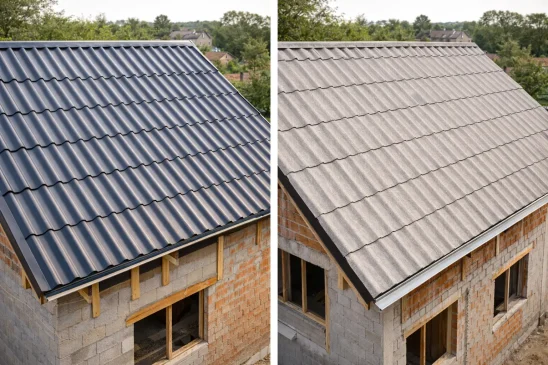

Step into any hardware store and these names come up immediately.
Iron roof sheet
Fiber roof sheet
Colour-coated sheets
Polycarbonate sheets
Each roofing sheet behaves differently once it’s installed.
Pick the wrong one, and you’ll feel it every summer or monsoon.
Iron roof sheet: tough, familiar, and everywhere
The iron roof sheet is probably the most common roof you’ll see across India.
You’ll spot it on village houses, over shops and godowns, on factory sheds, and covering terrace extensions.
People still go for an iron roof sheet for simple reasons.
Strong and load-bearing
Handles long spans easily
Available almost everywhere
Lower initial cost
A decent quality iron roof sheet—galvanised or colour-coated—can last 15 to 25 years if installed properly.
But iron sheets have clear drawbacks.
They heat up fast during summer.
Rain can get noisy.
Low-quality sheets can rust quickly.
Because of this, many homeowners add insulation under iron sheets or choose colour-coated options to cut down heat.
Fiber roof sheet: cooler, quieter, more comfortable
Now, the fiber roof sheet.
Anyone who has lived under one during peak summer can tell the difference immediately.
A fiber roof sheet is usually made using cement, resin, or reinforced fibers.
Why do people prefer them for homes?
Rooms stay noticeably cooler
Rain noise is softer
No rust issues
Good lifespan if handled properly
For bedrooms, kitchens, and living areas, a fiber roof sheet generally feels more comfortable than an iron roof sheet.
That said, fiber sheets have limitations.
They can crack if mishandled.
They’re not meant for heavy loads.
Installation needs care.
Still, for residential use, the fiber roof sheet strikes a good balance between comfort and cost.
Iron vs fiber roof sheet: what really matters
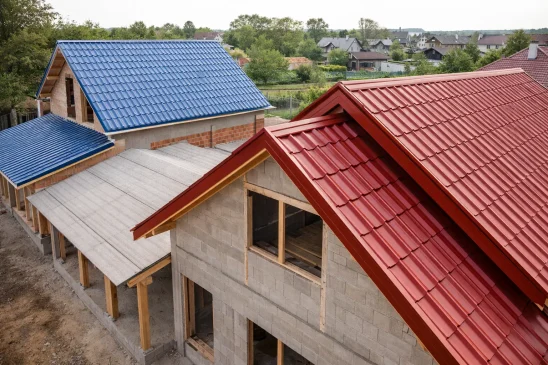
This debate comes up on every site.
Iron roof sheet
Stronger overall
Better for long spans
Hotter and noisier
Needs rust protection
Fiber roof sheet
Cooler indoors
Quieter during rain
No corrosion
Slightly lower load capacity
For garages, godowns, and verandahs—iron makes sense.
For rooms where people actually live—fiber feels better.
That’s the practical truth.
Roofing sheet prices: a realistic idea
Prices change with steel rates and location, but broadly:
Iron roof sheet: ₹70–₹120 per sq ft
Colour-coated iron sheet: ₹100–₹160 per sq ft
Fiber roof sheet: ₹80–₹140 per sq ft
Remember, the roofing sheet price isn’t the full story.
You’ll also spend on the support structure, screws and fasteners, labour, and insulation if needed.
Saving a few rupees per square foot on a house roofing sheet can cost much more later.
Where each roofing sheet works best
Site experience teaches one lesson quickly—match the sheet to the use.
Use iron roof sheets for garages, sheds, godowns, industrial areas, and wind-prone locations.
Use fiber roof sheets for homes, terrace rooms, farmhouses, kitchens, and living spaces.
Knowing the types of roofing sheets avoids regrets later.
Installation matters more than the material
Even the best roofing sheet will fail if fitted badly.
Common mistakes seen on sites include insufficient slope, over-tightened screws, no allowance for expansion, and poor joint sealing.
Whether it’s an iron roof sheet or fiber roof sheet, correct slope and fixing decide how long it lasts.
Material matters.
The person installing it matters just as much.
One last, practical thought
Your roof takes the hardest beating of the house.
Sun all day.
Rain all season.
Wind, dust, pollution.
So don’t rush when choosing a house roofing sheet.
Think five summers ahead, not just today’s budget.
A roofing sheet works best when the structure below it is solid—proper RCC supports, good concrete work, and dependable cement. On many sites, when the foundation and slab are done right using trusted materials like JK Cement, roofing sheets—iron or fiber—sit better, last longer, and create fewer problems over time.
A solid roof starts with a careful plan and good materials.
Get those right, and you won’t have to worry about it for a long time.
FAQs
1. What’s the best roofing sheet for homes in India?
For living spaces, fiber roof sheets are usually better. Iron roof sheets work well for sheds and garages.
2. Are iron roof sheets suitable for heavy rain?
Yes, but they can be noisy. Insulation helps.
3. Do fiber roof sheets crack easily?
Good-quality fiber sheets are strong, but careful handling is important.
4. Which roofing sheet costs less?
Iron roof sheets are cheaper upfront, but fiber can save on cooling.
5. How long does a roofing sheet last?
With proper installation, 15–25 years is common.
6. Can roofing sheets be used for entire houses?
Yes, particularly in rural areas, as long as the structure and slope are suitable.
7. What roof slope works best for roofing sheets?
Around 10–15 degrees for smooth water drainage.