What is the Role of a Structural Engineer in Construction?

Most people notice the paint, tiles, lighting, or maybe the fancy front elevation when they walk into a building. But the real story of a building is hidden behind the walls. Inside the concrete. Inside the steel. Inside the calculation, nobody sees.
That’s where a structural engineering professional comes in. Good construction is not just about using cement and steel. It’s about using them correctly. That’s exactly what structural engineering is about. A good civil structural engineer doesn’t just design buildings.
A structural engineer is the person quietly making sure your house doesn’t crack during monsoon season, your office tower can handle strong winds, and your balcony won’t sag after a few years of use.
Read on to know more about the role of structural engineers in construction.
Who is a Structural Engineer?
A structural engineer is a specialized engineer who designs the “skeleton” of a structure. Think of a building like the human body. Architecture is the face. Interior design is the clothing. But the structure? Those are the bones. Without strong bones, nothing stands properly. A structural engineer studies how buildings react to weight, pressure, earthquakes, wind, water, and time itself.
They calculate:
- Beam sizes
- Column strength
- Slab thickness
- Foundation depth
- Steel reinforcement
- Load distribution
In simple words, they make sure a building can safely carry everything it needs to carry. This includes people, furniture, vehicles, machines, rainwater, and even future modifications. But what exactly does a civil structural engineer work on? A civil structural engineer may work on:
- Residential homes
- High-rise towers
- Bridges
- Factories
- Schools
- Hospitals
- Flyovers
- Warehouses
And while most people only notice problems when something fails, good structural engineering usually goes unnoticed. That’s actually the point. If nobody talks about structural issues for 30 years, the engineer did their job well.
What Does a Structural Engineer Do?
People often assume a structural engineer only sits with drawings and calculations. Reality is very different. A structural engineer spends a lot of time understanding how real sites behave. Different soils behave differently. A structural engineer usually:
- Studies soil reports
- Designs foundations
- Calculates structural loads
- Decides reinforcement requirements
- Reviews construction quality
- Coordinates with architects and contractors
- Inspects ongoing work on-site
Sometimes they even stop bad decisions before they become expensive disasters. For example, an owner may want to remove a wall to make the living room bigger. But that wall could be load-bearing. Removing it without structural analysis can weaken the entire building. That’s where the role of the structural engineer becomes critical. They don’t just help build structures. They help avoid failures.
Why is Structural Engineering Important in Construction?
A beautiful building that is structurally weak is like a luxury car without brakes. Looks impressive. Dangerous underneath. Structural engineering matters because buildings are expected to survive for decades. Sometimes generations.
In India, especially, structures face:
- Heavy rainfall
- Extreme summer heat
- Earthquakes in some regions
- Soil movement
- Water seepage
- Rapid urban loading
Without proper structural engineering, buildings deteriorate much faster. And repair work later is always more expensive than doing things correctly the first time. This is also where material quality matters. Reliable cement, proper curing, good aggregates, and correct mix proportions all support structural performance.
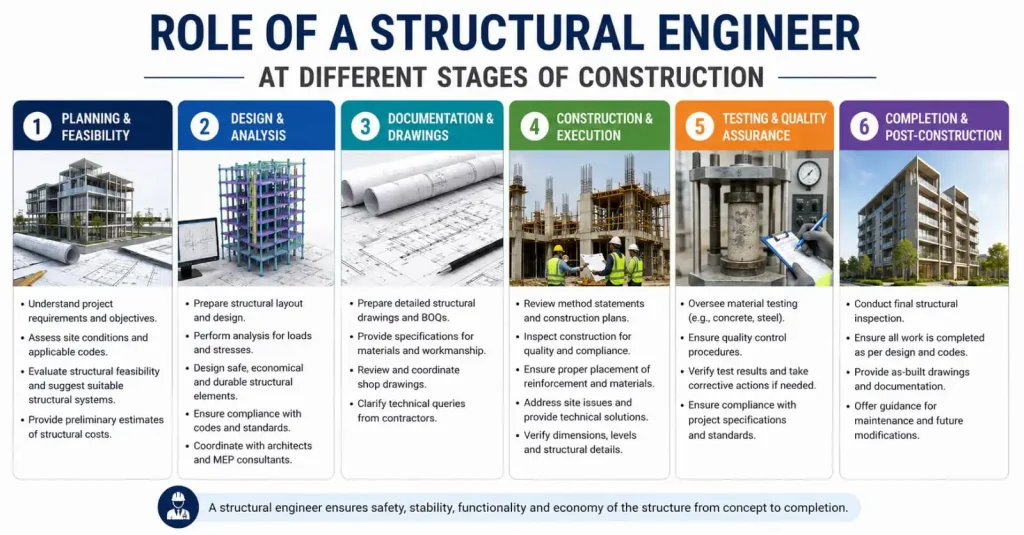
What is the Role of a Structural Engineer at Different Stages of Construction?
The role of a structural engineer changes throughout the project lifecycle is given below:
Before Construction
This stage involves:
- Site analysis
- Soil investigation review
- Structural planning
- Foundation selection
- Load calculations
Mistakes here become expensive later.
During Design
The structural engineer prepares detailed drawings and calculations. This includes:
- Beam layouts
- Column positioning
- Reinforcement detailing
- Slab design
- Structural safety checks
This phase is where structural engineering becomes highly technical.
During Construction
This is where theory meets reality. A civil structural engineer visits sites to check:
- Steel placement
- Concrete quality
- Formwork alignment
- Structural dimensions
- Construction sequencing
Even small execution mistakes can affect structural integrity.
After Completion
Some structural engineers also conduct:
- Structural audits
- Safety inspections
- Renovation assessments
- Load-bearing evaluations
Especially for older buildings.
What Are the Key Skills Required for a Structural Engineer?
Being good at mathematics alone is not enough. A strong structural engineer also needs practical judgment. Because real construction sites are messy. The best structural engineers usually combine technical knowledge with practical site understanding.
Important skills include:
- Structural analysis
- Problem-solving
- Construction knowledge
- Communication skills
- Attention to detail
- Material understanding
- Software proficiency
- Site coordination
And honestly, patience. Because construction projects rarely go exactly according to plan.
Structural Engineer vs. Civil Engineer: What’s the difference?
This confuses many people. A civil engineer handles broader infrastructure and construction activities. A structural engineer is a specialist within civil engineering.
You can think of it like this: Every structural engineer is generally connected to civil engineering. But not every civil engineer specialises in structures. A civil engineer may manage:
- Roads
- Water supply systems
- Drainage
- Construction management
- Transportation system
A structural engineer specifically focuses on structural safety and load-bearing systems. That’s why large projects often have both. The civil engineer manages execution. The structural engineer ensures the structure can safely stand.
What Are the Common Challenges Faced by Structural Engineers in Construction?
Construction in India comes with real-world complications. Not textbook conditions. Structural engineers often deal with:
- Last-minute design changes: Owners suddenly want larger rooms. Extra floors. Open kitchens. Cantilever balconies. All these affect structural calculations.
- Poor Site Execution: Sometimes drawings are ignored on-site to save labor or materials. This creates long-term risks.
- Material Variations: Low-quality concrete or inconsistent curing affects strength. Even the best structural engineering cannot fully compensate for poor workmanship.
- Tight Deadlines: Projects are often rushed before festivals, possession dates, or financial deadlines. And rushed construction usually increases structural risks.
- Weather Conditions: Monsoons can delay foundation work and affect curing quality. Experienced structural engineers plan around these realities.
How Do Structural Engineers Help in Sustainable Construction?
Sustainability is no longer just a buzzword. Construction waste, energy use, and carbon emissions are real concerns today. Structural engineering plays a huge role here. A skilled structural engineer optimizes material use.
This means:
- Less unnecessary concrete
- Smarter steel usage
- Efficient structural systems
- Reduced waste
Modern structural engineering also supports:
- Green buildings
- Energy-efficient designs
- Longer-lasting structures
- Low-carbon construction practices
When Should You Hire a Structural Engineer?
People often think structural engineers are only needed for skyscrapers. Not true. You should consider hiring a structural engineer when:
- Building a new home
- Adding extra floors
- Removing walls
- Renovating old structures
- Seeing structural cracks
- Planning basements
- Constructing large commercial spaces
- Building on difficult soil
Even for independent homes, structural guidance can prevent expensive future problems. Especially in areas with weak soil or heavy rainfall. And if you’re buying an older property, a structural assessment can reveal hidden issues before purchase. That small consultation fee can save lakhs later.
What is the Future of Structural Engineering in Modern Construction?
Construction is changing quickly. And structural engineering is changing with it. Today, structural engineers use:
- 3D modelling
- BIM software
- Earthquake simulation tools
- AI-assisted analysis
- Smart materials
- Sustainable construction systems
Buildings are becoming taller, lighter, and more complex. At the same time, safety expectations are increasing. Future structural engineering will focus heavily on:
- Earthquake resilience
- Climate adaptation
- Sustainable materials
- Faster construction methods
- Smart infrastructure
India’s growing infrastructure demand will also increase the importance of skilled civil structural engineers across cities and smaller towns alike. Because no matter how advanced technology becomes, buildings still need to stand safely. That responsibility never changes.
The Final Words
At the end of the day, the role of a structural engineer is simple to understand. They make buildings safe. Strong. Stable. And durable enough to survive real life. Most people never meet the structural engineer behind their home, office, school, or hospital. But their work quietly supports everyday life. Every staircase climbed safely. Every balcony was trusted. Every roof that survives another monsoon. That’s structural engineering at work. Invisible most of the time. Essential all the time.
FAQs
1. What is the main role of a structural engineer in construction?
The main role of a structural engineer is to ensure buildings and structures are safe, stable, and capable of handling loads, weather, and long-term use.
2. Is a structural engineer different from a civil engineer?
Yes. A structural engineer is a specialised branch within civil engineering focused specifically on structural safety and design.
3. When do I need a structural engineer for my house?
You should hire a structural engineer when building a new house, adding floors, removing walls, or noticing major structural cracks.
4. What does structural engineering include?
Structural engineering includes foundation design, beam and column design, load calculations, reinforcement detailing, and structural safety analysis.
5. Can a structural engineer inspect old buildings?
Yes. Structural engineers conduct structural audits and safety inspections for older buildings to identify weaknesses or repair needs.
6. Why is structural engineering important in earthquake-prone areas?
Structural engineering helps buildings resist seismic forces through specialised earthquake-resistant design techniques.
7. How do structural engineers support sustainable construction?
Structural engineers reduce material waste, improve structural efficiency, and help create durable buildings with lower long-term environmental impact.