Insulation in Construction: Meaning, Types & Applications

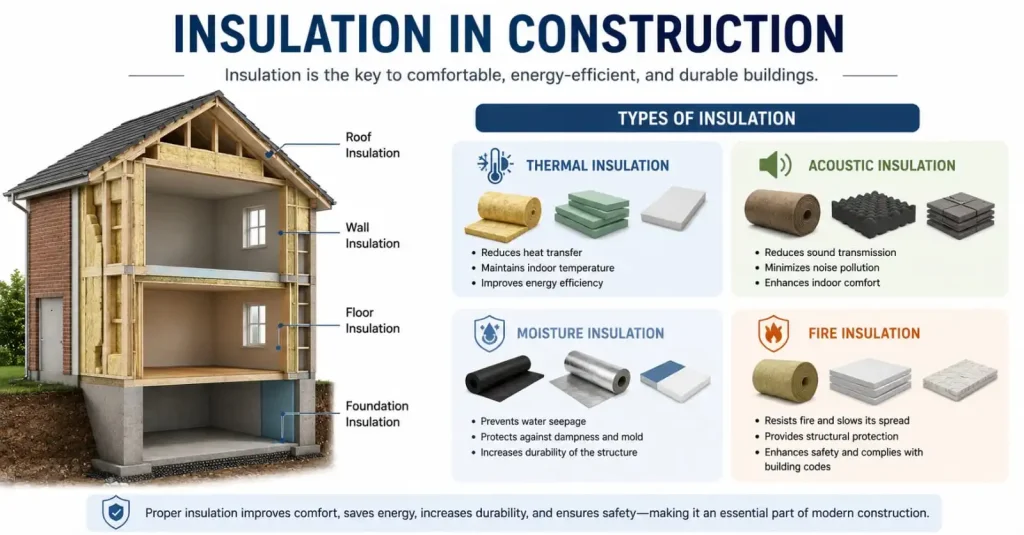
Walk into a house in peak Rajasthan summer without insulation, and you’ll feel it instantly. The walls radiate heat. The ceiling feels like a tandoor. The AC keeps running, but the room never really cools down.
Now walk into a properly insulated home. Same city. Same weather. A completely different experience. That’s the real job of insulation in construction.
Most people think insulation is only for cold countries where snowfall happens every year. But honestly, insulation matters just as much in Indian homes.
Read on to find out all about insulation in construction.
What Does Insulation in Construction Mean?
Insulation is a layer that protects buildings. It not only reduces heat transfer but also sound movement and moisture penetration.
Let’s understand this way: A thermos flask keeps tea hot for longer. Why? This is because it reduces the heat movement. Building insulation works in the same way. It keeps the indoor spaces cool during summer and warm in winter.
What’s more? Insulation in buildings is much more. Some additional benefits of insulation are the following:
- Noise reduction
- Moisture control
- Fire resistance
- Energy saving
- Indoor comfort
What Are the Different Types of Insulation Used in Construction?
Different buildings need different kinds of insulation. Given below are some common types used in construction today:
- Thermal Insulation
This is the most common type of insulation used in construction. It reduces heat transfer between indoor and outdoor spaces. It can be used in:
- Roofs
- Walls
- Floors
- False ceilings
Roof insulation is becoming extremely popular in Indian homes. This is because terrace slabs absorb huge amounts of heat.
- Acoustic Insulation
Ever stayed near a busy road where traffic noise never stops? That’s where sound insulation helps. Commonly used in:
- Offices
- Hospitals
- Hotels
- Apartments
- Home theatres
Acoustic insulation absorbs or blocks noise between rooms or from outside sources.
- Moisture Insulation
Moisture is a silent destroyer in buildings. It leads to:
- Damp walls
- Fungus
- Paint peeling
- Steel corrosion
Moisture insulation prevents water penetration through roofs, basements, and external walls.
- Fire Insulation
Certain insulation materials can slow down the spread of fire. This becomes important in:
- Commercial buildings
- Factories
- High-rise apartments
Safety regulations now demand better fire-resistant systems in many urban projects.
What Are the Different Insulation Materials Used in Construction?
Now comes the practical part. What exactly are these insulation layers made from? Here is a list of different insulation materials used in construction:
- Fiberglass Insulation
One of the most widely used materials globally. Good for:
- Thermal insulation
- Sound insulation
- Budget-friendly projects
It looks soft and wool-like and is made from extremely fine glass fibers.
- Mineral Wool
Made from rock or slag fibers. This material handles both heat and sound very well. It is commonly used in industrial buildings and commercial spaces.
- Foam Board Insulation
Rigid panels are installed inside walls or roofs. Perfect for:
- Modern homes
- Commercial structures
- False ceiling systems
These boards provide high insulation with less thickness.
- Polyurethane Foam (PUF)
This is sprayed directly onto surfaces. It expands and seals gaps very effectively. PUF insulation is becoming common in:
- Cold storages
- Warehouses
- Premium residential projects
Even if the home’s concrete mix ratio is done correctly, air gaps in construction can still create heat problems. Spray foam helps solve that.
- Cellulose Insulation
An eco-friendly option made from recycled paper products. It is treated chemically for fire resistance. It is used mainly in sustainable or green buildings.
- Reflective Insulation
This works differently. Instead of slowing heat flow, it reflects heat away. Very useful for Indian climates where roofs receive intense sunlight. You’ll often see reflective sheets under metal roofing systems.
How to Choose the Right Insulation Material?
This is where many homeowners get confused. There is no “one best material” for every project. Selection depends on several practical factors.
- Climate
Hot regions need strong thermal insulation. Cold regions need heat retention. Humid areas need moisture-resistant materials.
- Budget
Some insulation systems are affordable. Others are premium long-term investments. A contractor balancing the concrete mix ratio for a home budget often also balances insulation choices alongside flooring, waterproofing, and finishing costs.
- Building Type
A warehouse and a bedroom need completely different insulation strategies. For example, acoustic insulation matters more in apartments, whereas thermal insulation matters more in factories
- Durability
Good insulation should last years without sagging, cracking, or absorbing moisture. Cheap materials often fail early. And replacing insulation after construction is difficult and expensive.
What Are the Applications of Insulation in Construction?
Insulation is used almost everywhere now. Not just luxury projects.
- Roof Insulation
Probably the most important in India. Terrace slabs absorb direct heat all day long. Even with a strong M20 mix ratio, concrete naturally stores heat. Insulation layers reduce that heat transfer indoors.
- Wall Insulation
Used in external walls to maintain indoor temperature. Very common in modern urban apartments.
- Floor Insulation
Helpful in colder regions and commercial buildings. It also improves acoustic comfort between floors.
AC ducts and pipelines use insulation to prevent energy loss. Without insulation, cooling efficiency drops heavily.
- Industrial Buildings
Factories, cold storages, and warehouses rely heavily on insulation for temperature control and energy savings.
What Are the Advantages of Insulation in Buildings?
This is where insulation proves its real value.
- Lower Electricity Bills: Less heat entering the building means less AC usage.
- Better Comfort: Rooms remain cooler and more stable in temperature. You feel the difference immediately.
- Noise Reduction: Traffic sounds, loud neighbors, and machinery noise are reduced significantly.
- Improved Building Life: Moisture and temperature fluctuations damage buildings slowly. Insulation helps reduce stress on materials.
- Environmentally Friendly: Reduced energy usage means lower carbon emissions. That matters today more than ever.
What Are the Common Problems Caused by Poor Insulation?
Bad insulation creates problems people often blame on “construction quality.” But the actual issue is thermal and moisture control.
- Excessive Indoor Heat: Common in top-floor apartments.
- Dampness and Mold: Especially during monsoons. We’ve all seen black patches growing near ceilings and corners.
- High Power Bills: ACs work overtime in poorly insulated homes.
- Condensation Problems: Water droplets form inside walls or ceilings when insulation fails.
- Noise Disturbance: Thin walls without acoustic insulation create constant discomfort.
What Are the Latest Trends in Building Insulation?
Construction practices are changing fast. And insulation technology is evolving, too.
Green Insulation Materials
Builders are shifting toward eco-friendly products with lower environmental impact. Smart Insulation Systems. Modern insulation now combines:
- Heat resistance
- Waterproofing
- Fire resistance
- Acoustic control
All in one system.
Cool Roof Technology
Reflective roof coatings are becoming popular in Indian cities. They reduce roof surface temperatures significantly.
Energy-Efficient Buildings
Developers are now marketing energy savings as a major feature. Just like mentioning premium cement or a proper M20 mix ratio, insulation quality is becoming a selling point too.
What is the Installation Process of Insulation in Construction?
Good insulation only works when installed properly. Even premium materials fail with poor workmanship. Typical installation steps include:
- Surface preparation
- Measuring and cutting insulation material
- Fixing boards, rolls, or foam
- Sealing joints and gaps
- Adding protective finishing layers
In roof insulation systems, waterproofing usually comes before or after insulation, depending on design requirements. Skilled installation matters just as much as material quality.
The Final Words
Insulation is one of those construction decisions people rarely think about until discomfort begins. Modern construction is no longer only about strength. Of course, structural quality matters. A well-insulated building feels calmer, cooler, quieter, and more efficient every single day. And honestly, that’s what good construction should do. Not just stand strong. But make life inside better.
FAQs
1. What is insulation in construction?
Insulation is a material or system used to reduce heat, sound, or moisture transfer inside buildings.
2. Which insulation is best for Indian homes?
Thermal roof insulation and reflective insulation are commonly preferred because of India’s hot climate.
3. Does insulation reduce electricity bills?
Yes. Proper insulation reduces heat transfer, helping AC systems work more efficiently and lowering power consumption.
4. Is insulation necessary in concrete buildings?
Absolutely. Even with the right M20 mix ratio, concrete absorbs and transfers heat easily. Insulation improves indoor comfort.
5. What is the difference between thermal and acoustic insulation?
Thermal insulation controls temperature, while acoustic insulation controls noise.
6. How long does building insulation last?
Good-quality insulation can last 20–50 years, depending on the material and installation quality.
7. Can insulation help during monsoon seasons?
Yes. Moisture-resistant insulation systems help reduce dampness, leakage, and mold growth during heavy rains.