Honeycomb Concrete: Causes, Types, Repair Methods & Prevention

Talk to any mason on a home construction site, and sooner or later, the conversation lands on concrete. Not paint. Not tiles. Not fancy elevation designs. Concrete. Because no matter how beautiful a house looks from the outside, its real strength comes from what’s inside the slab, columns, and beams.
And that strength depends heavily on the concrete mix ratio for home construction. Poor balance between sand and aggregates? The structure starts showing problems years before it should.
One common issue caused by poor mixing and improper pouring is honeycomb concrete. If you’ve ever seen rough concrete with visible gaps, tiny holes, or exposed stones on a site, that’s honeycombing. Read on to find out its meaning, along with causes and types of honeycombing in detail.
What is Honeycomb Concrete in Construction?
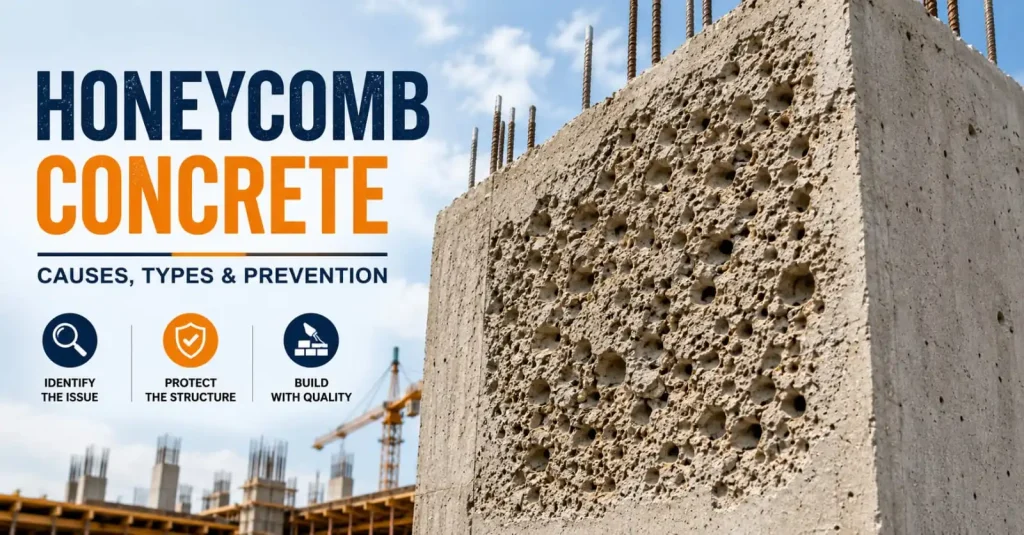
“Honeycomb concrete” refers to gaps or voids left inside hardened concrete where mortar failed to fill the spaces properly. Instead of a dense, smooth finish, the concrete surface looks porous and uneven. Almost like a honeybee hive. That’s where the name comes from.
This usually happens when the concrete mix ratio for home construction is not balanced properly or when compaction is poor during pouring. A lot of people assume honeycombing is just a surface issue.
It’s not. Sometimes it goes deep inside the structural member. And that can affect durability, strength, and even reinforcement protection. In residential construction, honeycombing is commonly seen in:
- Columns
- Beams
- Staircases
- Retaining walls
- Roof slabs
- Water tanks
Especially during fast-track projects before festivals or monsoon deadlines, workers sometimes rush concreting work. That’s when problems begin. Even with a proper M20 mix ratio, poor workmanship can still create honeycomb concrete
How Does Honeycomb Concrete Look On-Site?
Once the shuttering is removed, honeycomb areas become pretty easy to spot. You’ll notice:
- Visible cavities in concrete
- Exposed aggregates
- Rough and patchy surfaces
- Tiny air pockets
- Reinforcement bars partially visible
- Hollow sound when tapped
Sometimes the damage looks minor. Sometimes it’s serious enough to require structural repair. A small surface honeycomb in plaster backing may not create major issues. But deep honeycombing inside a column using the wrong home concrete mix ratio can become dangerous over time. We’ve all seen sites where workers try covering honeycombs quickly with cement paste before the engineer arrives. But patchwork doesn’t solve the root problem.
What Are the Common Causes of Honeycomb Concrete?
Honeycomb concrete rarely happens because of one mistake. Usually, it’s a combination of poor materials, bad handling, and rushed execution.
- Improper Concrete Mix Ratio
This is the biggest reason. If the concrete mix ratio for home construction has insufficient cement paste, the aggregates won’t bind properly. For residential work, the m20 mix ratio generally follows 1:1.5:3 (cement: Sand: Aggregate). When workers randomly alter proportions to “save cement,” honeycombing increases.
- Excessive Water
Too much water weakens the mix. It also causes segregation, where aggregates settle separately from the cement slurry. That leaves voids behind.
- Poor Compaction
Concrete needs vibration after pouring. Without proper vibrating, trapped air pockets remain inside. And those pockets later become honeycombs.
- Congested Reinforcement
In tightly packed steel sections, concrete struggles to flow properly. Very common in narrow columns and beam junctions.
- Poor Quality Materials
Dusty sand. Oversized aggregates. Expired cement. Everything affects the home concrete mix ratio performance.
- Leakage in Shuttering
If slurry leaks from formwork gaps, only coarse aggregates remain behind. That creates visible cavities.
What Are the Types of Honeycombing in Concrete?
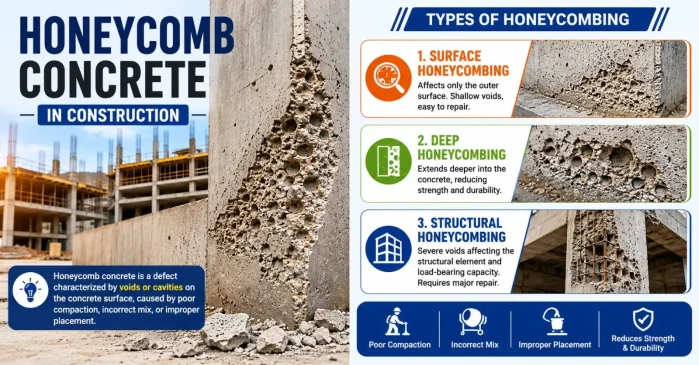

Honeycombing isn’t always equally severe. It generally falls into three categories.
- Surface Honeycombing
Minor damage on outer concrete surfaces. Usually repairable with cement mortar.
- Deep Honeycombing
Voids extend deeper inside structural members. Needs detailed inspection.
- Structural Honeycombing
This is serious. Steel bars may get exposed. Load-bearing strength may reduce. In such cases, engineers may recommend grouting, epoxy repair, or partial reconstruction.
How to Identify Honeycomb Concrete On-Site?
Good site engineers identify honeycombing immediately after de-shuttering. Here’s what they usually check:
- Uneven concrete texture
- Visible aggregate pockets
- Cavities around reinforcement
- Water seepage areas
- Hollow sound during hammer tapping
- Crumbling edges
Sometimes honeycombing stays hidden under plaster for years. Then suddenly, dampness, cracks, or corrosion begin appearing. That’s why proper inspection after every concrete pour is critical. Especially in homes using a standard concrete mix ratio for home applications like slabs and beams.
What Are the Effects of Honeycomb Concrete in Construction?
Many homeowners ignore small honeycombs, thinking they’re cosmetic. But over time, they can create bigger structural problems.
- Reduced Strength
Voids reduce concrete density. And lower density means lower strength. Even a properly designed M20 mix ratio loses effectiveness if honeycombing is severe.
- Steel Corrosion
When reinforcement bars get exposed to air and moisture, rusting begins. Corrosion slowly weakens the structure from the inside.
- Water Leakage
Honeycomb areas allow water penetration. This becomes a huge issue in terraces, bathrooms, and water tanks.
- Reduced Durability
Concrete is supposed to protect steel. Honeycombing compromises that protection.
- Poor Appearance
Visible cavities look unprofessional. Especially in exposed concrete finishes.
What Are the Honeycomb Repair Methods?
Repair depends on how serious the honeycombing is.
- For Minor Honeycombs: Surface cleaning and cement mortar filling usually work. Polymer-modified mortar gives better bonding.
- For Medium Damage: Pressure grouting or epoxy injection may be required. This helps fill internal voids.
- For Severe Honeycombing: Damaged portions may need partial dismantling and recasting. Especially in structural members.
A good engineer never repairs blindly. First, they inspect depth and structural impact carefully. Using the right concrete mix ratio for home construction during recasting is equally important.
How to Prevent Honeycombing in Concrete?
Honestly, prevention is much cheaper than repair. And much less stressful. Here are practical ways sites avoid honeycombing:
- Use Proper Mix Design: For residential construction, the M20 mix ratio is commonly used in slabs, beams, and columns. Maintain accurate batching. No guesswork.
- Control Water Quantity: Concrete should be workable. Not watery.
- Ensure Proper Vibration: Needle vibrators help remove trapped air pockets. But over-vibration can also cause segregation. Balance matters.
- Use Good Quality Materials: Clean sand. Fresh cement. Properly graded aggregates. Simple things make a huge difference.
- Check Formwork Properly: Leak-proof shuttering prevents slurry loss. Pour concrete in layers, especially in tall columns. Dumping concrete from a height causes segregation.
What Are the Best Practices for Concreting to Avoid Honeycombing?
Experienced contractors follow certain habits religiously. Because they’ve seen the cost of bad concreting.
- Always Measure Materials Properly: Random site mixing creates inconsistency. Maintain the designed home concrete mix ratio for every single batch.
- Don’t Delay Concrete Placement: Fresh concrete should be placed quickly after mixing. Avoid Concreting During Heavy Rain. Monsoon water changes the water-cement ratio instantly.
- Cure Concrete Properly: Good curing improves bonding and reduces shrinkage cracks.
- Train Labour Teams: Even the best m20 mix ratio fails under poor workmanship.
What Are Honeycomb Concrete in Different Structural Elements?
Different parts of a house face honeycombing differently.
- Columns: Usually caused by congested reinforcement and poor vibration.
- Beams: Honeycombing appears near beam-column junctions.
- Slabs: Mostly due to improper levelling and compaction.
- Staircases: Common near corners and landings.
- Water Tanks: Even small honeycombs become leakage points here.
That’s why waterproofing and proper concrete mix ratios for home water-retaining structures matter heavily.
The Final Words
Home construction is emotional. People spend years saving for it. And honestly, most structural mistakes don’t happen because homeowners are careless. They happen because nobody explains the basics clearly. Honeycomb concrete is one of those problems that starts small but grows quietly over time. The good news? It’s mostly preventable.
FAQs
1. What is the standard M20 mix ratio for home construction?
The standard M20 mix ratio is usually 1:1.5:3. That means 1 part cement, 1.5 parts sand, and 3 parts aggregates. It’s commonly used in residential slabs, beams, and columns.
2. Is honeycomb concrete dangerous?
Minor surface honeycombing may not be serious. But deep or structural honeycombing can weaken concrete and expose steel reinforcement to corrosion.
3. What causes honeycomb concrete most often?
Poor vibration, excess water, bad shuttering, and improper concrete mix ratios for home construction are the most common reasons.
4. Can honeycomb concrete be repaired?
Yes. Small honeycombs can be repaired using mortar or grout. Severe cases may require epoxy injection or recasting.
5. Which concrete grade is best for homes?
M20 grade concrete is widely used in standard residential construction because it balances strength and cost well.
6. Does too much water weaken concrete?
Absolutely. Excess water reduces concrete strength and increases the chances of honeycombing and cracking.
7. How can homeowners check concrete quality on site?
Look for smooth concrete surfaces after shuttering removal. Visible gaps, exposed aggregates, and hollow sounds may indicate honeycombing or poor compaction.