Green Technology for New Homes: Save Energy, Save Money

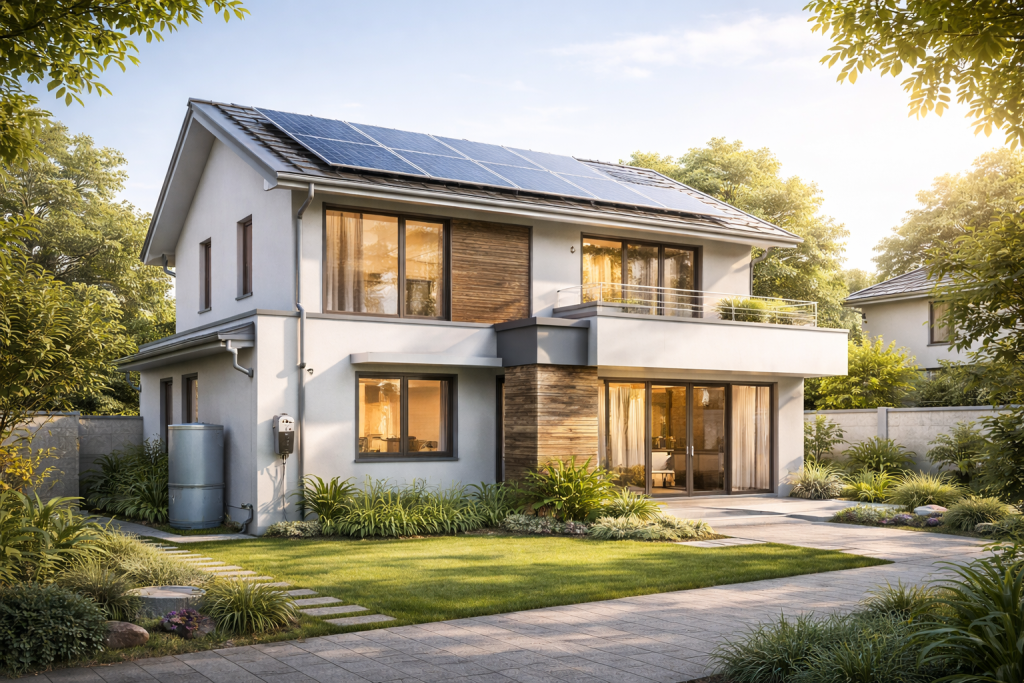
If you’re building a new home today, saving energy isn’t about being “eco-conscious” anymore. It’s about common sense and monthly bills.
Green technology helps new homes stay cooler, use less electricity, waste less water, and quietly save money without changing how you live. That, in simple words, is what green technology actually does for everyday living.
What Is Green Technology?
People hear big words and switch off. Too technical or too complicated? None.
Green technology is not about fancy gadgets or showing off solar panels.
It’s about building and running a home in a way that wastes less – less power, less water, and less money.
In construction, this is called green building technology.
It focuses on basics first:
- How heat enters the house
- How air moves inside rooms
- How water is used and reused
When these things are planned mindfully, green technology and sustainability stop being theory and start showing up in your daily life and electricity bill.
The Cool Roofs
Anyone who has stood on a terrace in May knows where most heat comes from.
One of the most practical green technology ideas is a cool roof.
It’s nothing complicated – simply put, it includes special coatings or tiles that reflect sunlight instead of soaking it in.
What changes after that?
- Rooms heat up more slowly.
- ACs don’t run endlessly
- Fans actually feel useful
This is one of the clearest advantages of green technology.
No apps and no maintenance. Just a smarter surface doing its job.
Green Insulation: Quietly Doing the Heavy Lifting
Insulation doesn’t get talked about much in Indian homes. But as time demands it, here is an insight.
Good insulation is a core part of green building technology. It slows down heat entering in summer and escaping in winter. Think of it like wearing a thick cotton shirt instead of a thin one in the sun. Your body doesn’t struggle as much.
Homes work the same way.
And once insulation is done right, it keeps saving energy year after year. It is one of the most underrated advantages of green technology.
Climate-Friendly Materials That Work
Some building materials don’t age gracefully. They crack, trap heat, or need constant fixing.
Green technology pushes builders to use materials that last longer, breathe better, and create less waste.
- Biodegradable and low-impact materials support green technology and sustainability without turning the home into an experiment.
- Even traditional ideas like rammed earth bricks are making a comeback – not because they’re trendy, but because they work.
- They naturally regulate temperature and reduce dependence on machines.
Sometimes, the smartest green building technology is just using old wisdom properly.
Rainwater Conservation- A Precious Resource.
Every monsoon, we complain about waterlogging, and then about water shortage.
That’s not bad weather – it’s bad planning.
Stormwater management is a simple green technology solution that includes:
- Rainwater harvesting
- Sloped surfaces that drain well
- Storage for reuse
This reduces pressure on municipal supply and cuts electricity use from pumps.
It’s a textbook example of green technology and sustainability meeting real life.
Solar Power, Without Going Overboard
Solar power gets all the attention, and for good reason. But here’s the honest version:
You don’t need to power your entire house on day one.
Most new homes start with:
- Solar water heaters
- Solar lighting for common areas
That alone makes a dent in electricity bills. Over time, the usage can be increased.
This gradual approach is why solar remains one of the most practical advantages of green technology.
Smart Glass and Smarter Appliances
Some green technology ideas sound fancy, but solve very ordinary problems. Electrochromic smart glass is one such solution. It is a very innovative technology that adjusts itself based on sunlight. It emits less glare, less heat and less curtain drama.
Smart appliances do something similar – they use only the power they need, reducing wastage automatically. You don’t have to change habits.
That’s the point of good green building technology – it maintains your lifestyle while working in the background.
The Idea Behind Zero Energy Homes
A zero-energy home sounds unrealistic until you break it down. It simply means that the house produces as much energy as it uses. This results in losses being minimised through design, and power being derived from renewables where possible.
Not every home reaches zero, but many new homes move closer every year. That’s green technology and sustainability in the long game.
Why This Matters More Than People Think
The biggest advantages of green technology aren’t slogans. They’re practical and have many advantages to their credit:
- Lower bills
- Better comfort
- Fewer repairs
- Homes that age well
All of this depends on strong construction basics – solid walls, proper curing, reliable cement, and good finishes. That foundation decides how effective green features actually are. For strong and long-lasting durability and efficiency par excellence, JK Super Cement stands out as a credible name in construction.
Green technology isn’t about being perfect. It’s about being sensible. If you’re building a new home, ensure it is designed in a way that it works with the climate. Choose materials that last and add smart systems where they make sense.
Do this once, properly, and your home will keep saving energy and money quietly, for years.
FAQs
1. What is green technology in home construction?
It’s about building homes that waste less energy, water, and resources.
2. Are green homes expensive to build?
Some features cost more upfront, but most recover their cost through savings.
3. What are the main advantages of green technology?
Lower bills, better comfort, and long-term durability.
4. Is solar power compulsory for green building technology?
No. Design and materials play an equally important role.
5. Can green technology be added later?
Some parts can, but planning it early gives the best results.
6. How does green technology support sustainability?
Green technology reduces waste and conserves resources.
7. Does green technology work in Indian weather?
Yes. Solutions such as solar power, electromagnetic smart glass, cool roofs and green insulation are all suitable for Indian weather.