Foundation Waterproofing in India: Methods, Costs & Expert Tips

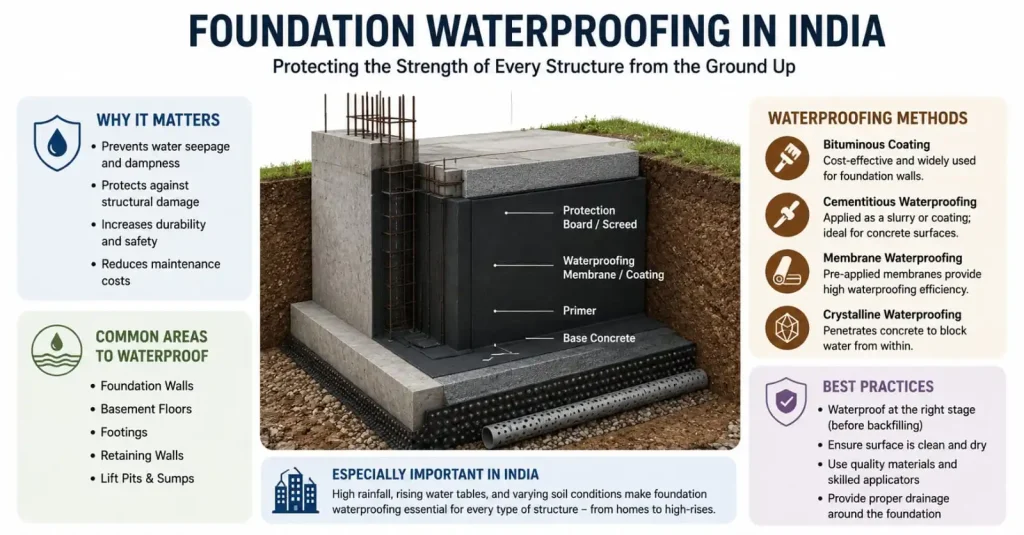
Let me tell you something most first-time homeowners don’t think about: your foundation walls are fighting a constant battle with water. In places like Mumbai, when the monsoons hit, groundwater pushes hard against basement walls, and if you don’t waterproof, water finds a way inside—through pores, cracks, joints. I’ve seen basements in Delhi turn into storage tanks simply because someone thought “a coat of paint is enough.” Spoiler: it isn’t.
Waterproofing isn’t fancy—it’s survival for your house. Done right, it keeps your walls dry, your reinforcement safe from rust, and your air free of mold.
Why Foundation Waterproofing?
Foundation walls sit below ground where soil and water press continuously. Without waterproofing, you invite:
- Damp, musty basements that no amount of painting fixes.
- Mold growth creeping into bedrooms, triggering allergies.
- Corroded steel reinforcement inside concrete.
- Soil erosion around footings, leading to structural settlement.
In short: waterproofing saves you from paying 10x later in repairs.
What Causes Water Ingress in Foundations?
Water doesn’t just “leak”—it pushes, creeps, and climbs.
- Hydrostatic Pressure: Groundwater pushing against walls.
- Capillary Action: Moisture wicking through concrete pores.
- Soil Settling: Cracks at wall joints open water paths.
- Bad Drainage: Absent or blocked drains keep water hugging the walls.
Which Waterproofing Methods Work in India?
- Cementitious Coatings: Easy to apply, cheap—works for small basements.
- Bituminous Membranes: Rolls or sheets, torch-applied, very common across Indian projects.
- Liquid Membranes (PU/Acrylic): Spray or roller applied—seamless, flexible, longer life.
- Crystalline Admixtures: Added to concrete during casting; self-healing micro-cracks later.
- Bentonite Clay Panels: Swell on contact with water, best for high water-table zones like Kerala.
How to Choose the Right Waterproofing System?
- High water table? Go with bentonite or bituminous membranes.
- Only inside access? Cementitious or crystalline works.
- Soil likely to move? Flexible liquid membranes perform best.
- Budget check? Bituminous gives mid-range life (10–15 yrs), while liquid PU lasts ~20 years.
Application Process in a Nutshell
- Prep the surface: Clean, repair cracks, patch joints.
- Crack treatment: Polymer mortar or epoxy.
- Primer coat: Key for adhesion.
- Main waterproofing: Coatings/membranes applied as per product spec.
- Protection & drainage: Boards and perforated drain pipes to keep water moving away.
How Much Does Foundation Waterproofing Cost?
| System Type | Cost (₹/sq m) | Lifespan |
| Cementitious Coating | 150–250 | 5–7 yrs |
| Bituminous Membrane | 300–500 | 10–15 yrs |
| Liquid PU/Acrylic Mem. | 400–600 | 15–20 yrs |
| Crystalline Admixture | 100–150 (in mix) | Lifelong |
| Bentonite Panels | 500–700 | 20+ yrs |
Rule of thumb: spend 0.5–1% of house budget on waterproofing, or risk spending 10–15% later fixing dampness.
Practical Tips for Homeowners
- Hire certified applicators, not just a “painter.”
- Keep drain pipes clean—blocked drains = wet walls.
- Slope your landscaping away from walls.
- Inspect after every heavy rain—fix damp spots early.
- Reseal or recoat membranes every decade.
FAQs on Foundation Waterproofing
Q1. How do I know if my foundation walls actually need waterproofing?
If you notice damp patches, white salt stains (efflorescence), or mold smell after rains—your foundation is already leaking. Even new houses can face this if soil pressure is high.
Q2. Can I waterproof foundation walls from the inside only?
Yes, cementitious and liquid coatings can be applied inside, but exterior waterproofing always lasts longer because it stops water before it enters.
Q3. What’s the difference between bituminous membranes and liquid membranes?
Bituminous sheets are rolled and torched, cost-effective, and durable. Liquid membranes are seamless, more flexible, and better for tricky shapes or where cracks might appear.
Q4. Is bentonite panel waterproofing better than membranes?
Not better, but in very high water-table areas (Kerala, coastal Goa), bentonite works brilliantly because it swells when wet and seals naturally. Needs careful installation, though.
Q5. At what stage of construction should waterproofing be done?
Ideally before backfilling the foundation. Once the soil covers the walls, exterior access is expensive.
Q6. Can waterproofing fix existing cracks?
Small cracks yes, if treated with epoxy or polymer before applying the waterproofing system. Major cracks need structural repair first.
Q7. How thick should cementitious coating be?
3–5 mm in two coats minimum. Thinner coats wear out fast.
Q8. Is DIY waterproofing effective?
Not for foundations. Wrong mixing, poor curing, or gaps in application kill performance. Always get trained applicators.
Q9. Do waterproofing systems need maintenance?
Yes—check joints and drainage every 5–10 years. Liquid membranes may need recoating after 15+ years.
Q10. What’s the typical life of waterproofing systems?
Cementitious: 5–7 yrs. Bituminous: 10–15 yrs. Liquid PU: 15–20 yrs. Bentonite and crystalline admixtures can last as long as the house.