Electrical Layout: Meaning, Symbols, Planning Rules & House Electrical Layout Guide

If you’re building or renovating a house, an electrical layout is basically the roadmap of your home’s wiring. It shows where switches, sockets, lights, fans, AC points, and the main distribution board will sit.
A proper electrical layout plan helps you avoid messy wires, overloaded sockets, and last-minute wall cutting. Think of it like planning plumbing before pouring concrete — once the walls are done, changes become painful and expensive.
This blog is a complete guide to what an electrical layout includes, its meaning, the electrical layout plan, and the rules.
What Is an Electrical Layout?
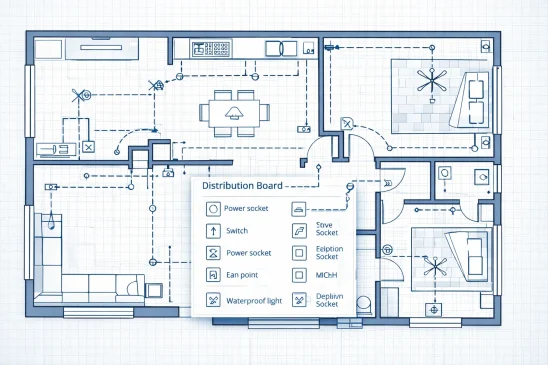
An electrical layout is a drawing that shows the position of every electrical point in a building.
It includes lighting points, power outlets, switches, MCB panels, inverter wiring, and sometimes even internet and TV points. Without it, most electricians rely on guesswork — and that’s when you get a switch behind a cupboard or a socket too far from the bed.
In homes, the layout is usually prepared room by room.
For example, a bedroom electrical layout will show:
2–3 light points
1 fan point
Bedside switchboards
Charging sockets
AC point
TV or internet point
When this is planned properly, daily life becomes smoother.
When it’s not… extension boards start multiplying.
Why You Should Never Skip an Electrical Layout Plan

Homeowners spend lakhs on tiles and paint, but ignore the electrical layout plan.
After shifting in, they realise:
- No socket near the study table
- Switchboard hidden behind curtains
- Not enough power points in the kitchen
- No separate line for heavy appliances
Fixing this later means breaking plaster and repainting.
A good electrical layout drawing helps with:
- Load distribution (no tripping every time AC + geyser runs together).
- Safety planning (proper earthing and MCB separation).
- Future expansion (inverter, solar, EV charging).
- Better furniture placement alignment.
It’s not just about wiring. It’s about lifestyle planning.
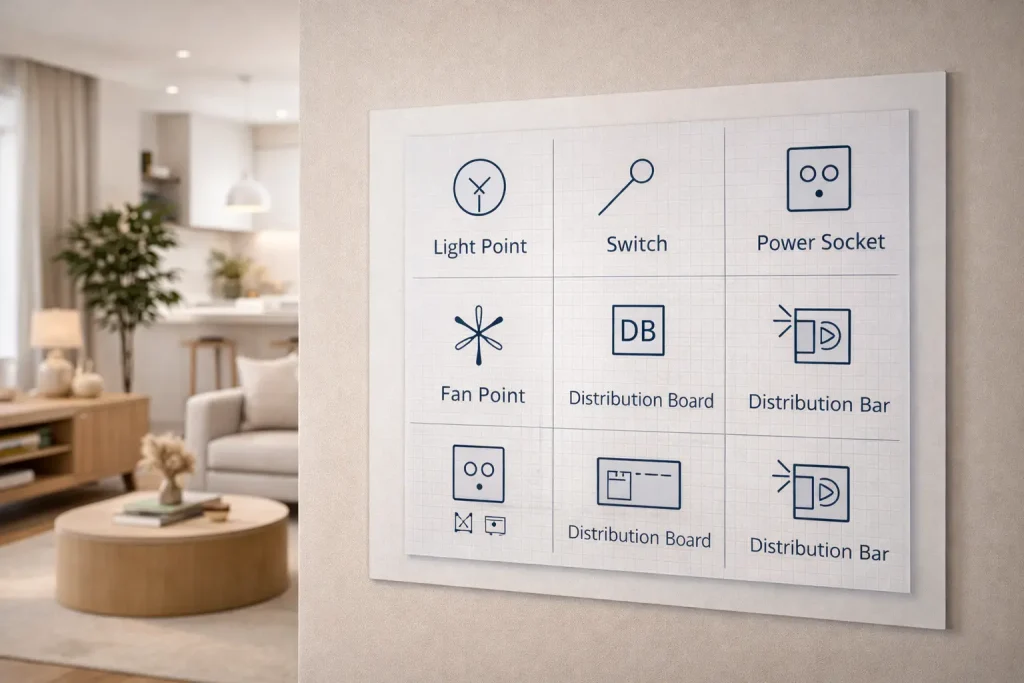
Common Electrical Symbols You’ll See in Drawings
When you look at an electrical layout drawing, it may seem confusing at first. But the symbols are fairly simple.
Here are common ones:
- ○ with cross = Light point
- Fan symbol = Ceiling fan
- S = Switch
- 5A / 15A = Socket rating
- DB = Distribution board
- Bell icon = Doorbell
- AC = Dedicated AC point
Understanding these makes discussions with your contractor easier.
Even in a simple bedroom electrical layout, symbols help show exactly where the bedside switches or AC isolator will be.
Once you understand the map, you’re in control.
Planning Rules for a Smart House Electrical Layout
There are some unwritten rules experienced electricians follow.
If you’re building a house, keep these in mind while reviewing your electrical layout plan.
1. Switch Height Matters
- Standard switch height: 4–5 feet from the floor.
- Bedside switches: slightly lower for comfort
2. Separate Heavy Loads
- AC, geyser, oven — each should have a separate line in the electrical layout drawing.
3. Don’t Underestimate Sockets
In Indian homes, appliances increase every year.
- Plan extra sockets now.
4. Think Furniture First
- Your bedroom electrical layout should align with the bed position, the wardrobe placement, and the TV wall.
5. Kitchen Needs the Most Planning
- Mixer, microwave, chimney, fridge, RO — all need planned points in the electrical layout plan.
- Good electrical planning feels invisible.
- Bad planning annoys you every single day.
Room-by-Room House Electrical Layout Guide
Let’s simplify this with a practical walkthrough.
1. Living Room Electrical Layout
- Main light + cove lighting
- Fan point
- TV + DTH + internet
- 5–6 sockets minimum
- AC point
- One spare power point
The electrical layout drawing should consider sofa placement and TV wall location.
2. Bedroom Electrical Layout
A proper bedroom electrical layout includes:
- Ceiling light
- Fan point
- 2 bedside switchboards
- Charging sockets
- AC point
- TV point (if needed)
- Night lamp point
One common mistake is: No two-way switching. You switch off the lights near the door and then walk in the dark to the bed.
Plan two-way switches in your electrical layout plan for bedrooms.
3. Kitchen Electrical Layout
This is the most overloaded area in any home. Your electrical layout drawing should include:
- Fridge point
- Microwave point
- Chimney point
- Mixer socket
- RO socket
- Under-cabinet lighting
Separate circuits are important here.
4. Bathroom Electrical Layout
- Geyser point (dedicated line)
- Exhaust fan
- Mirror light
- 1 waterproof socket
- Safety is critical here.
Safety Considerations You Can’t Ignore
A clean-looking electrical layout isn’t enough. Safety matters more. Always check:
- Proper earthing
- ELCB/RCCB installation
- Separate MCB for each room
- ISI-marked wiring
- Proper load calculation
In many site projects, we coordinate electrical conduits before slab casting. This is where structural quality and planning go hand in hand.
If you’re already working on structural planning, you might want to understand basics like what cement is—because strong construction and smart electrical layout always go together.
Mistakes People Make While Planning Electrical Layout
Let me save you some regret. Common mistakes in an electrical layout plan:
- Planning based on current needs only
- No inverter wiring provision
- No provision for router or WiFi
- Ignoring outdoor lighting
- No spare conduits
A flexible electrical layout drawing gives you future-proofing.
Homes evolve. Your wiring should too. Plan Before You Build
An electrical layout may not be visible once the house is ready. But you’ll feel it every day.
Good planning means:
- No messy extension boards
- No overload trips
- No broken walls later
Before plastering starts:
- Sit with your contractor and review the electrical layout plan carefully.
- Mark furniture positions.
- Think about daily routines.
- Add extra sockets.
In the future you will be grateful.
FAQs
1. What is an electrical layout in house construction?
An electrical layout is a drawing that shows the placement of switches, lights, sockets, fans, and distribution boards in a house.
2. Why is an electrical layout plan important?
It prevents wiring mistakes, overload issues, and costly wall breaking after construction.
3. What is included in an electrical layout drawing?
It includes lighting points, power outlets, switchboards, AC points, DB panels, and wiring paths.
4. How many sockets should a bedroom electrical layout have?
At least 4–6 sockets, including bedside charging points and an AC socket.
5. When should the electrical layout be planned?
Before plastering and ideally before slab casting for concealed wiring.
6. What is the standard height for switches?
Typically 4–5 feet from finished floor level.
7. Can I modify the electrical layout later?
Yes, but it often requires breaking walls, which increases cost and effort.