Earthquake Resistant House Construction: Building Safe Homes That Stand Strong

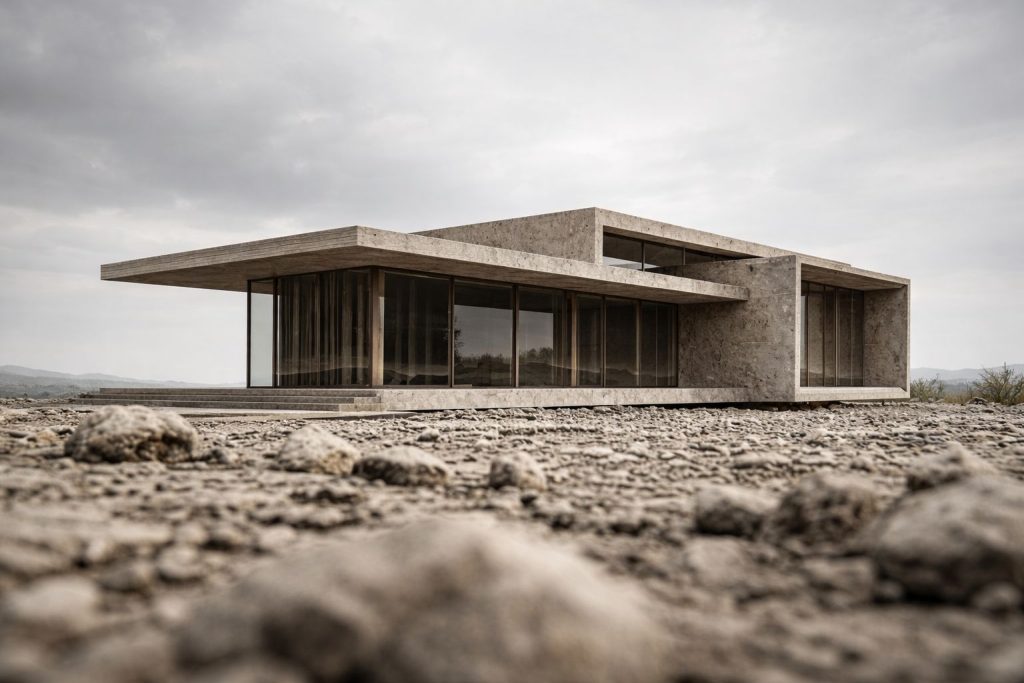
It’s 3 AM in Guwahati. You’re fast asleep when the earth rumbles beneath you. In that moment, you don’t think about furniture or gadgets—you think about your walls, your roof, your home. Will it protect your family? That question is at the heart of why earthquake resistant house construction matters so deeply in India.
Nearly 60% of India’s landmass lies in moderate to high seismic zones. From Delhi sitting in Zone IV, to Chennai in Zone III, to the high-risk Northeast states in Zone V—millions live where tremors aren’t a “maybe,” but a “when.” Yet, too often, our houses are built like they’ll never be tested. And that’s dangerous.
The good news? With the right design choices, strong materials, and proper detailing, a home can stay safe without looking like a fortress—or breaking your budget. I’ve seen it firsthand in Shimla, where light, smartly designed homes swayed but stood during quakes, while older heavy buildings crumbled.
Why Earthquake Resistance Isn’t Optional
India sits at a restless tectonic boundary. The Indo-Australian plate keeps nudging the Eurasian plate, and the tension releases as earthquakes. From the Bhuj tragedy in 2001 to the Nepal quake of 2015, we’ve seen how unprepared structures collapse while well-designed ones survive.
The Bureau of Indian Standards (BIS) notes that adding seismic safety features costs just 5–10% more upfront in places like Zone III, but can slash potential damage by up to 80%. Think about it: spending a few lakhs more now vs. losing your home—or worse—later.
What Makes a Home Earthquake Resistant?
A safe house isn’t one that resists movement at all—it’s one that can flex, bend, and absorb seismic energy without breaking apart. Think of it like a dancer moving with the rhythm, not stiffly against it.
- Lightness: Heavy structures pull more seismic force. A water tank dumped on a roof? That’s like tying a rock to the end of a stick—it wobbles and snaps.
- Symmetry: Balanced layouts (square or rectangular) spread forces evenly. Odd L- or T-shapes? They twist and crack.
- Continuity: Every column, beam, and slab must be tied together like a strong chain.
- Ductility: Reinforced concrete with quality steel bends without breaking. That’s why TMT bars (Fe500 grade and above) are vital.
Materials That Save Lives
Over decades of quakes, we’ve learned which materials fail and which perform.
- Steel + RCC: The backbone of Indian seismic design. RCC frames with ductile detailing (per IS 13920) survive because they bend, not shatter.
- Brick masonry + seismic bands: Old-style brick walls need RCC bands at plinth, lintel, and roof to stay tied together.
- AAC blocks: Lightweight yet strong. Reduce building mass = reduce seismic forces.
- Timber & bamboo (traditional): In the Northeast, Assam-type homes with timber frames have proven resilient. Lightweight, flexible, and naturally seismic-friendly.
Foundations: Where Safety Begins
A home is only as safe as its base. Wrong foundation on soft soil? It’s like standing on jelly.
- Isolated footings with tie beams: Common, affordable, and effective for homes in seismic zones.
- Raft foundation: Best when soil is soft or building shape is irregular.
- Base isolation (premium): Rubber bearings or sliders that separate the structure from the shaking ground. Seen in high-value projects, hospitals, or government buildings.
Soil testing is non-negotiable. In Dehradun, a sandy site forced us to switch to micro-piles with a raft foundation. That change likely saved the building’s future.
Key Structural Players
Every part of a house contributes:
- Moment-resisting frames: Beams + columns locked rigidly together.
- Shear walls: Vertical walls that absorb lateral forces (lift shafts often double as these).
- Braced frames: Steel braces add strength without bulk.
- Beam-column joints: The most failure-prone spots if detailing is sloppy. Proper stirrup spacing (max 100mm) is a must.
Cost: Is Safety Expensive?
Not really. Data from IIT studies shows:
- Zone II: 2–3% extra
- Zone III: 5–8% extra
- Zone IV: 10–15% extra
- Zone V: 15–25% extra
For a ₹15 lakh house in Zone IV, seismic detailing may add ₹1.5–2.2 lakh. That’s less than a fancy car upgrade—and far cheaper than rebuilding after a collapse.
Most of this cost goes into extra steel and tighter quality control. And that’s money well spent.
Codes You Must Follow
Indian codes exist because we’ve learned from disaster:
- IS 1893:2016 – Seismic design loads & zone maps.
- IS 4326:2013 – General construction principles for quake safety.
- IS 13920:2016 – Ductile detailing for RCC frames (mandatory in Zones III–V).
After Bhuj, compliance became mandatory. States like Gujarat enforce them rigorously. Others… not so much. But as a homeowner, demand compliance. It’s your right.
Regional Notes
- Kashmir, Himachal, Northeast (Zone V): Timber + stone traditional homes are proof of centuries of wisdom. Modern builds need high-grade steel and special frames.
- Delhi (Zone IV): Mostly RCC with brick infill. Structural audits are common here.
- Gujarat: Post-Bhuj, leads in retrofitting and prefab quake-safe housing.
- Northeast: Soft soil and humidity challenge construction; Assam-type homes still perform remarkably.
- South (Zone II-III): Safer, but coastal builds must balance seismic + cyclone loads.
Practical Tips for Homeowners
- Don’t skimp on soil testing.
- Keep building shapes simple.
- Use Fe500D or higher TMT bars.
- Never compromise on curing—weak concrete is a silent killer.
- Avoid afterthought modifications like knocking off a wall (it may be a shear wall!).
- Maintain—check cracks after tremors, don’t ignore them.
FAQs
1. How is an earthquake-resistant house different from a normal one?
It’s built to bend and absorb shocks instead of breaking. Using ductile TMT steel, simple symmetrical layouts, and proper reinforcement (IS 13920) keeps it safe. Regular houses often skip these details, making them fragile.
2. How do I know which seismic zone my city is in?
Check the IS 1893:2016 seismic map or ask your local municipal body. For quick reference: Delhi is Zone IV (high risk), Mumbai Zone III (moderate), Rajasthan mostly Zone II (low), while the Northeast and Kashmir are Zone V (very high).
3. How much more does earthquake-resistant construction cost?
It usually adds 2–25% depending on the zone. For a ₹20 lakh home in Zone IV, expect around ₹2–3 lakh extra. Most of it goes into extra steel, detailing, and better quality checks — worth it compared to rebuilding after damage.
4. Can old houses be upgraded for earthquake safety?
Yes. Retrofitting methods like adding steel braces, shear walls, or strengthening joints can boost safety by 60–80%. Costs are about 15–30% of the original build but far less than reconstruction.
5. Which materials are best for earthquake-prone areas?
TMT steel (Fe500+ grade) with good concrete is the backbone. AAC blocks are great for being lightweight. Traditional timber and bamboo also perform well if detailed properly. Avoid weak, heavy, or brittle materials.
6. Why is soil testing important before building in seismic zones?
Soil type affects how earthquakes shake a building. Soft soil can double or triple ground motion compared to rock. A soil test tells you the foundation depth, type, and whether you need special systems like piles or base isolators.
7. What are the key structural features of an earthquake-resistant house?
Strong RCC frames with ductile beam-column joints, shear walls, continuous load paths, and proper foundations. All parts must work together as one system to resist shaking.
8. Do traditional Indian building methods resist earthquakes well?
Many do. Timber homes in the Northeast, Assam-type houses, and stone or brick walls with wooden bands in Himachal perform surprisingly well. Mixing these with modern engineering makes them even safer.
9. Which building codes cover earthquake safety in India?
The main ones are: IS 1893 (seismic loads), IS 4326 (design rules), IS 13920 (RCC detailing), and IS 456 (general concrete). Local bylaws may add more. Following these isn’t optional — they’re mandatory in risk zones.
10. How can I check if my house is earthquake-resistant?
Hire a structural engineer for a safety audit. They’ll check material quality, reinforcement, beam-column joints, seismic bands in masonry, and foundation strength. Municipal certificates may confirm compliance, but an independent check gives peace of mind.