Types of Concrete: Blended vs OPC – What You Need to Know Before You Build

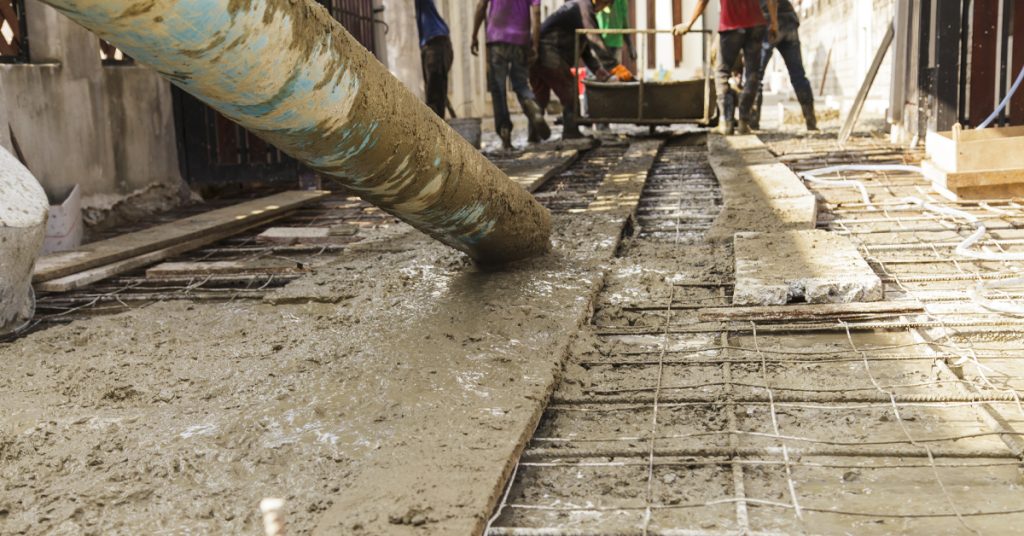
If you’ve ever been part of a home construction project or even just overheard a site conversation, you’ve probably heard the terms “OPC” and “PPC”, but for most of us, those abbreviations may be confusing.
When you’re putting in your hard-earned money to build a home or renovate a space, you deserve to know what materials are going in, especially when it comes to concrete, because once it’s poured, there’s no going back.
Most of us don’t think about cement types until we’re building a house. But the truth is that knowing the difference between OPC and PPC, or between various concrete types, is worth understanding because your house isn’t just a structure; it’s your life’s investment.
Concrete is made from cement, sand, aggregates, and water. The cement types you use, whether it’s OPC or PPC, decide how that concrete behaves. You must ask yourself:
- Which cement to use for which part of the house
- How fast do you want it to set
- How much protection do you want
This blog will break down every question.
So, What is OPC?
OPC stands for Ordinary Portland Cement. It is the most basic, commonly used, tried-and-tested cement, available in 43 Grade and 53 Grade. It is mostly used for:
- RCC (Reinforced Cement Concrete) work
- Structural beams, slabs, and columns
- Precasting tiles or blocks
This is because it:
- Builds early strength
- Useful where timelines are tight
But quick hardening also means more heat, which can cause cracks, especially in our Indian summers.
What is Blended Cement?
Blended cement is OPC mixed with fly ash, a leftover from thermal plants, which, when mixed properly with cement, improves durability and makes concrete more eco-friendly.
PPC is one of the most used blended cement types. It stands for Portland Pozzolana Cement and takes a bit more time to set fully. Some blends also use slag or other natural materials. Its popularity is because it:
- Gives off less heat while setting
- Better for long-term durability
- Works well for plastering, walls and bathrooms.
- Better for the environment
Blended Cement vs OPC: What’s the Real Difference?
Here are the factors that matter when comparing blended cement vs OPC:
- Strength: OPC gives fast strength, while PPC gains strength slowly and steadily.
- Heat of Hydration: OPC has a high heat of hydration during the setting process, which can lead to cracks, whereas PPC has a low heat of hydration, making the chances of cracking less.
- Cost: OPC can cost slightly more than PPC as it requires specific aggregates. PPC uses natural ingredients such as fly ash, which makes it less costly. The bigger savings come from long-term durability. Using PPC in the right places can reduce future repairs. Think fewer wall cracks, better water resistance.
- Applications: OPC sets quicker and gains strength faster, making it ideal for columns, beams, slabs, and foundations. PPC takes its time to gain strength but remains strong for years – a good choice for general RCC work, slabs, and foundations, especially in areas exposed to moisture or high temperatures.
- Weather: In hot and dry areas, PPC’s low heat setting prevents surface cracks and in coastal or sulphate-rich soil areas, it resists chemical attacks better. OPC might help get the job done faster in cold or urgent timelines.
- Eco-friendliness: PPC is good for the planet. Let’s not forget- blended cement uses fly ash, a waste product that would otherwise pollute land and water. Every bag of PPC helps reduce carbon emissions.
How To Decide Between OPC and PPC or Blended Cement?
The secret is not to get waylaid by brands and hype.
- You must focus on what each part of your home needs. Take this simple rule-
- For fast setting and structural work → OPC
- For long-lasting, low-maintenance walls and surfaces → PPC / Blended cement
- Ask your engineer or supplier to break down what’s being used where.
- Always check for ISI marks and batch quality.
You don’t need a civil engineering degree to understand your building materials. A little awareness goes a long way. Because in the end, it’s not just about concrete. It’s about the home where your children will grow, where your parents will rest, and where your memories will be made.
So ask the extra question. Double-check the bag. Know the basics of blended cement vs OPC- because once the slab is poured, you can’t take it back.
FAQs
1. Is OPC always stronger than PPC?
Not really. OPC gains strength faster, but PPC (blended cement) keeps getting stronger over time. Both are equally strong in their best-suited applications.
2. Can I just use one type of cement for my whole house?
You can, but you shouldn’t. OPC is great for your beams, columns, and slab. PPC works better for plastering, walls, and areas exposed to moisture. Using OPC in moisture-prone areas won’t give the structure the required strength against that environment. Using PPC in beams and columns will take too much time.
3. Why does PPC take longer to set up? How does that help?
PPC requires a longer setting time because of its composition and water ratio. The extra time helps reduce cracks and makes the structure stronger in the long run.
4. Is PPC cheaper than OPC?
Yes, it is. But the real saving is in long-term maintenance. PPC’s resistance to cracks and moisture can mean fewer repairs later.
5. Which one should be used for someone living in a coastal area?
Coastal areas have salty air and more moisture. PPC (blended cement) is generally better there because it resists chemical damage and lasts longer in such conditions.
6. Why do contractors prefer OPC?
Usually, because OPCs set faster, which means they can complete the job sooner. But it’s wise to ask questions about what cement to use in your building construction.