What Is Prefabricated Construction? Meaning, Types & Advantages

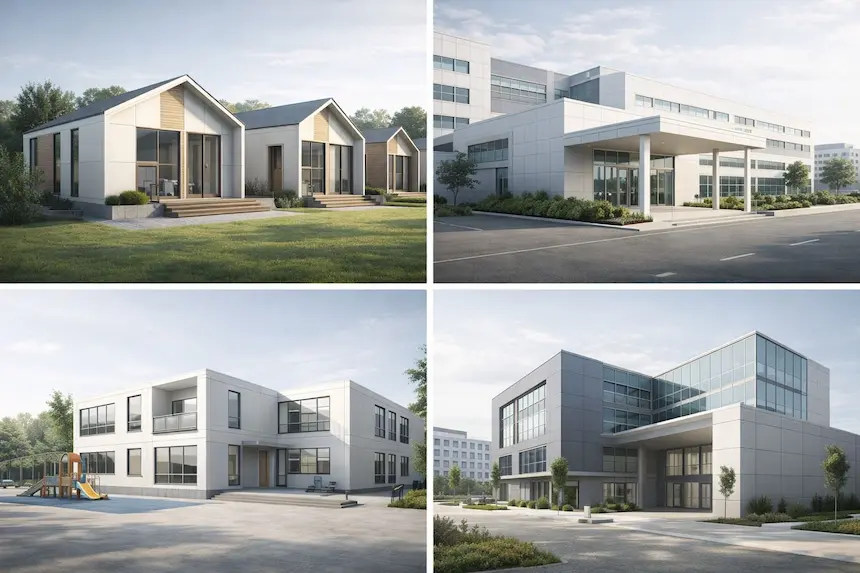
Have you ever watched a building come up faster than expected and thought, “This used to take a year—how did they finish in six months?” There is no magic or mystery here. The reason is often prefabricated construction.
In plain words, prefabricated construction means that parts of the building are made somewhere else, then brought to the site and assembled. And yes, it’s changing how homes and buildings are made in India.
Instead of casting everything on-site, prefabricated construction techniques shift a big chunk of work into factories. This makes construction and design cleaner, faster, and more predictable.
What Is Prefabricated Construction?

Prefabricated construction is not about temporary buildings or cheap shortcuts. It’s about control.
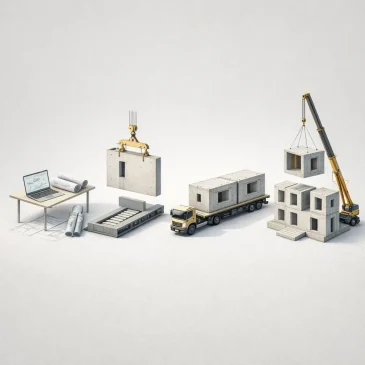
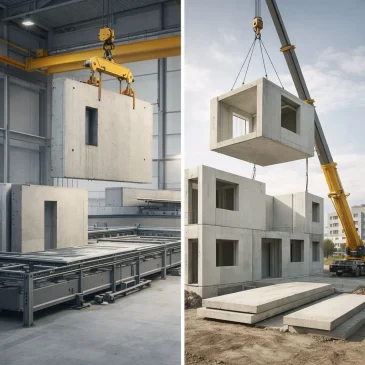
In prefabricated home construction, the structure comes together more like assembly than traditional brick-by-brick work. Walls, slabs, beams, staircases, and even entire rooms are produced using prefabricated construction materials in a factory setting. These are then transported and installed on site.
Think of it like tailoring. A suit stitched in a workshop fits better than one measured bit by bit and stitched at home. Same logic.
Why Builders Are Taking Prefabrication Seriously
Anyone who has handled a site knows the usual problems, such as labour shortages, weather delays, material wastage, and rework. Prefabricated construction reduces all of that.
While the foundation work is happening on site, the structural elements are being prepared elsewhere. Two things move together instead of one waiting for the other.
That’s why prefabricated construction techniques are picking up speed in cities where time is money.
How Prefabricated Construction Works on the Ground
Here’s what usually happens in a real project:
- The design is frozen early (very important)
- Structural elements are manufactured using prefabricated construction materials
- Foundations are cast on site
- Precast elements arrive on trucks
- Cranes lift and place them
- Joints are connected and finished
In prefabricated concrete construction, this process brings better curing, better strength, and uniform quality. There’s less guesswork and less “adjustment later.”
Types of Prefabricated Construction Systems You’ll Actually See
Panelized Wood Framing
Mostly for lightweight buildings. Walls come as ready panels. Common in smaller prefabricated home construction projects.
Sandwich Panels
Two outer layers with insulation in between. Used in factories, warehouses, and site offices. A popular prefabricated construction technique where speed matters more than finish.
Steel Framing Systems
Steel members are fabricated off-site and bolted on-site. Clean, fast, and accurate. Often used in commercial prefabricated construction projects.
Prefabricated Concrete Construction
The most common in India. Beams, columns, slabs, staircases – all precast. Ideal for housing projects, hostels, and parking structures.
Modular Construction
Entire rooms built in factories. Typical applications are bathrooms, hotel rooms, and hospital units. This is full-scale prefabricated home construction, not just components.
Where Prefabricated Construction Is Used in India
Prefabricated construction isn’t limited to one sector anymore. You’ll see it in:
- Affordable housing projects
- High-rise residential buildings
- Hospitals and medical colleges
- Metro stations
- Industrial buildings
Government projects also favour prefabricated concrete construction because timelines are tight and repetition is high.
Advantages of Prefabricated Construction
- Faster Completion: Months are saved with prefabricated construction techniques.
- Consistent Quality: Factory-controlled production means fewer defects, especially for prefabricated concrete construction.
- Less Wastage: Materials are measured, reused, and controlled, reducing waste significantly.
- Lower Labour Dependency: Smaller teams on site, helpful when skilled labour is scarce.
- Cleaner Sites: Less debris, dust, and noise, making sites safer and neighbours happier.
Is Prefabricated Construction Expensive?
Not really, if you look at the full picture. Yes, prefabricated construction may cost more at the start due to factory production, transportation, and crane usage; but it saves money by:
- Reducing project time
- Lowering rework
- Cutting long-term maintenance
For large projects, prefabricated home construction often ends up cheaper overall.
What Prefab Cannot Fix
Technology helps only when fundamentals are solid. Prefabricated construction techniques rest on a good base. If the foundations are weak, levels carelessly done, or cement quality is low, even immaculately applied prefabrication will be ineffective.
Reliable cement, mindful grouting, and strong joints are non-negotiable. This is why professionals recommend trustworthy and innovative brands like JK Super Cement.
Prefabricated Construction vs Traditional Construction
- Traditional: Allows changes on the go. Prefab demands planning upfront.
- Traditional: Requires excessive on-site labour. Prefab reduces on-site labour.
- Traditional: Requires transporting materials regularly. Prefab materials are prepared in factories, saving transportation costs.
Is Prefabricated Construction the Future?
It will not replace all construction, but it is definitely part of the future. As cities grow taller and timelines shrink, prefabricated construction techniques make sense where speed, quality, and scale matter.
It’s not about replacing masons; it’s about making their work smarter.
FAQs
What is prefabricated construction in simple words?
Building parts are made off-site and assembled on-site.
Is prefabricated home construction strong?
Yes. When executed correctly, it matches traditional construction strength.
Where in India can we see prefabricated construction?
Housing, hospitals, metros, and industrial buildings.
What are the materials that prefabricated construction uses?
Concrete, steel, timber, sandwich panels, and composites.
Is prefabricated concrete construction durable?
Very. Factory curing improves long-term performance.
Can prefab reduce project delays?
Yes. That’s one of its biggest advantages.
Is prefab suitable for individual houses?
Yes. Especially when time is a constraint.